Long-Lasting Survival Foods You Can Make and Store at Home
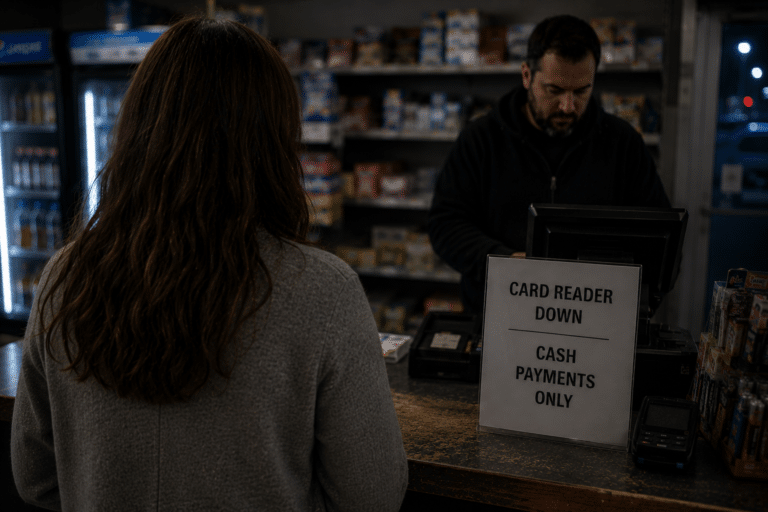
Long-lasting survival foods have helped people survive wars, blackouts, supply shortages, wilderness travel, and major emergencies for centuries. While modern grocery stores and refrigeration systems make food easy to access most of the time, those systems can fail surprisingly fast during disasters or long-term power outages.
This post contains affiliate links. I may earn a small commission at no extra cost to you. Learn more.
The best emergency foods are shelf-stable, calorie-dense, practical, and capable of lasting for extended periods when stored correctly. Some require very little preparation, while others provide lightweight nutrition for bug-out bags, camping, or long-term preparedness planning.
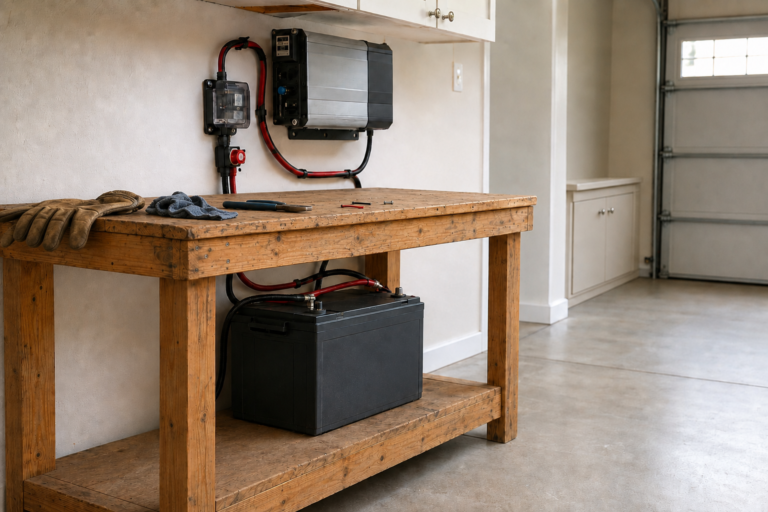
If you are building a complete emergency food system, it should also connect with reliable water storage, backup cooking methods, and broader preparedness planning. Start with Emergency Preparedness Plan 2026, then read How to Cook During a Power Outage and Long-Term Water Storage for Emergencies to build a more complete survival system.
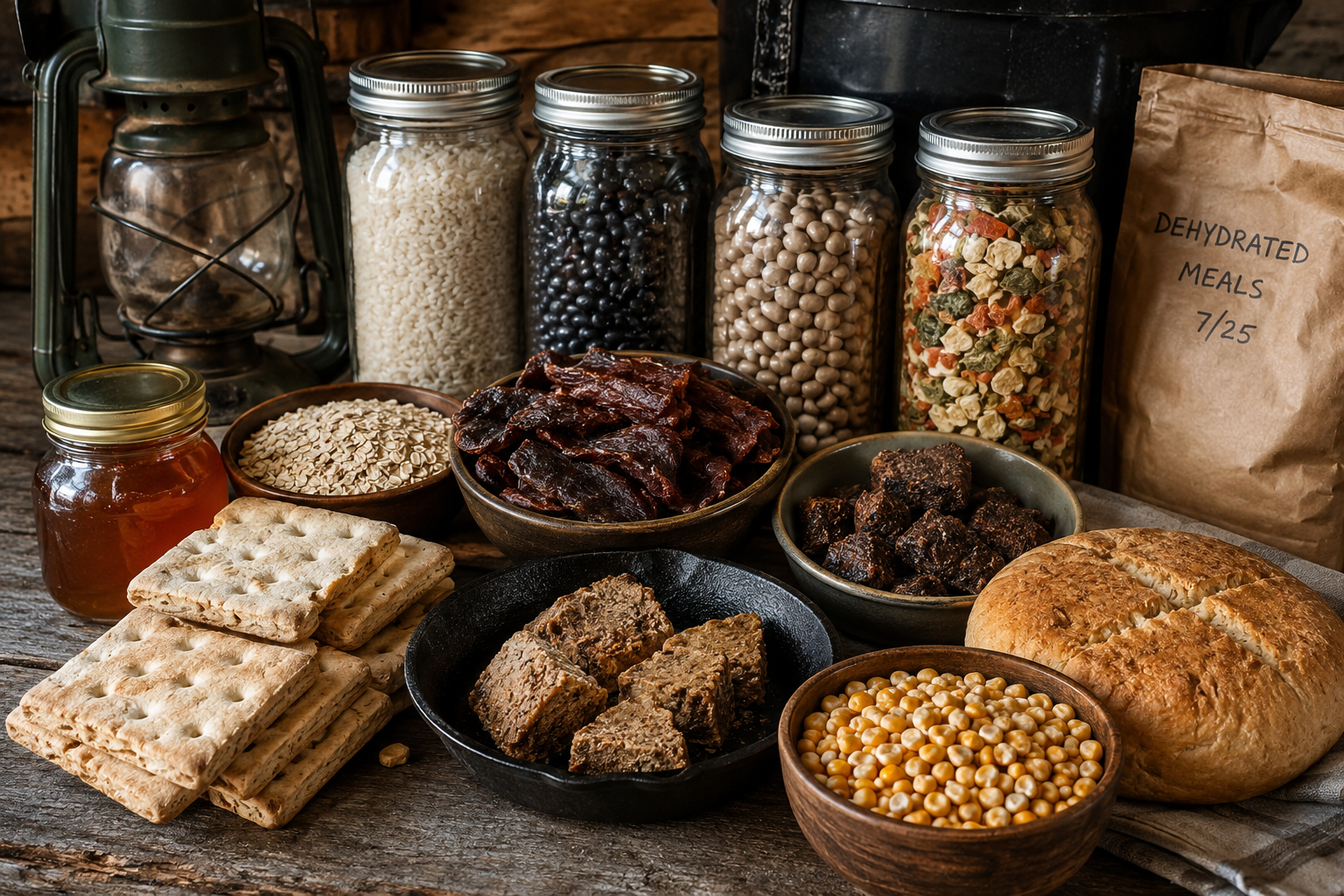
This guide covers some of the best long-lasting survival foods you can make and store at home, including hardtack, pemmican, dehydrated meals, rice and beans, honey, jerky, and other proven preparedness staples that continue working when modern conveniences stop.
1. Hardtack: The Original Long-Lasting Survival Food
Long before refrigeration, freeze-dried food, and modern emergency rations existed, people relied on simple foods that could survive long journeys, military campaigns, and harsh conditions without spoiling. One of the most famous examples is hardtack.
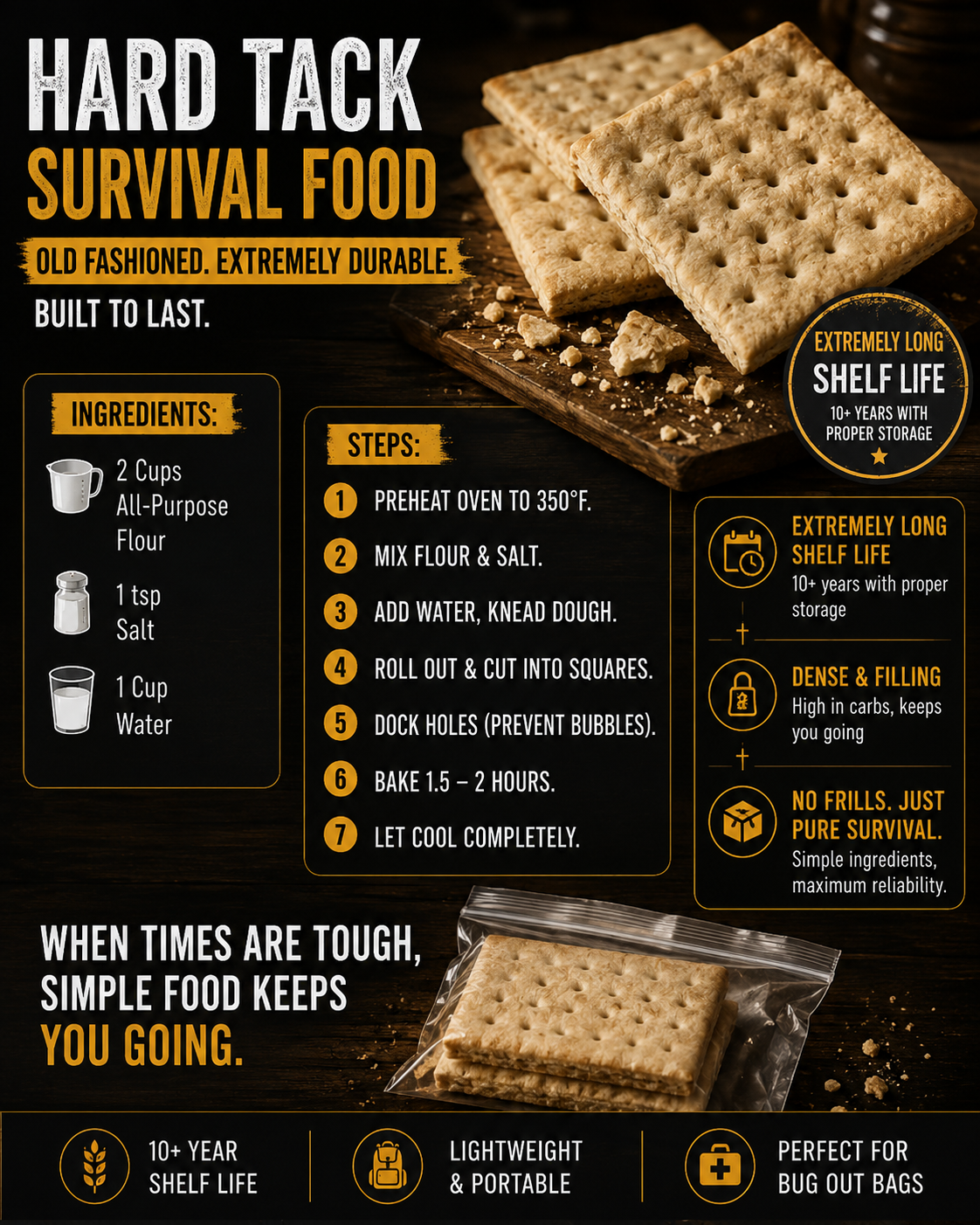
Hardtack is a dense, dry survival cracker traditionally made from only flour, water, and salt. That simplicity is exactly why it became one of the most dependable long-term survival foods in history. Sailors carried it across oceans. Soldiers survived on it during wars. Pioneers packed it into wagons because it could remain edible long after normal bread molded or spoiled.
Even today, hardtack still makes sense as part of a practical emergency food system. It is cheap to make, easy to store, lightweight, and capable of lasting for years if protected from moisture.
Basic Hardtack Ingredients
- Flour
- Water
- Salt
The process is simple: mix the ingredients into a stiff dough, flatten it, cut it into squares, and bake it long enough to remove as much moisture as possible. Small holes are usually poked into the dough before baking to prevent bubbles and uneven cooking.
The goal is not flavor or softness. The goal is shelf stability.
That is what separates survival foods from ordinary pantry foods. Most modern snacks contain oils, sugars, preservatives, or moisture that shorten shelf life. Hardtack avoids almost all of those problems by staying extremely dry.
Why Hardtack Still Matters for Preparedness
Many people assume emergency food storage has to involve expensive freeze-dried meals or commercial survival buckets. While those products can absolutely be useful, hardtack proves that reliable emergency calories can also come from extremely simple ingredients.
During a major blackout or supply chain disruption, foods that store well without refrigeration immediately become more valuable. Bread disappears quickly from grocery shelves because it spoils fast. Hardtack solves that problem by trading comfort for durability.
It also pairs well with other preparedness foods. Hardtack can be softened in soups, stews, broth, coffee, or hot water. It works especially well alongside protein-heavy foods like jerky, beans, or pemmican.
If you are building a complete blackout food system, also read How to Cook During a Power Outage because food storage is only half the equation. You also need reliable ways to prepare meals when kitchen appliances stop working.
How Long Does Hardtack Last?
When properly baked and stored in a cool, dry environment, hardtack can last for years. Moisture is the biggest threat. If humidity reaches the crackers, mold becomes possible and shelf life drops dramatically.
For best results, hardtack should be stored in airtight containers, Mylar bags, or food-grade storage buckets with oxygen absorbers. Keeping food dry is one of the most important principles in long-term emergency food storage.

Hardtack is not designed to replace a balanced diet, but it is one of the simplest ways to create dependable emergency calories from inexpensive ingredients. That is why it continues to appear in preparedness plans, bug-out bags, and long-term survival discussions even hundreds of years after it was first used.
2. Pemmican: The High-Calorie Survival Food That Lasts for Years
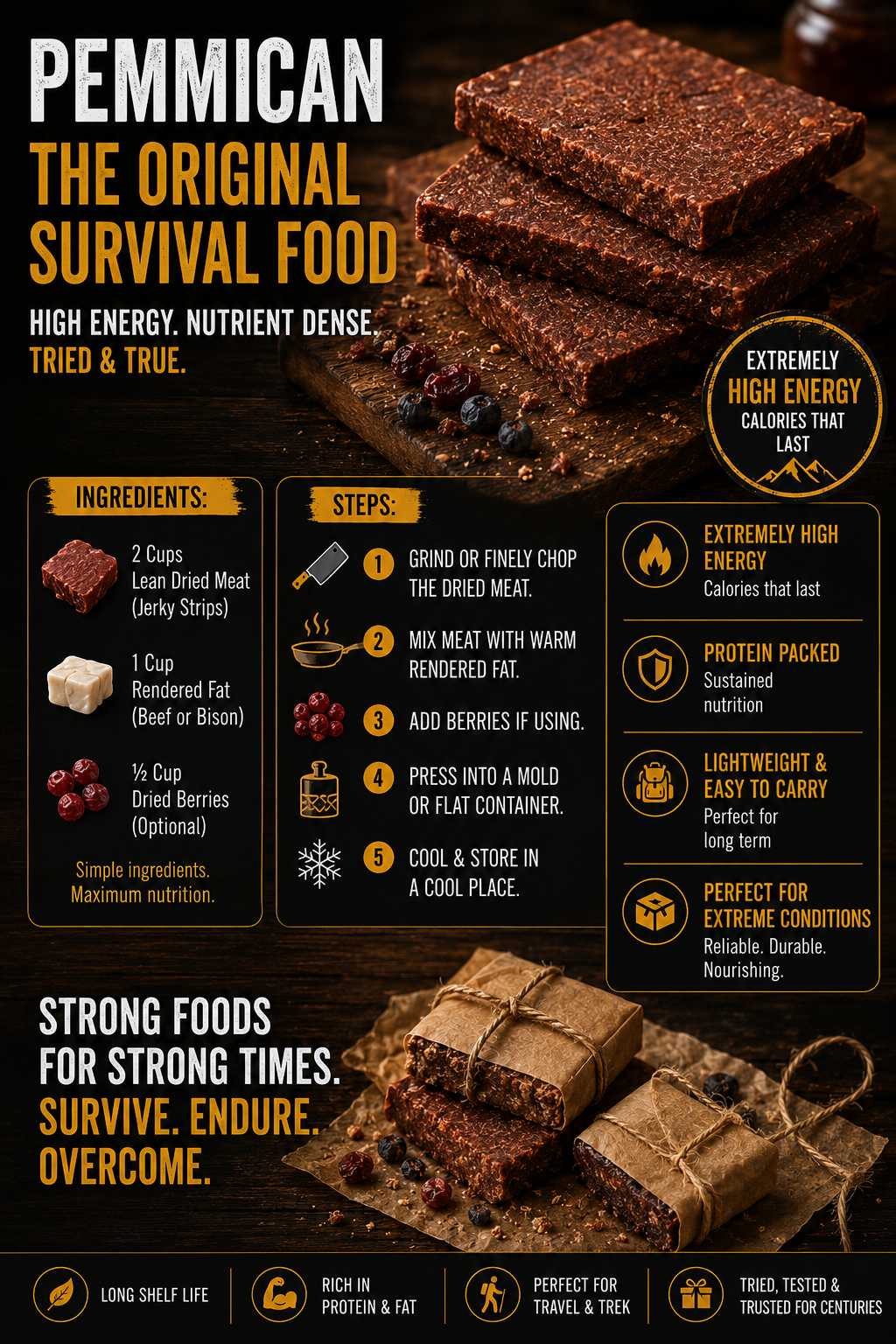
If hardtack was the survival world’s long-lasting carbohydrate source, pemmican was the fuel that provided fat, protein, and serious calories. For centuries, indigenous tribes, explorers, mountain men, and fur traders relied on pemmican because it was lightweight, nutrient-dense, and capable of lasting for long periods without refrigeration.
Unlike many modern survival foods that focus mostly on carbohydrates, pemmican delivers something far more important during emergencies: concentrated energy.
That matters because calories become extremely valuable during physically demanding situations. Cold weather, hauling gear, walking long distances, stress, and limited sleep all increase how much energy your body burns. Foods that combine protein and fat help sustain energy far longer than sugary snacks or processed foods.
Traditional Pemmican Ingredients
- Dried lean meat
- Rendered fat (usually tallow)
- Optional dried berries
The meat is fully dried first to remove moisture, then crushed into small pieces or powder. Rendered fat is mixed into the meat to create dense bars or chunks that harden as they cool. Some traditional recipes also included dried berries for flavor and nutrients, although pure meat-and-fat pemmican generally stores longer.
What makes pemmican unique is its balance of portability, calories, and shelf life. Properly made pemmican contains very little moisture, which dramatically slows spoilage. Combined with the preservative effect of rendered fat, it became one of the most efficient travel foods ever created.
Why Pemmican Is Still Valuable Today
Modern emergency preparedness often focuses heavily on canned food and freeze-dried meals, but pemmican fills an entirely different role. It is compact, calorie-dense, and requires no cooking. That makes it useful for bug-out bags, vehicle kits, hunting packs, hiking supplies, and emergency backup food.
In a real grid-down situation, foods that require minimal preparation become increasingly valuable. Fuel may be limited. Cooking equipment may not work. Water may need to be conserved. Pemmican solves many of those problems because it is ready to eat immediately.
This also connects directly to water preparedness. Many survival foods require large amounts of water to prepare, which becomes a serious problem during long-term emergencies. If you have not already built a reliable water storage plan, read Long-Term Water Storage for Emergencies.
The Biggest Mistake People Make With Pemmican
The biggest mistake is using fatty meat that was not properly dried before mixing it with rendered fat. Moisture is the enemy of long-term food storage. Any remaining moisture increases the risk of spoilage and dramatically reduces shelf life.
Another common mistake is assuming pemmican is meant to be a snack food. Traditional pemmican was survival fuel. It is dense, rich, and extremely filling because it was designed for people burning enormous amounts of energy in harsh environments.
That density is exactly why it remains one of the most respected historical survival foods ever created.
Best Uses for Pemmican
- Bug-out bags
- Emergency travel food
- Cold-weather preparedness
- Hunting and hiking trips
- High-calorie backup food storage
For modern preparedness, pemmican works best as part of a layered food system rather than your only emergency food source. Pair it with carbohydrates, shelf-stable staples, water storage, and backup cooking methods to create a more complete emergency plan.
If you are preparing for longer outages or supply disruptions, also read What Runs Out First in a Blackout because food shortages happen much faster than most people expect.
Pemmican may be hundreds of years old, but the survival logic behind it still makes sense today: lightweight food, maximum calories, minimal waste, and long-term reliability.
3. Rice and Beans: The Foundation of Long-Term Emergency Food Storage
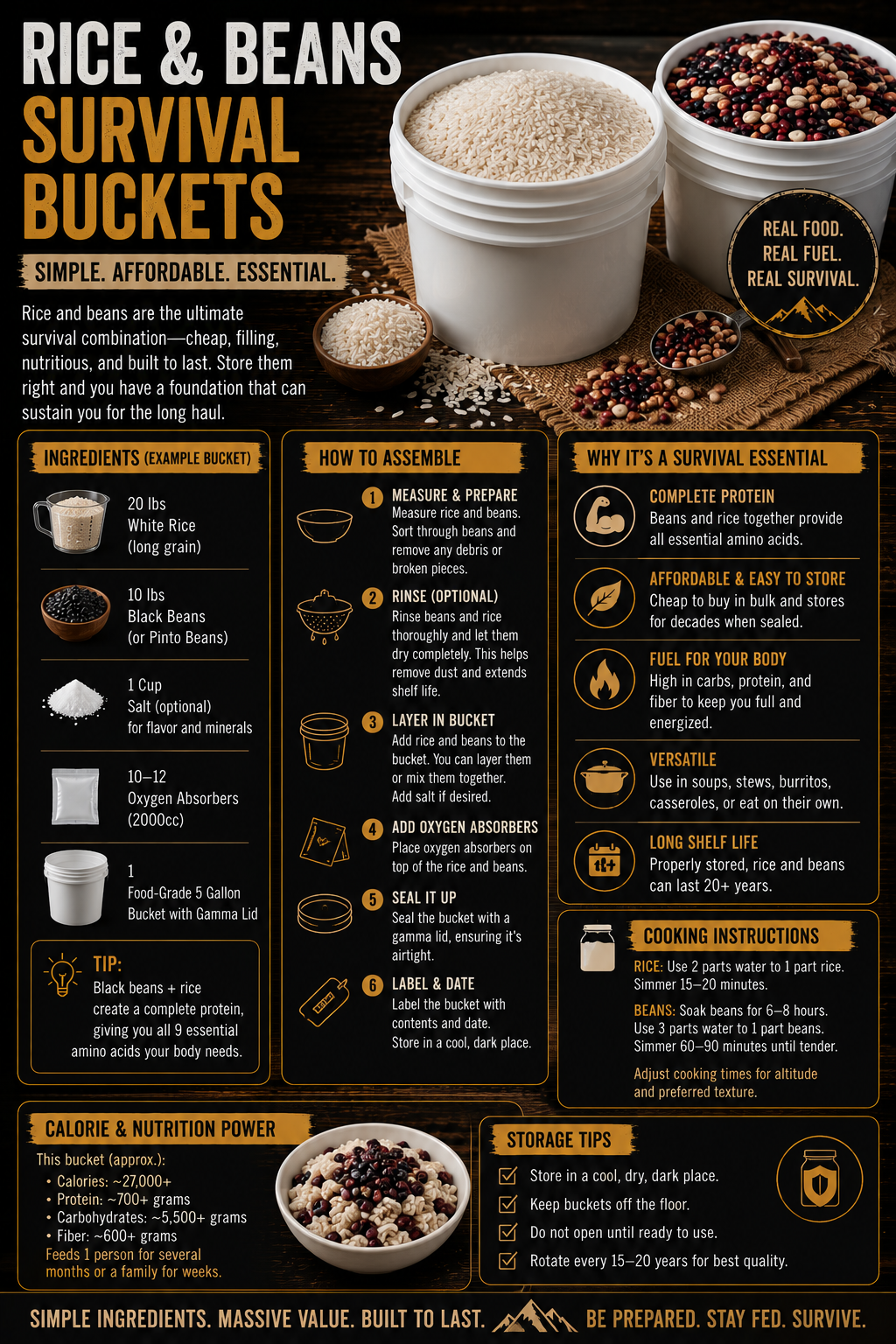
While some survival foods are designed for portability or quick calories, rice and beans remain one of the most practical long-term emergency food combinations ever used. They are inexpensive, widely available, easy to store in bulk, and capable of feeding families during extended emergencies when grocery stores, supply chains, or refrigeration systems fail.
There is a reason rice and beans appear in almost every serious preparedness plan. Together, they create a simple but effective survival food foundation that can scale from short-term blackouts to long-term disruptions.
Rice provides carbohydrates and energy. Beans provide protein, fiber, and nutrients. Combined together, they form a much more balanced survival meal than either food alone.
Why Rice and Beans Work So Well for Preparedness
Most modern grocery shopping depends on constant resupply. Stores are restocked regularly, refrigerated transportation keeps food moving, and many families only keep a few days of food inside the house at any given time.
That system works fine until it suddenly does not.
During major weather events, power outages, economic disruptions, or panic buying, staple foods disappear quickly. Rice and beans remain one of the cheapest and most effective ways to build food security before that happens.
They also store far longer than many people realize when packaged correctly. White rice, dry beans, oxygen absorbers, Mylar bags, and food-grade buckets can create a long-term storage system capable of lasting for years.
Best Types for Long-Term Storage
- White rice
- Pinto beans
- Black beans
- Lentils
- Navy beans
- Jasmine or basmati rice
White rice is generally preferred over brown rice for long-term storage because brown rice contains oils that shorten shelf life. Dry beans also store extremely well, although older beans may require longer cooking times.
Lentils are another strong preparedness option because they cook faster and require less fuel and water than many larger beans.
The Water Problem Most People Forget
One of the biggest weaknesses of rice and beans is that both require water and cooking fuel. Many people stockpile dry foods without realizing how much water preparation actually consumes.
That becomes a major issue during grid-down emergencies or water disruptions.
If you are building food storage around dry staples, you also need a serious water plan. Cooking, cleaning, hydration, and sanitation all compete for the same water supply. That is why food preparedness and water preparedness should always be connected.
For a complete water strategy, read Long-Term Water Storage for Emergencies.
How to Store Rice and Beans Properly
Long shelf life depends almost entirely on storage conditions. Heat, moisture, pests, and oxygen all reduce food quality over time.
For best results, many preparedness-minded families store rice and beans using:
- Mylar bags
- Oxygen absorbers
- Food-grade buckets
- Gamma seal lids
- Cool, dry storage areas

Properly stored white rice can remain usable for decades under ideal conditions, making it one of the most cost-effective emergency calories available.
Why Rice and Beans Are Still One of the Smartest Prepper Foods
Some emergency foods are expensive novelty items designed more for marketing than practicality. Rice and beans are the opposite. They are basic, proven, scalable, and affordable enough for almost anyone to start building a food reserve.
That matters because preparedness is not just about buying gear. It is about reducing dependence on fragile systems before those systems fail.
Rice and beans may not be exciting, but during a real emergency, dependable food matters far more than convenience or branding.
If you are preparing for extended outages, also read How to Cook During a Power Outage because backup cooking methods become critical once normal kitchen appliances stop working.
4. Homemade Beef Jerky: Lightweight Protein for Emergency Preparedness
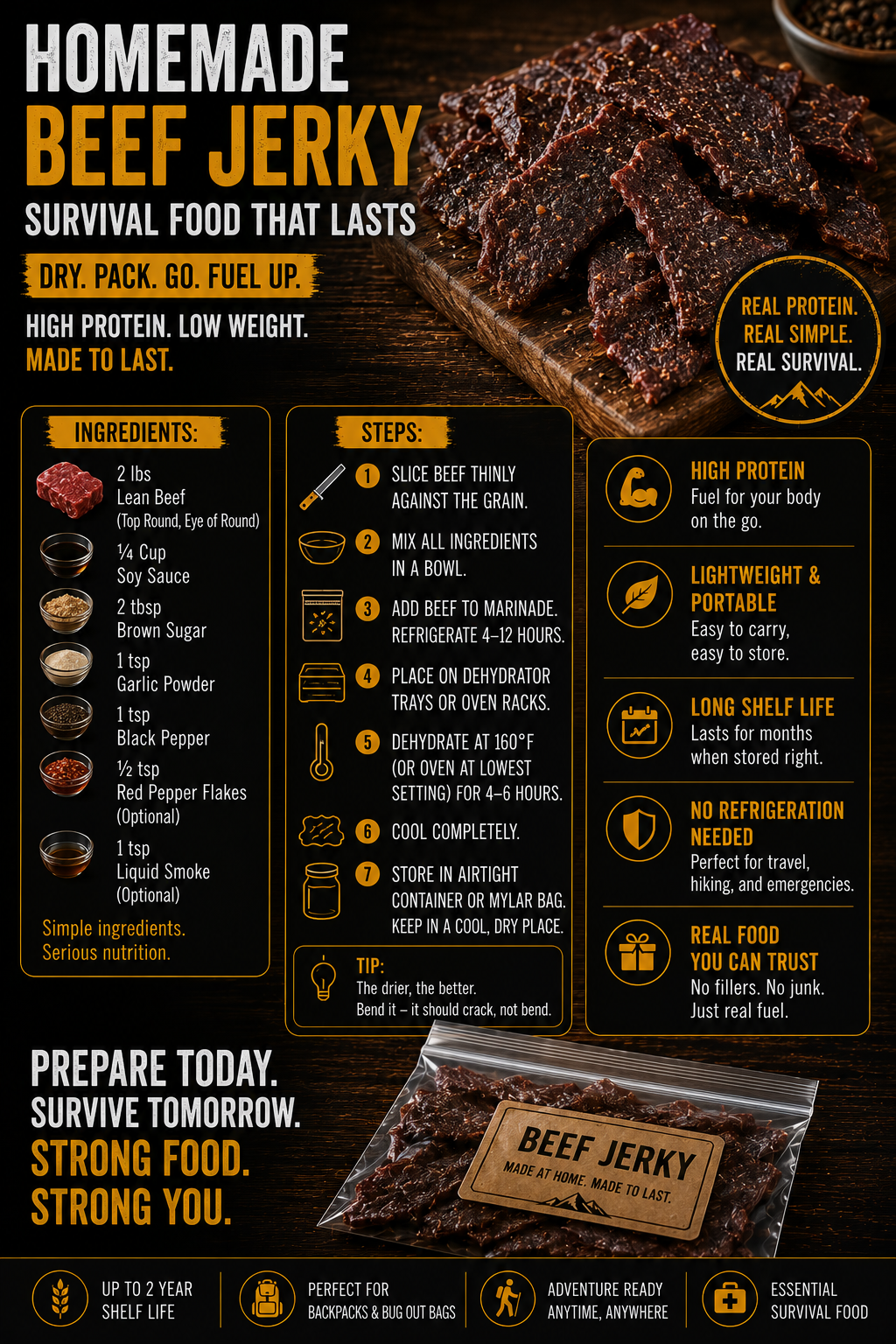
Protein becomes one of the hardest things to store during long-term emergencies. Refrigeration failures, freezer spoilage, and supply shortages can remove fresh meat from the equation very quickly during major blackouts or disaster scenarios.
That is one reason beef jerky has remained a valuable survival food for generations.
When properly prepared and stored, homemade beef jerky provides lightweight, shelf-stable protein that works well for bug-out bags, vehicle kits, hiking packs, and emergency food storage. It is portable, calorie-dense, and requires no refrigeration once fully dried.
Jerky also fills an important preparedness gap that many emergency food stockpiles overlook. A lot of survival food storage focuses heavily on carbohydrates like rice, pasta, oats, and flour. Those foods are useful for energy, but protein helps support strength, recovery, and long-term nutrition during stressful situations.
Basic Homemade Jerky Ingredients
- Lean beef
- Salt
- Seasonings or marinade
- Optional curing ingredients
The most important factor is using lean meat and removing moisture thoroughly during the drying process. Fat spoils faster than properly dried meat, which is why lean cuts are preferred for long-term storage.
Jerky can be made using dehydrators, smokers, ovens, or even low-temperature outdoor drying methods depending on the environment and equipment available.
Why Jerky Works Well in Survival Situations
One of the biggest advantages of jerky is portability. Unlike canned meats or frozen foods, jerky weighs very little and stores easily in compact spaces. That makes it ideal for evacuation kits, hunting gear, and mobile emergency supplies.
Jerky also requires no cooking, no water preparation, and no refrigeration after drying. During emergencies where fuel and water are limited, ready-to-eat foods become significantly more valuable.
This is especially important during the first 72 hours of a major disaster when utilities, communication systems, and transportation networks may already be unstable. If you have not read it yet, see First 72 Hours After a Disaster for a breakdown of how quickly systems begin failing during major emergencies.
The Biggest Mistakes People Make With Jerky
The biggest mistake is not drying the meat completely enough before storage. Any remaining moisture can allow bacteria or mold growth over time.
Another common problem is storing jerky improperly after it is made. Oxygen, humidity, and heat all reduce shelf life. Vacuum sealing or airtight storage helps preserve freshness much longer.
Homemade jerky generally does not last as long as commercially packaged jerky unless it is carefully stored, but it avoids many preservatives and allows complete control over ingredients and flavor.
Best Storage Methods for Jerky
- Vacuum-sealed bags
- Mylar bags with oxygen absorbers
- Mason jars
- Airtight containers
- Cool, dry storage locations

For bug-out bags and mobile kits, smaller vacuum-sealed portions usually work best because they reduce moisture exposure once opened.
Jerky as Part of a Larger Survival Food System
Jerky works best when combined with other preparedness foods instead of acting as a complete emergency diet by itself. Pairing protein-rich foods with carbohydrates and fats creates a more sustainable food system during long-term emergencies.
For example, jerky pairs well with:
- Hardtack
- Rice and beans
- Oatmeal packs
- Soup mixes
- Pemmican
The goal is not just storing food. The goal is building layered food security that remains practical even when refrigeration, stores, fuel, or supply chains fail.
Homemade beef jerky remains one of the simplest ways to add lightweight protein to that system without depending entirely on canned or frozen foods.
5. Homemade Dehydrated Meals: Lightweight Food Storage That Saves Space
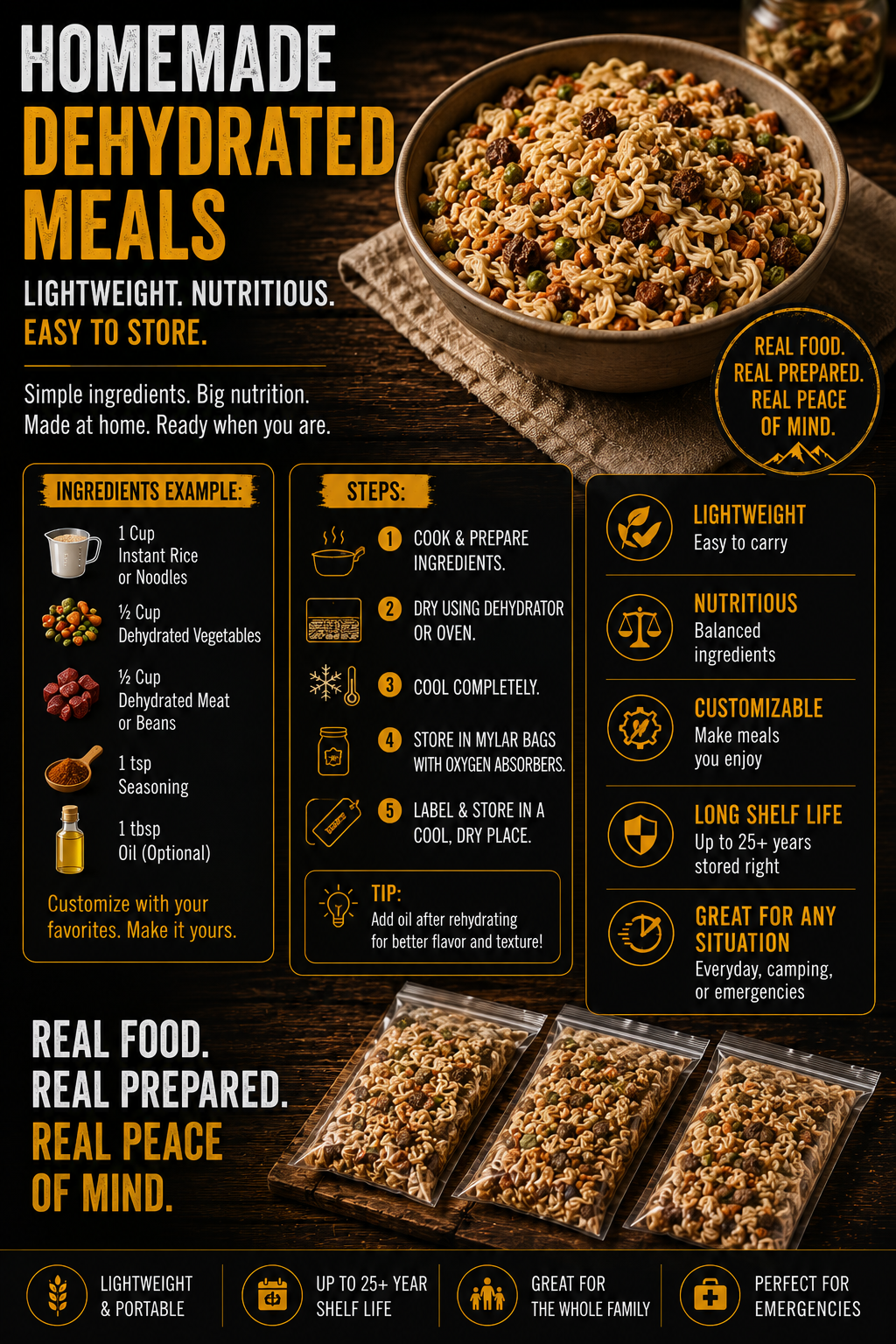
One of the biggest problems with emergency food storage is balancing shelf life, portability, nutrition, and storage space. Canned food works well for short-term emergencies, but it becomes heavy and bulky very quickly when trying to store larger quantities.
That is where dehydrated meals become extremely valuable.
By removing moisture from food, dehydration dramatically slows spoilage while reducing weight and storage space at the same time. Properly dehydrated foods can remain usable for long periods when stored correctly, making them one of the most practical ways to build a scalable emergency food system.
Homemade dehydrated meals also allow far more flexibility than many commercial survival foods. Instead of relying entirely on prepackaged emergency buckets, you can create meals your family already recognizes and enjoys eating.
Common Foods Used in Dehydrated Meals
- Rice
- Pasta
- Beans
- Vegetables
- Cooked meat
- Soup mixes
- Fruit
Many preparedness-minded families build complete dehydrated meal kits using combinations of carbohydrates, protein, vegetables, and seasonings packed together in individual meal portions.
The result is a lightweight emergency food supply that stores far more efficiently than traditional canned meals.
Why Dehydrated Meals Work So Well for Preparedness
Dehydrated meals solve several preparedness problems at once.
First, they reduce storage space. A large amount of food can fit into relatively compact containers once moisture is removed.
Second, they improve portability. Lightweight food matters during evacuations, bug-outs, camping trips, or vehicle storage.
Third, dehydration helps preserve food without depending entirely on refrigeration or freezers. During long-term blackouts, frozen food spoilage becomes a major issue very quickly.
If you are preparing specifically for long outages, also read How Long Food Lasts Without Power because many families underestimate how fast refrigerated food becomes unsafe.
The Biggest Mistake People Make With Dehydrated Foods
The most common mistake is storing dehydrated foods before they are fully dry. Even small amounts of remaining moisture can reduce shelf life dramatically and increase the risk of mold or spoilage.
Another mistake is failing to package foods properly after dehydration. Oxygen, humidity, heat, and light all damage long-term food storage over time.
For best results, dehydrated foods should be stored in airtight containers with moisture protection.
Best Storage Methods for Dehydrated Meals
- Mylar bags
- Oxygen absorbers
- Vacuum sealing
- Mason jars
- Food-grade buckets

Vacuum sealing individual meal portions also makes rotation easier because you only open what you need instead of exposing large food containers repeatedly.
Why Homemade Dehydrated Meals Are Better Than Many People Realize
A lot of people assume emergency food means expensive freeze-dried kits that sit untouched for years. While commercial emergency food absolutely has its place, homemade dehydrated meals give you far more control over ingredients, portion sizes, and meal planning.
That becomes especially important for families with dietary restrictions, picky eaters, or limited budgets.
Dehydrated meals also fit naturally into broader preparedness systems. They work well for:
- Bug-out bags
- Camping food
- Vehicle emergency kits
- Power outage meal planning
- Long-term emergency storage
Combined with reliable water storage and backup cooking methods, dehydrated meals become one of the most flexible emergency food systems available for modern preparedness.
If you are building a complete emergency framework, also read Emergency Preparedness Plan 2026 because food storage works best when connected to water, cooking, lighting, power, and communication planning.
6. Survival Oatmeal Packs: Cheap, Filling, and Easy Emergency Calories
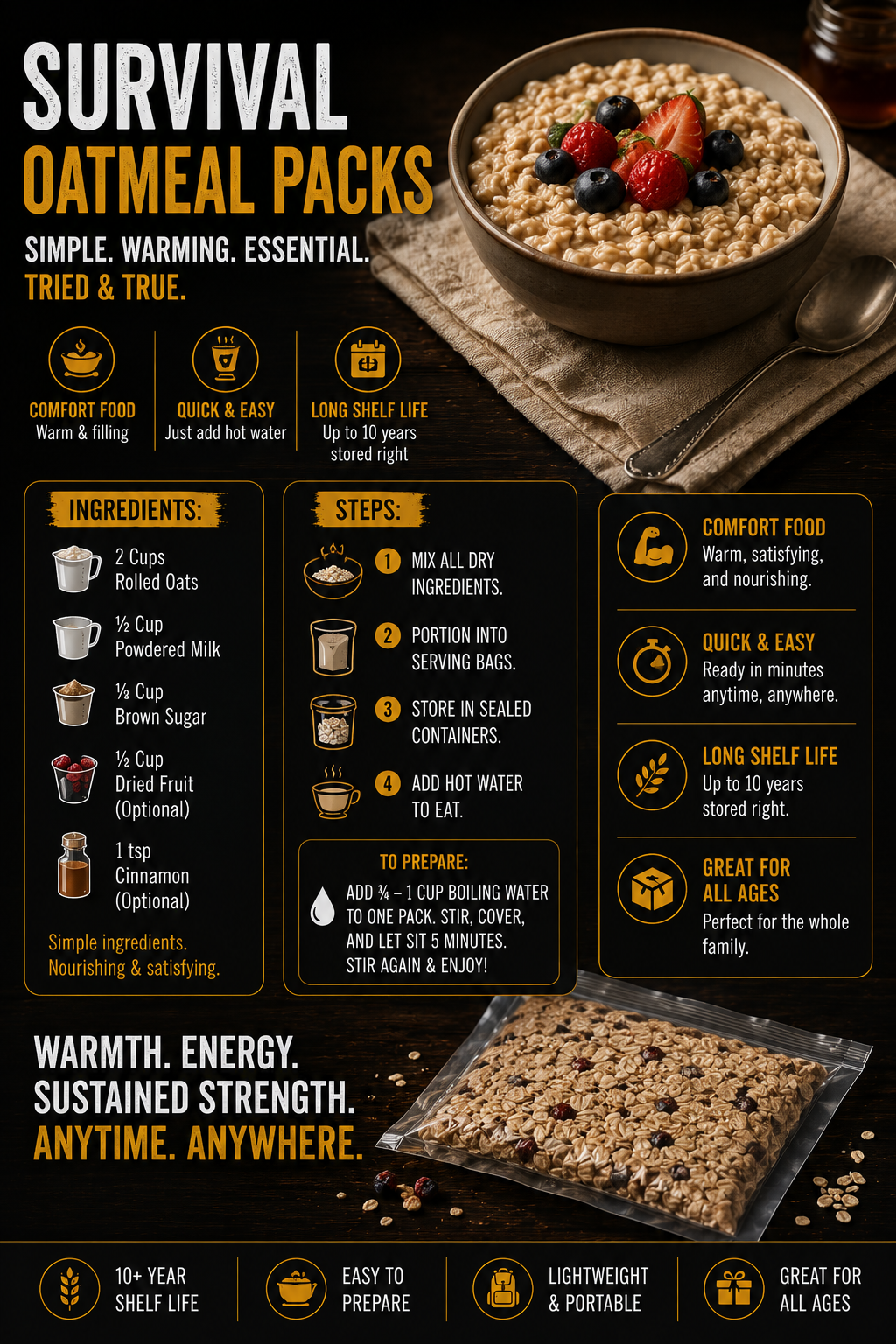
Not every survival food needs to be complicated, expensive, or designed for extreme wilderness conditions. Sometimes the most practical emergency foods are the ones that are cheap, familiar, easy to store, and capable of feeding an entire family with minimal preparation.
That is exactly why oatmeal deserves a place in long-term preparedness planning.
Oatmeal is one of the simplest ways to store dependable emergency calories without spending a fortune. It stores well, cooks quickly, requires relatively little fuel compared to many dry foods, and can be customized with additional ingredients for better nutrition and flavor.
For many families, survival oatmeal packs also provide something that is often overlooked during emergencies: comfort and routine.
Warm meals help reduce stress during difficult situations, especially during cold weather outages, storms, or long-term disruptions where morale starts becoming a serious factor.
Common Ingredients in Survival Oatmeal Packs
- Rolled oats or quick oats
- Powdered milk
- Dried fruit
- Cinnamon
- Honey powder or sugar
- Nuts or seeds
Individual oatmeal portions can be prepacked into jars, vacuum-sealed bags, or Mylar pouches for quick preparation later. Some preparedness-minded families create large batches ahead of time for emergency breakfasts, camping meals, or bug-out food kits.
Why Oatmeal Works Well for Preparedness
One of oatmeal’s biggest advantages is efficiency.
It stores compactly, cooks relatively fast, and provides steady energy from carbohydrates and fiber. Compared to larger dry foods like beans, oatmeal usually requires less water, less fuel, and shorter cooking times.
That matters more than many people realize during emergencies.
Fuel supplies may become limited during long blackouts or severe winter storms. Cooking methods may also change significantly if electric stoves, microwaves, or kitchen appliances stop functioning.
If you are preparing for those situations, also read How to Cook During a Power Outage because emergency cooking capability becomes critical once modern conveniences disappear.
The Biggest Mistake People Make With Oatmeal Storage
The biggest mistake is assuming oatmeal can simply be left inside its original cardboard container indefinitely. Moisture, oxygen, pests, and humidity all reduce shelf life over time.
For longer-term storage, oatmeal should be repackaged into airtight containers or Mylar bags with oxygen absorbers.
Another mistake is storing only plain oats without considering nutrition variety. While oatmeal provides useful carbohydrates and fiber, pairing it with fats, protein, dried fruit, or powdered milk creates more balanced emergency meals.
Best Storage Methods for Oatmeal Packs
- Mylar bags
- Mason jars
- Vacuum-sealed portions
- Food-grade buckets
- Oxygen absorbers
Smaller individual portions also make meal rotation easier because you only expose a small amount of food at a time.
Why Oatmeal Is One of the Most Underrated Survival Foods
Many emergency food discussions focus entirely on expensive survival products while ignoring practical staples that families will actually eat regularly.
Oatmeal succeeds because it is realistic.
It works for:
- Emergency breakfasts
- Cold-weather blackouts
- Family food storage
- Budget preparedness
- Camping and bug-out meals
It is also easy to rotate into everyday use, which helps prevent waste and keeps preparedness costs manageable over time.
During a real emergency, dependable foods that are easy to prepare and familiar to your family become far more valuable than novelty survival meals nobody actually wants to eat.
If you are building a larger emergency food system, also read What Runs Out First in a Blackout because basic grocery staples disappear much faster than most people expect once panic buying begins.
7. Homemade Granola: Lightweight Emergency Food With Long Shelf Potential
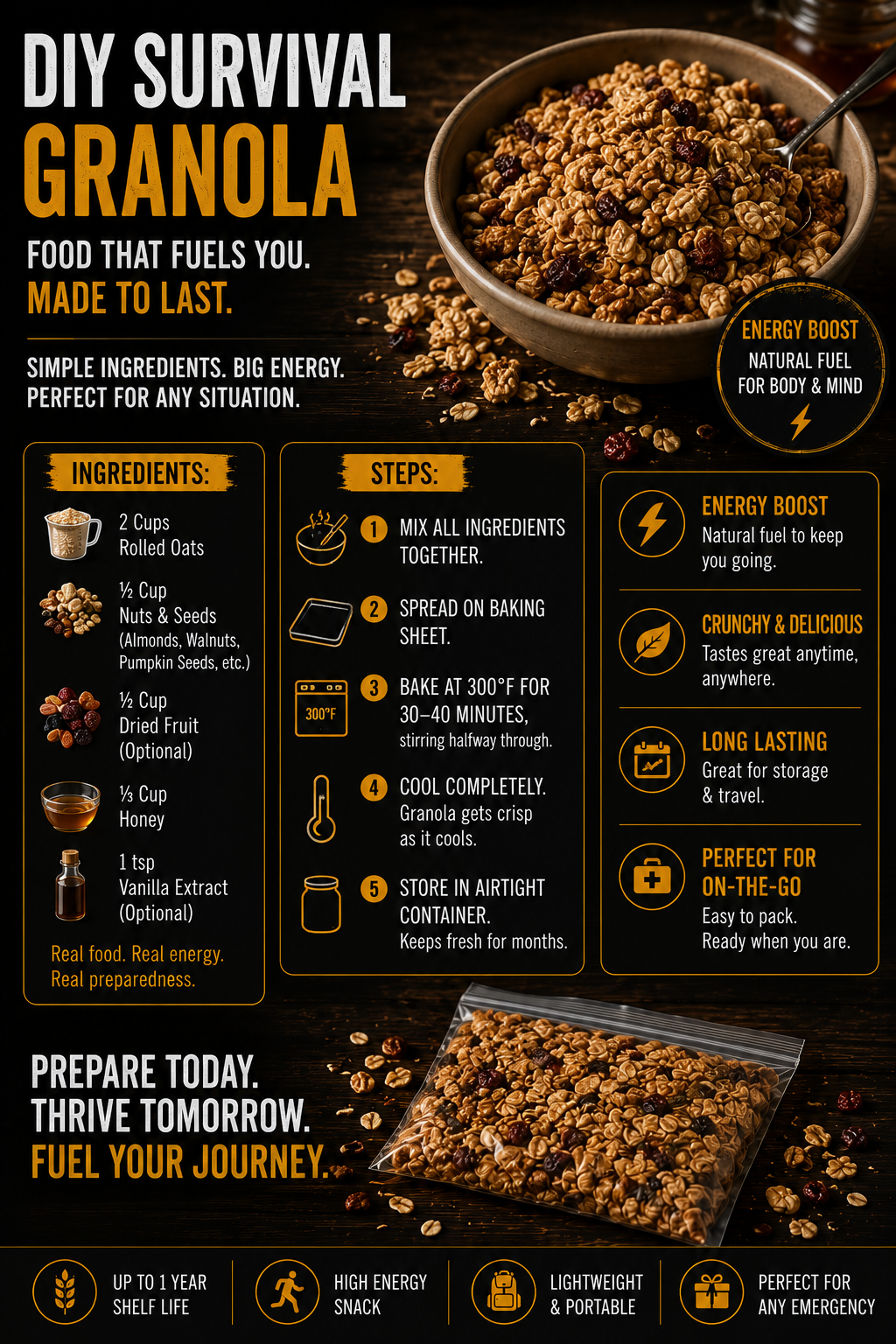
Granola is often viewed as camping food or a healthy snack, but it can also serve an important role in emergency preparedness when made and stored correctly. Homemade granola is lightweight, calorie-dense, portable, and easy to eat without cooking, making it useful for bug-out bags, vehicle kits, evacuation supplies, and short-term emergency food storage.
Unlike many processed snack foods, homemade granola also allows complete control over ingredients, sugar levels, fats, and calories.
That flexibility matters because preparedness is not just about storing food. It is about storing practical food your family will actually eat under stress.
Common Homemade Granola Ingredients
- Rolled oats
- Honey or syrup
- Nuts
- Seeds
- Dried fruit
- Cinnamon
- Peanut butter or coconut oil
The ingredients are mixed together and baked until dry and crisp, which helps reduce moisture and improve shelf stability.
Granola can then be stored in airtight containers, jars, vacuum-sealed bags, or Mylar pouches depending on how long you intend to keep it.
Why Granola Works for Preparedness
One of granola’s biggest advantages is convenience.
It requires no cooking, no refrigeration, and very little preparation. During fast-moving emergencies, evacuations, or short-term outages, ready-to-eat foods become extremely valuable because they save both water and fuel.
Granola also provides a useful combination of carbohydrates, fats, and quick calories. While it should not be your only survival food, it works well alongside larger staple foods like rice, beans, oatmeal, and dehydrated meals.
For mobile preparedness kits, lightweight foods matter even more. If you are building evacuation supplies, also read Ultimate 72-Hour Bug Out Bag Guide because food weight adds up quickly during travel.
The Biggest Problem With Granola Storage
The main weakness of granola is oil content.
Ingredients like nuts, seeds, peanut butter, and oils improve calories and flavor, but they can also reduce shelf life over time if stored improperly. Heat and oxygen speed up spoilage significantly.
That means granola generally works best as a medium-term preparedness food instead of a decades-long storage solution like white rice or properly stored hardtack.
Rotation becomes important. Homemade granola should be eaten and replaced periodically to maintain freshness and quality.
Best Storage Methods for Homemade Granola
- Mason jars
- Vacuum-sealed bags
- Mylar bags
- Airtight containers
- Cool, dry pantry storage
Smaller portions also work well because they prevent repeatedly exposing the entire batch to air and humidity.
Why Granola Belongs in a Preparedness Plan
Preparedness food should not only focus on surviving the absolute worst-case scenario. It should also support realistic short-term disruptions like storms, temporary blackouts, evacuations, and travel emergencies.
That is where foods like granola become extremely practical.
Granola works well for:
- Quick emergency calories
- Travel food
- Bug-out bags
- Camping supplies
- Short-term blackout food
It also provides variety inside larger food storage systems, which becomes more important the longer an emergency lasts. Eating the same bland foods repeatedly lowers morale quickly during stressful situations.
If you are building a complete emergency preparedness system, also read Emergency Preparedness Guide because food storage works best when combined with backup water, cooking, power, lighting, and communication planning.
8. Ghee: The Long-Lasting Survival Fat Most People Forget to Store
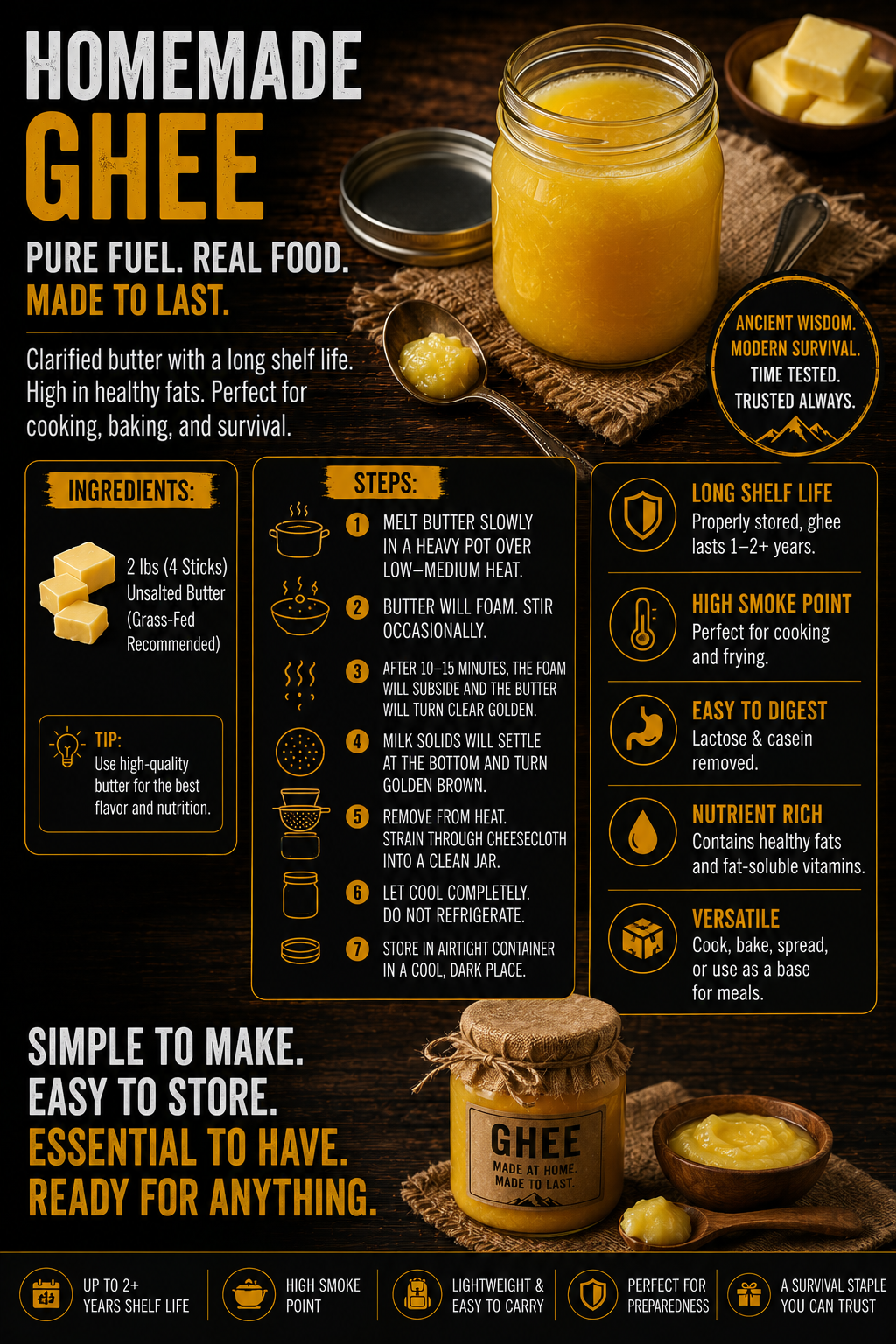
One of the biggest weaknesses in many emergency food stockpiles is the complete lack of stable fats. People often focus heavily on storing carbohydrates like rice, pasta, flour, oats, and beans while forgetting that fats are one of the body’s most important long-term energy sources.
That is where ghee becomes extremely valuable.
Ghee is a form of clarified butter created by slowly removing water and milk solids from butter, leaving behind a shelf-stable cooking fat with a much longer lifespan than ordinary butter. Properly stored ghee can last for extended periods without refrigeration, making it one of the most practical survival fats available.
Historically, cultures used clarified butter for long-term cooking storage long before refrigeration existed. Modern preparedness simply applies the same logic to emergency food planning.
Basic Ghee Ingredients
- Butter
That simplicity is part of the appeal.
The butter is heated slowly until water evaporates and milk solids separate from the fat. Once strained, the remaining golden liquid cools into shelf-stable ghee.
Removing moisture is what dramatically improves storage life compared to ordinary butter.
Why Fat Matters in Emergency Preparedness
Calories become critically important during stressful or physically demanding emergencies. Cold weather, hauling supplies, poor sleep, and increased physical activity all raise energy demands.
Fats contain far more calories per gram than carbohydrates or protein, making them extremely valuable during long-term disruptions.
That is one reason historical survival foods like pemmican relied heavily on rendered fat.
Without adequate fats, emergency food systems often become unbalanced and less sustainable over time.
Ghee also improves cooking flexibility during outages because it can be used for:
- Cooking rice and beans
- Frying foods
- Adding calories to meals
- Improving flavor
- Emergency baking
Why Ghee Works Better Than Many Other Cooking Fats
Many common oils eventually go rancid because of oxidation, heat, or light exposure. Ghee is more stable because the water and milk solids that spoil quickly have already been removed.
It also has a relatively high smoke point, which makes it useful for cooking over camp stoves, propane burners, grills, and emergency heat sources.
If you are preparing for cooking during outages, also read How to Cook During a Power Outage because fuel planning and cooking methods become major issues during extended blackouts.
The Biggest Mistake People Make With Ghee Storage
The biggest mistake is exposing ghee to moisture or contamination after it has been prepared. Water shortens shelf life significantly.
Always use clean utensils and keep containers tightly sealed after opening.
Heat and sunlight also reduce long-term quality, so cooler storage locations generally work best.
Best Storage Methods for Ghee
- Glass jars
- Airtight containers
- Cool pantry storage
- Dark storage areas
Some preparedness-minded families rotate smaller jars into everyday cooking use while keeping additional backup jars stored separately for emergencies.
Why Ghee Is One of the Most Overlooked Survival Foods
Many emergency food discussions focus entirely on “how much food” people should store instead of asking whether those foods provide balanced calories and sustainable nutrition.
Ghee helps solve one of the biggest gaps in preparedness planning: long-lasting cooking fat.
It works especially well alongside staple foods like:
- Rice
- Beans
- Oatmeal
- Hardtack
- Dehydrated meals
In real emergencies, flavor and calorie density matter far more than most people realize. Simple foods become easier to eat consistently when they contain fats and flavor instead of just dry carbohydrates.
Ghee may not receive as much attention as commercial emergency foods, but from a practical preparedness standpoint, it remains one of the smartest additions to a long-term food system.
9. Honey: The Survival Food That Practically Never Spoils
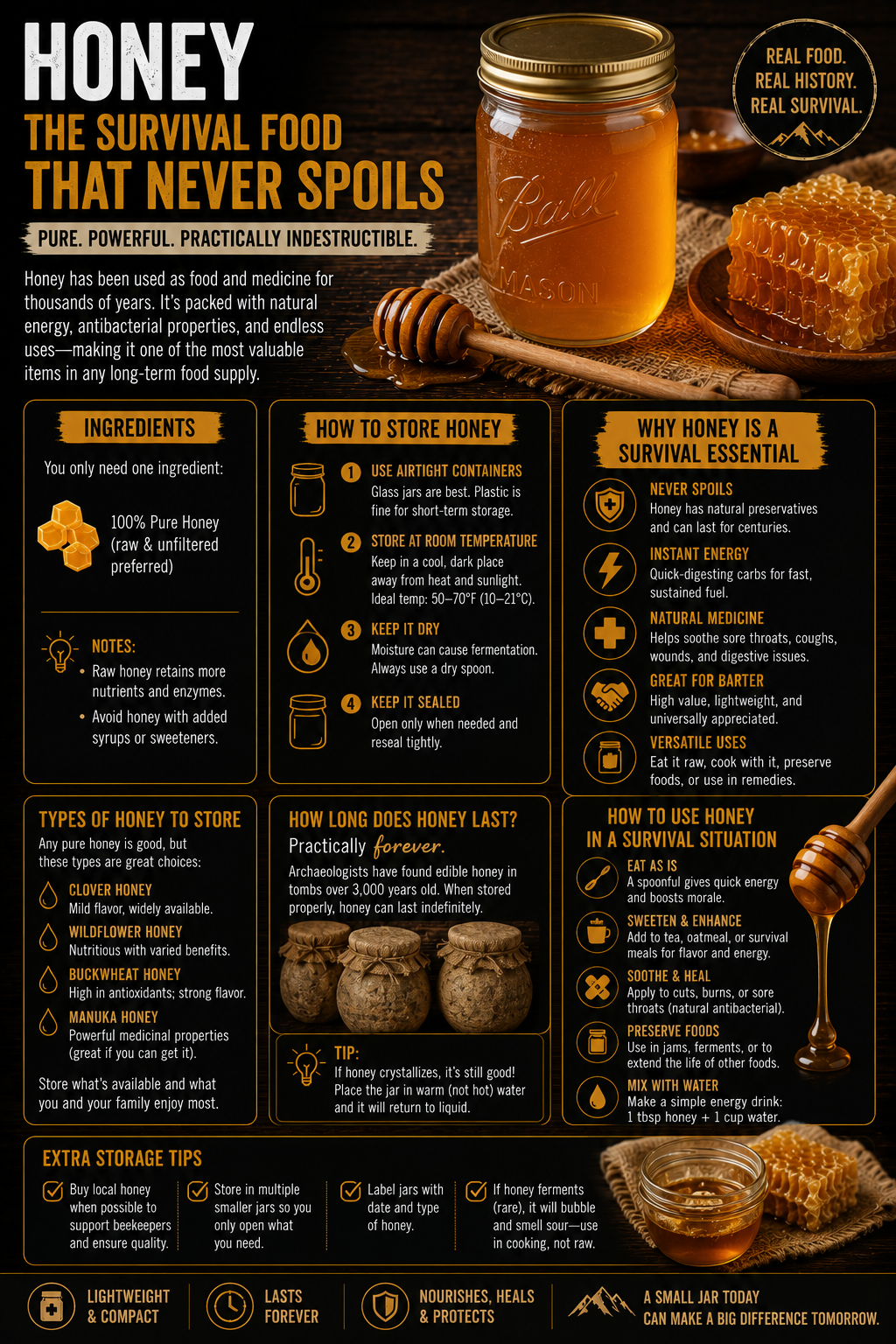
Very few foods have the reputation for longevity that honey does.
Honey has one of the strongest shelf-life reputations of any natural food.
When properly stored, pure honey can last for an incredibly long time without refrigeration, making it one of the most dependable natural sweeteners and emergency calorie sources available.
But honey’s survival value goes far beyond sweetness.
Honey provides quick energy, flavor variety, barter potential, and multiple practical uses during emergencies. In a long-term blackout or supply disruption, foods that improve morale and meal quality become more important than many people expect.
Why Honey Lasts So Long
Honey naturally contains very low moisture levels and high sugar concentration, creating an environment where bacteria struggle to survive. That natural stability is one reason honey stores far longer than most processed sweeteners or syrups.
Over time, honey may crystallize or thicken, but crystallization does not mean it has spoiled. In most cases, gently warming the container restores a smoother consistency.
That long shelf life makes honey extremely valuable for emergency food storage because it requires very little maintenance once stored correctly.
Why Honey Matters in Emergency Preparedness
Preparedness is not only about calories and survival mechanics. Long emergencies also create stress, exhaustion, and decision fatigue.
Foods that improve morale and make basic meals easier to eat become surprisingly important during difficult conditions.
Honey helps with that because it can be used in:
- Oatmeal
- Tea or coffee
- Baking
- Granola
- Trail foods
- Emergency snacks
It also provides fast carbohydrates, which can help during physically demanding situations or low-energy periods.
During prolonged emergencies, quick calories often matter more than perfect nutrition.
The Biggest Mistake People Make With Honey Storage
The biggest mistake is accidentally introducing moisture into the container. Water contamination increases the chance of fermentation and spoilage over time.
Always use clean utensils and keep lids tightly sealed after opening.
Another mistake is assuming flavored or processed honey products store as well as pure raw honey. Many commercial blends contain additional ingredients that reduce shelf life.
Best Storage Methods for Honey
- Glass jars
- Food-grade plastic containers
- Cool pantry storage
- Dark storage locations
Honey generally stores best when protected from excessive heat and direct sunlight.
Honey as a Barter Item During Emergencies
One aspect of preparedness many people overlook is barter value.
During long-term disruptions, useful comfort items and calorie-dense foods often become highly desirable. Honey stores well, tastes familiar, and serves multiple purposes, which makes it more valuable than many novelty survival products.
Historically, sugar, salt, coffee, and preserved foods all became important trade items during shortages. Honey fits naturally into that category because of its stability and usefulness.
Why Honey Belongs in a Long-Term Food Plan
Honey works especially well as part of a layered preparedness system rather than a standalone food source.
It pairs naturally with:
- Oatmeal packs
- Homemade granola
- Bannock bread
- Tea and drink mixes
- Emergency baking supplies
It also rotates easily into normal everyday use, which helps reduce waste and keeps preparedness food systems practical over time.
If you are building long-term emergency supplies, also read What Runs Out First in a Blackout because comfort foods, sweeteners, and simple pantry staples often disappear much faster than people expect during panic buying events.
Honey may be one of the oldest foods in human history, but from a preparedness perspective, it remains one of the smartest long-lasting foods you can store today.
10. Bannock Bread: The Simple Survival Bread That Works Almost Anywhere
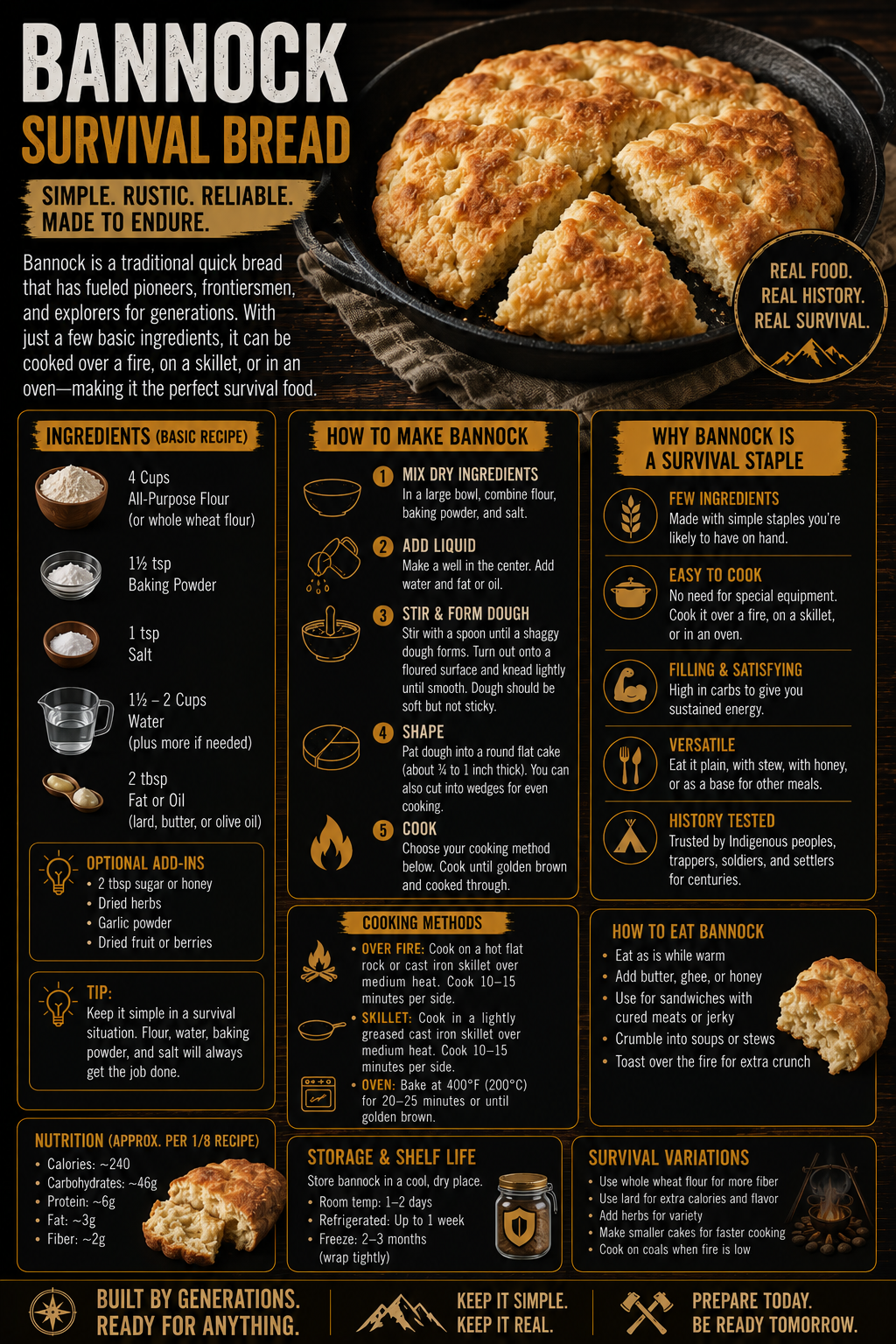
When people think about survival bread, they often picture complicated recipes, ovens, or large amounts of ingredients. Bannock is the opposite.
Bannock is one of the simplest and most adaptable survival breads ever used. For generations, explorers, pioneers, hunters, campers, and indigenous communities relied on bannock because it could be made with minimal ingredients and cooked almost anywhere.
That practicality is exactly why it still deserves a place in modern preparedness planning.
Unlike many baked foods, bannock does not require advanced equipment or perfect cooking conditions. It can be baked in a pan, cooked over a fire, prepared on a griddle, or even wrapped around sticks near open flames during emergencies or outdoor situations.
Basic Bannock Ingredients
- Flour
- Baking powder
- Salt
- Water
- Optional fat or oil
That simplicity makes bannock extremely useful during emergencies because the ingredients are easy to store in bulk.
Some versions include powdered milk, sugar, herbs, or additional fats, but traditional survival bannock stays intentionally basic.
Why Bannock Works for Preparedness
Bannock solves an important preparedness problem: flexibility.
Many emergency foods are designed only for storage, but bannock bridges the gap between food storage and actual cooking capability. It allows stored dry ingredients to become warm, filling meals using very limited equipment.
That matters during blackouts or off-grid situations where families may be cooking outdoors or using backup heat sources.
If you are planning for those scenarios, also read How to Cook During a Power Outage because emergency cooking methods become critical once electric stoves and appliances stop working.
The Biggest Strength of Bannock
The biggest advantage of bannock is adaptability.
It can be:
- Cooked indoors or outdoors
- Made with simple pantry ingredients
- Paired with soups or stews
- Used for quick emergency meals
- Prepared over campfires or propane stoves
Unlike hardtack, bannock is designed to be eaten relatively fresh. That makes it far more enjoyable during stressful situations where morale and comfort start becoming serious concerns.
Warm bread during a cold-weather blackout can have a surprisingly positive psychological effect during difficult conditions.
The Biggest Mistake People Make With Bannock
The biggest mistake is assuming bannock itself is a long-term storage food.
The ingredients store well. The finished bread generally does not.
Bannock should be viewed as a preparedness cooking solution rather than a decades-long storage food like properly stored rice, beans, or hardtack.
The real survival value comes from storing the ingredients needed to make it quickly during emergencies.
Best Ingredients to Store for Bannock Preparation
- Flour
- Baking powder
- Salt
- Powdered milk
- Shelf-stable fats
These ingredients also overlap with many other preparedness foods, which helps simplify long-term storage planning.
Why Bannock Still Makes Sense Today
Modern preparedness often becomes overly focused on expensive gear and freeze-dried meals while ignoring practical skills that work under difficult conditions.
Bannock remains valuable because it is simple, flexible, and realistic.
It works especially well for:
- Blackout cooking
- Camping
- Off-grid cooking
- Emergency meal stretching
- Cold-weather preparedness
It also pairs naturally with many other survival foods covered in this guide, including honey, jerky, soups, beans, and dehydrated meals.
Preparedness is not just about storing calories. It is about building practical systems that still function when modern conveniences stop working. Bannock fits perfectly into that philosophy because it turns simple shelf-stable ingredients into usable meals almost anywhere.
11. Parched Corn: The Forgotten Survival Food That Fueled Early America
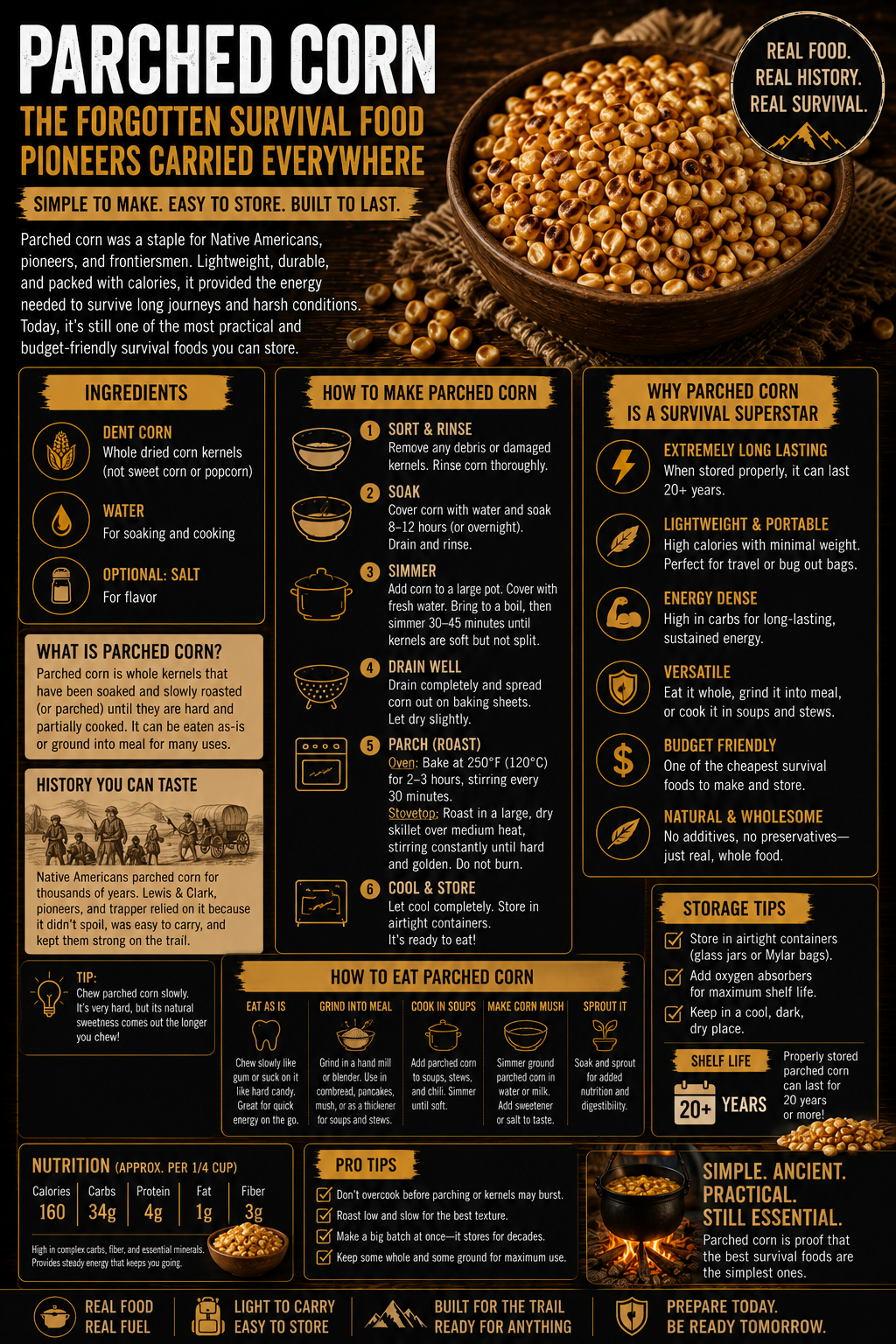
Long before modern energy bars, freeze-dried meals, or packaged survival snacks existed, travelers and frontier settlers relied on simple foods that could survive harsh conditions while remaining lightweight and portable. One of the most overlooked examples is parched corn.
Parched corn was widely used by indigenous tribes, explorers, traders, and early American frontiersmen because it stored well, carried easily, and provided quick calories during long travel or difficult conditions.
Despite its history, very few modern preparedness discussions mention it anymore.
That is a mistake because parched corn still solves several practical survival problems today.
What Is Parched Corn?
Parched corn is dried corn that has been roasted or heated until hard, dry, and lightly toasted. The process removes moisture while improving portability and shelf stability.
Some traditional methods involved grinding the corn afterward into meal or coarse powder that could be eaten dry, mixed with water, or added to soups and stews.
The result was a lightweight survival food that could travel long distances without refrigeration or complicated storage methods.
Why Parched Corn Worked So Well Historically
Early travelers needed food that was:
- Lightweight
- Durable
- Portable
- Easy to carry
- Capable of surviving rough travel
Parched corn checked all of those boxes.
Compared to hauling fresh food or bulky grain supplies, roasted dry corn provided a practical source of carbohydrates that could withstand heat, movement, and long journeys.
That same survival logic still applies to modern preparedness today.
Why Parched Corn Still Makes Sense for Preparedness
Modern emergency planning often focuses heavily on expensive commercial products while ignoring historical survival foods that already proved themselves under difficult conditions.
Parched corn remains useful because it is:
- Compact
- Lightweight
- Shelf-stable
- Simple to make
- Easy to transport
It works especially well for bug-out bags, hiking kits, hunting packs, and backup travel food where weight matters.
If you are building evacuation supplies, also read Ultimate 72-Hour Bug Out Bag Guide because food weight and portability become major issues during rapid evacuations.
The Biggest Weakness of Parched Corn
Parched corn is primarily a carbohydrate food. Like hardtack, it works best when paired with protein and fats instead of acting as a complete emergency diet by itself.
Historically, travelers often combined it with dried meat, fat, soup, or stews to create more balanced meals.
That same approach still makes sense today.
Parched corn pairs naturally with:
- Jerky
- Pemmican
- Beans
- Soup mixes
- Dehydrated meals
How to Store Parched Corn
Like most dry survival foods, moisture control is critical.
Parched corn stores best in:
- Mylar bags
- Mason jars
- Airtight containers
- Vacuum-sealed bags
- Cool, dry storage locations
Proper storage helps preserve texture, flavor, and shelf stability over time.
Why Forgotten Survival Foods Still Matter
One of the biggest lessons from historical preparedness is that survival often depended more on practicality than complexity.
Many historical survival foods lasted for generations because they solved real problems using simple methods and shelf-stable ingredients.
Parched corn fits perfectly into that category.
It may not receive the attention of modern survival products, but it remains an effective example of lightweight emergency calories that still make sense for preparedness planning today.
If you are building a larger food storage system, also read Emergency Preparedness Guide because food storage works best when connected to water, cooking, sanitation, and communication planning.
Sometimes the most valuable survival foods are the ones history already tested long before modern conveniences existed.
Final Thoughts: Food Security Matters More Than Most People Realize
Most people do not think seriously about food storage until shelves are already empty.
That pattern repeats during hurricanes, winter storms, blackouts, supply chain disruptions, and panic buying events. Grocery systems that normally feel stable can begin breaking down surprisingly fast once transportation, refrigeration, fuel, or communication systems start failing.
The families who handle those situations best are usually not the ones scrambling at the last second. They are the ones who prepared before the emergency started.
That preparation does not always require expensive freeze-dried meal kits or massive underground storage rooms. In many cases, practical preparedness starts with understanding simple, shelf-stable foods that store well, provide dependable calories, and continue working when modern conveniences disappear.
Foods like hardtack, pemmican, rice, beans, jerky, oatmeal, honey, bannock, and dehydrated meals all solve different survival problems. Some provide portability. Some provide long-term calories. Others improve morale, flexibility, or cooking capability during difficult conditions.
Together, they create something far more important than a pile of emergency food.
They create food security.
That security matters because emergencies rarely happen at convenient times. Power outages can last longer than expected. Roads become blocked. Stores run out of supplies. Refrigerated food spoils. Fuel shortages limit travel. Communication systems overload.
And once panic buying starts, it becomes extremely difficult to prepare effectively.
Preparedness is ultimately about reducing dependence on fragile systems before those systems fail.
Food storage is one of the simplest and most practical ways to start doing that.
The goal is not fear.
The goal is stability.
Even a basic emergency food supply can reduce stress dramatically during difficult situations because it gives families more time, more flexibility, and more options when conditions become unpredictable.
That is why long-lasting survival foods still matter today.
Not because society collapses tomorrow.
But because modern systems are more fragile than most people realize.
If you are continuing to build your emergency preparedness system, also read:
- Emergency Preparedness Plan 2026
- How to Cook During a Power Outage
- What Runs Out First in a Blackout
- Long-Term Water Storage for Emergencies
- Ultimate 72-Hour Bug Out Bag Guide
Because food is only one part of preparedness.
Water, cooking, lighting, communication, sanitation, and backup power all work together as part of a complete survival system.
The more of those systems you strengthen before an emergency happens, the less dependent you become when normal life stops working the way people expect.