
How to Communicate When the Grid Goes Down (Complete Off-Grid System Guide)
Knowing how to communicate when the grid goes down is something most people don’t think about—until it’s too late.
This post contains affiliate links. I may earn a small commission at no extra cost to you. Learn more.
As long as they have a phone in their pocket, they feel connected, informed, and in control.
That assumption is one of the biggest mistakes you can make.
When a real emergency hits—a blackout, severe storm, infrastructure failure, or evacuation—communication is one of the first systems to break down.
Communication systems don’t fail because radios stop working—they fail because power runs out. To keep your devices running when the grid goes down, you need a reliable energy system. See how to build one in our complete grid-down power guide.
Cell towers overload within minutes. Networks slow or stop completely. Internet access disappears. Power outages take down the systems everything depends on.
And suddenly, that smartphone becomes useless.
Most people don’t realize how fast communication fails until it’s already happening—👉 see what actually breaks down in the first 72 hours of a disaster.
If you can’t reach your family, coordinate with others, or receive critical updates, you’re operating blind—reacting instead of planning.
Off-grid communication means being able to send and receive information without relying on:
- Cell towers
- Internet connections
- Centralized infrastructure
It’s built on independent systems that continue working when everything else fails.
This includes radios, decentralized networks, and simple signaling methods that don’t require electricity at all.
The key is building a layered system—not relying on a single device.
Short-range radios work for close communication. Long-range systems like HAM radio extend your reach. Mesh networks offer flexible, decentralized messaging—but depend on nearby users.
Each method fills a different role—but together they create a system that holds up under pressure—👉 this complete off-grid communication system shows how it all fits together.
If you want to see how communication fits into a complete survival system, start here:
Emergency Preparedness Plan 2026
Recommended Gear: See our complete Emergency Communication Gear List for recommended radios, walkie talkies, backup power, and off-grid communication tools.
Communication determines whether you:
- Stay connected or get separated
- Get information or stay in the dark
- Make smart decisions or dangerous ones
In this guide, you’ll learn how off-grid communication actually works, what tools are worth using, and how to build a setup that keeps you connected when phones and internet fail.
Why Communication Systems Fail When You Need Them Most
Most people think communication systems will degrade gradually.
They won’t.
When a real emergency hits, failure is immediate.
Networks overload, infrastructure strains, and systems that worked minutes ago stop working entirely.
If you don’t understand how and why this happens, you’ll rely on systems that won’t be there when you need them.
Cell Networks Overload Instantly
Cell towers are built for normal use—not emergencies.
When disaster hits, everyone tries to use their phone at once.
The network overloads immediately.
Calls fail, messages don’t send, and apps stop working.
Even if the towers are still up, communication becomes unreliable within minutes.
Power Outages Take Everything Down
Communication systems rely on electricity.
When the power goes out, everything connected to it starts failing.
- Cell towers shut down
- Internet infrastructure fails
- Home routers go offline
- Charging devices become impossible
Once power is gone, most communication systems fail faster than people expect—👉 this shows what size solar generator you need to keep critical devices running.
Some towers have backup generators—but only for a limited time.
Once that backup power runs out, the entire system goes dark.
👉 For a deeper look at how quickly systems collapse during an emergency, read:
First 72 Hours After a Disaster
That early window is when most communication failures begin.
Infrastructure Gets Damaged
Storms, fires, earthquakes, and floods don’t just disrupt communication—they can destroy it.
Physical damage to:
- Towers
- Fiber optic lines
- Power stations
…can wipe out entire regions of connectivity.
This isn’t a temporary slowdown—it’s a complete loss of service.
In many cases, it takes days or longer to restore.
Centralized Systems Are the Weak Point
Modern communication relies on centralized systems.
That creates a single point of failure.
When those systems go down, communication goes with them.
This is why phones and internet fail in grid-down situations.
Off-grid communication avoids this entirely by using:
- Direct device-to-device communication
- Independent radio frequencies
- Decentralized networks
No central system. No dependency. No single failure point.
Most People Have No Backup Plan
Even prepared individuals often overlook communication.
They assume:
- “I’ll just call or text”
- “It won’t be that bad”
- “Someone will fix it quickly”
When systems fail, those assumptions collapse.
Without a backup method, you lose:
- Coordination
- Awareness
- Control
And that puts you at a serious disadvantage.
Communication Failure Happens Early—Not Late
Most people assume communication systems will hold up.
They don’t.
In a major event, networks can fail within hours.
What This Means for Your Communication Plan
If your plan depends on your phone, it fails with it.
To avoid that, you need systems that:
- Don’t rely on infrastructure
- Work without internet
- Operate without grid power
That’s what we’re building next.
If you don’t know how to communicate when the grid goes down, your entire plan depends on systems that won’t be there when you need them.
The 5 Layers of Off-Grid Communication (What Actually Works)
There is no single tool that solves communication when the grid goes down.
Real systems are built in layers.
Each layer serves a different purpose, covers a different range, and works under different conditions. When combined, they create redundancy—if one fails, another still works.
Layer 1: Short-Range Communication (Immediate Area)
This is your first line of communication.
Used for:
- Family members
- Small groups
- Property coordination
- Bug-out movement
These systems work within a few miles and provide instant communication without infrastructure.
This is where most people should start.
Layer 2: Mid-Range Communication (Extended Area)
This layer expands your reach beyond your immediate location.
Used for:
- Neighborhood communication
- Evacuation coordination
- Contact between nearby locations
This typically involves more powerful radio setups that extend range beyond handheld devices.
Layer 3: Long-Range Communication (Regional and Beyond)
This layer allows communication over large distances.
Used for:
- Contacting people outside your area
- Receiving information from other regions
- Large-scale emergency coordination
These systems require more setup but provide capabilities short-range tools cannot.
Layer 4: Decentralized Communication (No Infrastructure Required)
This layer removes reliance on centralized systems.
It uses:
- Device-to-device communication
- Independent radio signals
- Mesh networks
These systems operate without towers or internet and are especially useful in:
- Urban environments
- Community networks
- Long-term grid-down scenarios
Layer 5: Passive Communication (Receiving Information)
Communication isn’t just sending—it’s receiving.
This layer provides access to:
- Weather alerts
- Emergency broadcasts
- Official updates
Even without direct contact, information keeps you ahead of the situation.
Why You Need All Five Layers
Each layer solves a different problem.
If you rely on only one, you create a gap.
No single system does everything—but together they:
- Cover multiple distances
- Reduce failure points
- Adapt to different situations
- Keep you connected under pressure
How This Fits Into Your Overall Preparedness Plan
Communication connects directly to:
- Power (your equipment needs energy)
- Planning (who you’re contacting and when)
- Movement (how you coordinate during emergencies)
A complete setup should be part of a larger preparedness strategy:
👉 A complete preparedness strategy should connect communication, power, and survival planning:
Emergency Preparedness Plan 2026
The Right Way to Build This
Don’t try to build everything at once.
Start with:
- Short-range communication
- Passive information (radio)
- Long-range capability
- Decentralized systems
- Reliable power
Build in layers—that’s what makes the system work.
Now we break down each layer—starting with the most practical and widely used option.
Short-Range Communication: Walkie Talkies and GMRS Radios
If you’re starting from zero, this is where you begin.
Short-range radios are one of the most practical ways to communicate without phones or internet. They work instantly, require no infrastructure, and allow direct communication between devices.
They’re ideal for:
- Keeping in contact with family
- Coordinating movement during an evacuation
- Managing a property or campsite
- Communicating during power outages
This is your foundation layer.
How These Radios Work
Walkie talkies and GMRS radios send signals directly between devices using radio frequencies.
There’s no reliance on towers or internet—just direct communication.
That’s what keeps them working when other systems fail.
The tradeoff is limited range.
Realistic Range (What You Can Actually Expect)
Manufacturers often claim ranges of 20 miles or more.
In real-world conditions, expect:
- Urban areas: 0.5 to 2 miles
- Suburban areas: 1 to 3 miles
- Open terrain: 3 to 5+ miles
Terrain, buildings, and obstacles all affect signal strength.
Short-range communication is exactly that—short range.
And that’s the point.
This layer isn’t meant to do everything. It’s meant to keep your immediate group connected.
FRS vs GMRS: What You Should Use
You’ll run into two main types:
FRS (Family Radio Service)
- No license required
- Lower power
- Shorter range
- Basic functionality
Good for casual use, but limited.
GMRS (General Mobile Radio Service)
- Requires a simple license (no test)
- Higher power output
- Better range
- More reliable signal
If you’re building a serious off-grid setup, GMRS is the better choice.
What to Look for in a Radio
Don’t overcomplicate this.
Focus on what matters:
- Range and power output
- Battery life (or swappable batteries)
- Durability (water resistance helps)
- Weather alert capability
Everything else is secondary.
Recommended Starter Radio
This is a reliable entry-level GMRS option that balances performance and simplicity.

It offers solid range, NOAA weather alerts, and enough durability for real-world use—not just casual camping.
It’s not the most advanced option, but it’s dependable—and that’s what matters.
When These Radios Work Best
Short-range radios work best when:
- Your group is close together
- You need instant communication
- You want something simple and reliable
They’re especially effective for:
- Bug-out scenarios
- Campsites and rural properties
- Neighborhood coordination
Where They Fall Short
Short-range radios have limits:
- Limited distance
- Signal interference in urban areas
- No long-distance communication
This is why layering matters.
👉 If you want a deeper breakdown of which models actually perform in real conditions, see:
Best Walkie Talkies for Grid-Down Communication
How to Use Them the Right Way
Most people buy radios and never test them.
That’s a mistake.
You should:
- Test range in your environment
- Assign channels ahead of time
- Set communication check-in times
- Keep spare batteries ready
Don’t wait until you need them.
The Bottom Line on Short-Range Communication
This is your starting point.
It’s simple, reliable, and effective—but limited by distance.
Next, we expand that range.
Mid-Range and Long-Range Communication: Extending Your Reach
Short-range radios work well—until distance becomes a factor.
Once you move beyond a few miles, communication breaks down.
To maintain contact over larger areas, you need systems that extend your range.
Mid-Range Communication
Mid-range systems expand your coverage beyond your immediate area.
They’re useful for:
- Neighborhood communication
- Evacuation coordination
- Vehicle-to-vehicle contact
- Extending range beyond handheld limits
This is typically achieved using more powerful GMRS setups.
Mid-range and long-range communication setups depend heavily on power. Without a reliable system, even advanced radios fail quickly. See how to build a setup that actually lasts in our grid-down survival power guide.
👉 These setups depend heavily on reliable power—here’s how to choose the right system:
Best Solar Power Stations for Blackouts
Improving GMRS Range
Basic handheld radios provide limited range.
To extend that range, focus on:
- Higher power output
- Elevation (higher positions improve signal)
- Fewer obstructions
- External antennas
These factors often matter more than the radio itself.
Vehicle and Base Station Setups
Mid-range communication becomes significantly more effective when you move beyond handheld devices.
Examples include:
- Vehicle-mounted radios
- Home base stations
- External antenna systems
These setups provide stronger, more consistent signals and allow communication over greater distances.
They’re especially useful for fixed locations or mobile coordination.
Long-Range Communication: Extending Beyond Your Area
Long-range communication allows you to maintain contact over large distances.
It’s used for:
- Reaching outside your region
- Communicating across cities or states
- Receiving information when local systems fail
The primary tool for this is HAM radio.
What Makes HAM Radio Different
HAM radio operates on a different level than walkie talkies or GMRS.
It provides:
- Significantly greater range
- Access to multiple frequency bands
- The ability to communicate directly or through repeaters
Under the right conditions, communication can extend hundreds of miles or more.
The Trade-Off: Complexity
HAM radio requires more involvement than other systems.
You will need to:
- Learn how it works
- Understand frequencies and channels
- Obtain a license (in most cases)
- Practice using it
It’s not plug-and-play—but it offers capabilities no other system can match.
Recommended Entry-Level HAM Radio
If you’re getting started, focus on something reliable and simple.
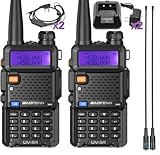
This is a widely used entry-level option that balances affordability and capability. It’s a practical way to begin building long-range communication without a large investment.
How Repeaters Extend Your Range
Repeaters receive your signal and rebroadcast it at higher power.
This allows you to:
- Extend range significantly
- Communicate over obstacles
- Reach areas outside direct signal range
However, repeaters rely on infrastructure and may not be available in a full grid-down scenario.
That’s why direct communication capability still matters.
When Long-Range Communication Matters
This layer becomes important when:
- You’re separated from others over distance
- You need information beyond your area
- Local systems are down
- You’re dealing with large-scale events
👉 If you want a full breakdown of setup, frequencies, and getting started, read:
HAM Radio for Beginners
Combining Mid-Range and Long-Range Systems
This is where your system becomes more capable.
Instead of relying on a single method, you’re layering:
- Short-range radios for local communication
- Mid-range setups for extended coverage
- Long-range systems for distance and information
Each fills a specific role and works together to maintain communication across different situations.
So far, everything we’ve covered relies on traditional radio systems.
Next, we move into a different approach—one that removes infrastructure entirely and allows devices to form their own network.
Decentralized Communication: Mesh Networks That Work Without Towers or Internet
Traditional radio systems are limited by range, interference, and infrastructure.
Mesh networks solve this by allowing devices to connect directly and form their own decentralized network—no towers or internet required.
What Is a Mesh Network?
A mesh network allows devices to communicate directly and pass messages between each other to extend range.
Instead of a single connection from point A to point B, messages move through multiple devices:
- Device A sends a message
- Device B receives and forwards it
- Device C passes it along
Each device becomes part of the network.
There’s no central hub, no towers, and no internet required.
Why Mesh Networks Matter in a Grid-Down Scenario
Mesh networks continue working when centralized systems fail because they are:
- Decentralized
- Self-routing (messages can reroute automatically)
- Independent of infrastructure
As long as devices are within range of each other, the network stays active.
They’re especially useful for:
- Urban environments
- Neighborhood communication
- Community preparedness
How Meshtastic Works (Simplified)
One of the most common systems is Meshtastic, which uses low-power LoRa radio signals.
In practical terms:
- Devices can run for days or weeks on battery
- Messages are text-based
- Range varies based on terrain
- Messages can hop between multiple devices
Instead of calling someone, you’re sending messages across a network you control.
Real-World Range Expectations
Range depends on conditions:
- Urban: 0.5 to 2 miles per node
- Suburban: 1 to 3 miles
- Open terrain: 3 to 10+ miles
Each additional device extends the network, making coverage dependent on node density rather than distance alone.
Where Mesh Networks Excel
Mesh systems work best when:
- Multiple users are within range
- Low-power operation is important
- Silent communication is preferred
- Infrastructure is unreliable
They’re ideal for:
- Neighborhood groups
- Family networks across town
- Urban survival scenarios
Where They Fall Short
Mesh systems have limitations:
- No voice communication (text only)
- Requires setup and configuration
- Performance depends on number of devices
- Slower than real-time radio communication
They are not a replacement for radios—they’re a supplement.
Recommended Mesh Device
If you want to experiment with mesh communication, this is a practical entry point.

These devices allow you to build a low-power, off-grid messaging network. They require setup, but once configured, they provide independent communication without relying on external systems.
When to Use Mesh Networks
Mesh networks are most useful in extended scenarios where:
- Power is limited
- Infrastructure is unreliable
- Communication needs to continue over time
Because they use minimal energy, they can operate longer than most other systems.
The Smart Way to Use Mesh Networks
Use mesh as part of a layered system:
- Radios for real-time communication
- Mesh networks for low-power messaging
- Emergency radios for receiving information
Each fills a different role.
The Bottom Line on Mesh Communication
Mesh networks are flexible and resilient—but not standalone.
Used correctly, they strengthen your communication system.
We’ve covered:
- Direct communication (radios)
- Long-distance communication (HAM)
- Decentralized communication (mesh)
What most people overlook is this:
Receiving information.
Passive Communication: How to Stay Informed When You Can’t Transmit
So far, we’ve focused on sending messages.
But in many situations, receiving information matters more.
Without it, you’re guessing.
What Passive Communication Means
Passive communication is the ability to receive information without transmitting.
This includes:
- Weather alerts
- Emergency broadcasts
- Government updates
- Disaster warnings
These signals often remain available even when other systems fail.
Why This Matters
Without reliable information, decisions become guesswork.
With it, you can:
- Avoid danger
- Prepare early
- Stay ahead of changing conditions
How Emergency Radios Work
Emergency radios receive signals from broadcast systems like NOAA weather radio.
They provide:
- Severe weather alerts
- Emergency warnings
- Real-time updates
These broadcasts often remain available even when other communication systems fail.
Power Options Matter More Than Features
What matters most isn’t features—it’s power.
In an emergency, you may not have access to electricity.
The best radios include multiple power options:
- Battery
- Solar charging
- Hand crank
- USB charging
Multiple power sources keep the radio usable when conditions change.
Recommended Emergency Radio
This is a reliable option that covers the essentials and offers multiple ways to stay powered.

It provides NOAA alerts, backup power options, and consistent performance in emergency situations.
Simple, dependable, and built for real-world use.
Where Passive Communication Fits in Your System
This isn’t a replacement for radios—it’s a separate layer.
- Radios = talking
- Mesh networks = messaging
- Emergency radios = listening
Each serves a different role, and all three work together.
When Passive Communication Matters Most
This layer becomes critical when:
- You’re isolated from others
- You can’t reach anyone directly
- You need real-time updates
- Conditions are changing quickly
In these situations, reliable information becomes your advantage.
👉 For a full breakdown of the best emergency radios and what to look for, see:
Best Emergency Solar Radios for Blackouts
The Mistake Most People Make
Most people assume information will reach them.
In a grid-down scenario, it won’t.
There’s no social media, no news apps, and no instant updates.
Without a reliable way to receive information, you’re operating without awareness.
Combining Passive and Active Communication
At this point, your system includes:
- Short-range communication
- Mid and long-range communication
- Decentralized communication
- Passive information access
Each layer fills a different role and works together to keep you connected.
The Bottom Line on Passive Communication
You don’t need constant communication—you need reliable communication.
And sometimes, the most important thing you can do is listen.
The biggest weakness in any communication system isn’t the tools—it’s power.
That’s what we address next.
Powering Your Communication: How to Keep Everything Running When the Grid Is Down
Every communication system depends on power.
When it runs out, communication stops.
That’s the gap most people overlook.
Why Power Is the Weakest Link
In normal conditions, power is easy to ignore.
In an emergency, it becomes limited—and once it’s gone, it doesn’t come back quickly.
That affects everything:
- Radios stop transmitting
- Devices lose charge
- Communication becomes limited
Power isn’t separate from communication—it’s what keeps it working. Build a system that supports everything in our off-grid power system guide.
Backup communication systems only work as long as the power supporting them lasts. Use the Emergency Power Planner to estimate realistic battery requirements for radios, phones, routers, mesh systems, and emergency charging setups.
Short-Term vs Long-Term Power
You need to plan for two phases:
Short-Term (0–72 Hours)
This is your immediate window.
You rely on:
- Charged batteries
- Power banks
- Backup battery packs
This works—but only temporarily.
👉 For a breakdown of what happens during this phase, see:
First 72 Hours After a Disaster
Long-Term (Beyond 72 Hours)
Once batteries run out, you need a way to generate power.
This includes:
- Solar charging systems
- Portable power stations
- Rechargeable battery setups
Without this, your communication system has a time limit.
The Best Approach: Layered Power
A reliable setup includes:
- Primary power (portable power station)
- Secondary power (solar charging)
- Backup power (battery packs or spare batteries)
Each layer provides redundancy, so your system keeps running even if one fails.
Portable Power Stations
If you want a reliable way to power your communication gear, start here.

A unit like this provides a centralized power source for radios, devices, and essential gear. It’s simple to use and doesn’t require technical setup.
Pair it with solar panels, and it becomes a sustainable power solution.
Why Solar Changes Everything
Solar allows you to generate power instead of just using it.
That means:
- Radios stay operational
- Devices stay charged
- Communication continues long-term
Even a small solar setup can make a major difference.
To figure out what size system you actually need, 👉 see what size solar generator you actually need to keep your communication running.
Battery Strategy (Don’t Skip This)
Even with a power station, you still need battery planning.
- Spare rechargeable batteries
- Backup AA/AAA batteries (if applicable)
- Charging and rotation cycles
Not everything runs off a single system, so redundancy matters.
Power Consumption Reality
Not all communication tools use power equally:
- Walkie talkies: low to moderate
- HAM radios: moderate to high
- Mesh devices: very low
- Emergency radios: low
Understanding this helps you prioritize what to power first.
The Mistake That Gets People Cut Off
Most people plan for communication—but not for sustaining it.
They assume:
- “I’ll recharge later”
- “The power will come back”
- “This battery will last”
In extended outages, those assumptions fail.
When power runs out, communication ends.
How to Build a Reliable Power Setup
Keep it simple and scalable:
- Start with a portable power station
- Add solar charging capability
- Build out battery backups
- Test your setup under real conditions
The Bottom Line on Power
Without power, communication stops.
If you ignore this layer, everything you’ve built has a limit.
Building a Real Off-Grid Communication Plan
Having the right tools isn’t enough.
If you don’t have a plan, your communication system breaks down when it matters most.
This is where most people fall short—they buy gear but never define how to use it.
Step 1: Define Your Primary Method
Start with your most reliable system.
For most people, that’s short-range radios.
Use it for:
- Immediate coordination
- Family communication
- Daily use during outages
Keep it simple and consistent.
Step 2: Establish Backup Communication
Your primary system won’t cover everything.
Add a backup:
- A second radio system
- Mesh messaging
- Predefined communication points
Redundancy keeps your system working.
Step 3: Set Communication Rules
Define:
- Check-in times
- Assigned channels or frequencies
- Fallback communication methods
- Emergency-only protocols
Without structure, even good equipment fails.
Step 4: Plan for Separation
Assume you won’t always be together.
Plan for:
- Meeting locations
- Time-based check-ins
- What to do if contact fails
This removes uncertainty under pressure.
If you get separated, where you regroup matters more than anything—👉 here’s how to choose the right bug-out location before it’s too late.
Step 5: Tie Communication to Power
Your plan must account for power.
Decide:
- What gets powered first
- How often devices are used
- How to conserve energy
This keeps your system running longer.
👉 A complete preparedness strategy should connect communication, power, and survival planning:
Emergency Preparedness Plan 2026
Keep It Simple
The most effective communication plans are:
- Clear
- Repeatable
- Tested
You don’t need more gear—you need a system you understand and can rely on.
If you don’t have a communication plan yet, start simple.
Pick one method. Test it. Build from there.
Then layer in backup systems, power, and structure.
Because when communication fails, everything else gets harder.
Need a reliable backup communication setup? See our recommended emergency communication gear here.
Final Thought
When communication fails, everything else starts to break down.
When it works, you stay in control.
The difference isn’t the situation—it’s whether you prepared for it.