
12 Best Minimalist Summer Survival Gear Essentials
Minimalist summer survival gear can make hiking, backpacking, and camping more comfortable when temperatures rise and every extra pound adds to your workload. However, packing lighter should never mean leaving behind the equipment you need for safe drinking water, emergency shelter, navigation, first aid, or protection from extreme heat.
This post contains affiliate links. I may earn a small commission at no extra cost to you. Learn more.
A lightweight summer setup starts with understanding which items genuinely improve your safety and which simply add unnecessary bulk. A dependable water filter, compact headlamp, appropriate shelter, and a reliable way to communicate during an emergency can be more valuable than carrying a collection of specialized gadgets.
In this guide, we’ll examine 12 lightweight camping and survival products, explain where each fits into a practical summer setup, and identify the limitations that matter before you buy.
You’ll also find a packing checklist, weight-planning advice, budget considerations, and important precautions for hiking in hot weather.
For additional ways to manage high temperatures, see our guides to staying cool without power and making a DIY cooling neck wrap.
What Is Minimalist Summer Survival Gear?
Minimalist summer survival gear consists of equipment selected to meet essential needs while limiting unnecessary weight, bulk, and complexity.
For hiking and backpacking, those needs typically include:
- Safe drinking water and sufficient carrying capacity
- Protection from sun, rain, wind, and temperature changes
- Reliable navigation and emergency communication
- Lighting for unexpected delays after dark
- Appropriate first-aid and emergency supplies
- Food, insulation, and shelter suitable for the trip
The objective is not to carry the lightest possible pack at any cost. It is to carry the lightest practical equipment that still supports your safety and the conditions you may encounter.
Summer backpacking presents challenges that are easy to underestimate. High temperatures increase heat stress, water requirements vary significantly, and sudden thunderstorms can turn an otherwise comfortable trip into an emergency.
Lightweight equipment should help you manage those risks rather than create new ones.
Quick Comparison: 12 Minimalist Summer Survival Gear Essentials
The following products cover water treatment, hydration, lighting, shelter, cooking, sleeping comfort, trekking support, power, fire starting, rain protection, insect protection, and personal hygiene.
Important: Product weights vary by model, size, accessories, and manufacturing revisions. Check the exact listing before purchasing. The approximate weights below are planning references, not verified specifications for every available version.
| Gear | Primary Purpose | Weight Consideration |
|---|---|---|
| Sawyer Squeeze Water Filter | Water filtration | Lightweight filter; include accessories. |
| HydraPak Stash 1 L | Water storage | Collapsible design reduces packed bulk. |
| Nitecore NU25 UL | Lighting | Compact rechargeable headlamp. |
| Go Time Gear Life Bivy | Emergency exposure protection | Compact emergency bivvy. |
| TOAKS Titanium Pot | Cooking and boiling water | Include stove and fuel separately. |
| NeoAir XLite NXT | Sleeping insulation | Weight varies by pad size. |
| Cascade Mountain Tech Trekking Poles | Trekking support | Compare pair weight and packed length. |
| Anker Solar Power Bank | Backup charging | Solar features may add weight. |
| Exotac nanoSPARK | Emergency fire starting | Compact ignition system. |
| Sea to Summit Ultra-Sil Pack Cover | Rain protection | Choose the correct pack size. |
| Sawyer Picaridin Lotion | Insect protection | Carry enough for the trip. |
| Sea to Summit AirLite Towel | Hygiene and drying | Weight varies by towel size. |
These 12 products are not a complete backpacking kit. You may also need a backpack, tent or other suitable shelter, sleeping bag or quilt, food, water, clothing, navigation equipment, first-aid supplies, and emergency communication.
How to Choose Lightweight Summer Survival Equipment
Before comparing products, consider how each item contributes to your overall setup.
Weight and Actual Usefulness
Low weight is helpful, but it should not outweigh reliability. A slightly heavier item may be worthwhile if it performs an essential function better or reduces the need for additional equipment.
Heat and Weather Protection
Choose equipment appropriate for expected temperatures, humidity, precipitation, and overnight conditions.
Summer does not guarantee warm nights, particularly at higher elevations.
Durability
Ultralight materials can require more careful handling. Consider abrasion resistance, repairability, and the consequences of equipment failure.
Compatibility
Check whether your water filter fits your bottles, whether your shelter requires trekking poles, and whether your power bank supports your devices.
Cost and Long-Term Value
Expensive equipment is not automatically better. Prioritize upgrades that meaningfully reduce weight or improve safety.
1. Sawyer Squeeze Water Filter: Lightweight Water Treatment
Safe drinking water is one of the most important considerations for summer hiking and camping. The Sawyer Squeeze is a popular backpacking filter because its hollow-fiber design is compact and can be used with compatible squeeze pouches or other supported setups.
It is designed to filter common waterborne bacteria and protozoa when used correctly and maintained according to the manufacturer’s instructions.
Advantages
- Compact filter body suitable for lightweight backpacking.
- Can be used with compatible squeeze bags and gravity setups.
- Reusable when properly maintained.
- Useful for treating microbiologically contaminated backcountry water.
Limitations
- Does not reliably remove all viruses or chemical contaminants.
- Flow may decrease when filtering sediment-heavy water.
- Freezing after the filter has been wetted can damage the filtration fibers.
- Requires attention to clean-water and dirty-water handling.
Best for: Hikers and backpackers who need a compact method for treating appropriate backcountry water sources.


Practical tip: Carry enough water to reach your next dependable source. A filter cannot help if available water sources have dried up.
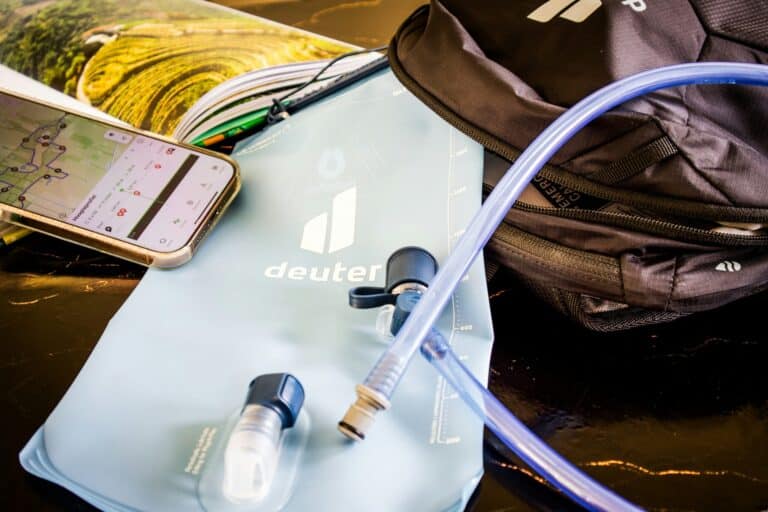
2. HydraPak Stash 1 L: Collapsible Water Storage
The HydraPak Stash is designed to provide reusable water storage while taking up less room when empty.
Collapsible containers can be useful for backpackers who want additional water capacity without permanently occupying the same amount of pack space.
Advantages
- Collapsible design reduces packed volume.
- Useful as supplemental water-carrying capacity.
- Reusable construction.
- Can help distribute water between containers.
Limitations
- Compatibility with filters and accessories must be checked.
- Collapsible bottles may be less convenient to handle than rigid bottles.
- Capacity is limited to one liter.
- Not every flexible bottle is suitable for hot liquids.
Best for: Backpackers seeking a compact supplemental water container.
Check HydraPak Stash on Amazon
Practical tip: Do not assume the Stash bottle threads directly onto the Sawyer Squeeze. Verify compatibility before relying on the combination in the field.
3. Nitecore NU25 UL: Compact Rechargeable Headlamp
A headlamp is essential when an afternoon hike takes longer than expected or when you need both hands free for camp tasks.
The Nitecore NU25 UL is designed for users who prioritize compact size and low carrying weight.
Advantages
- Hands-free lighting.
- Rechargeable design reduces dependence on disposable batteries.
- Multiple lighting modes for different tasks.
- Compact construction suitable for backpacking.
Limitations
- Battery runtime depends on brightness settings.
- Rechargeable batteries eventually require an external power source.
- Maximum advertised brightness does not represent continuous runtime.
- Specific features may vary by product revision.
Best for: Backpackers who want a lightweight primary headlamp and can manage charging requirements.
Check Nitecore NU25 UL on Amazon
Practical tip: Use lower brightness settings for routine tasks and reserve brighter modes for situations that require them.
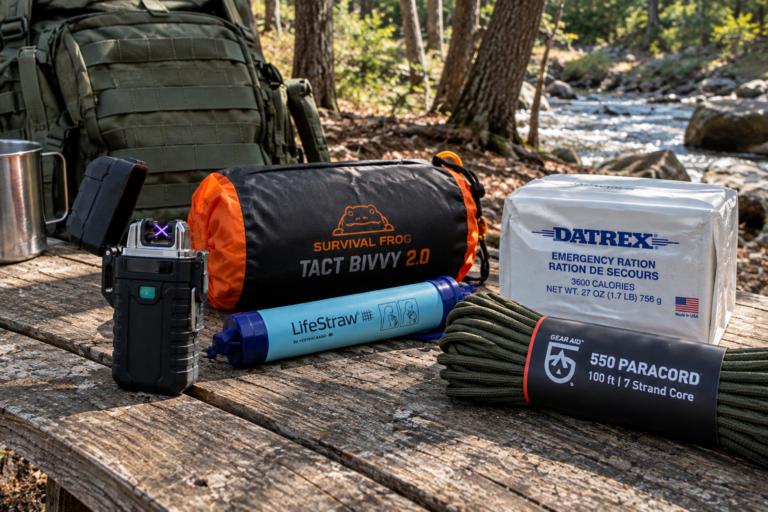
4. Go Time Gear Life Bivy: Lightweight Emergency Sleeping Bag
The Go Time Gear Life Bivy is a compact emergency sleeping bag designed to help protect you from wind, rain, and heat loss when an unexpected situation leaves you outdoors longer than planned.
Weighing approximately 4.1 ounces according to the manufacturer, this emergency bivvy is a practical addition to a minimalist summer survival gear kit. Its small packed size makes it especially useful for day hikers, backpackers, and campers who want emergency protection without adding significant weight.
The Life Bivy uses a reflective interior to help reduce radiant heat loss. Its bright orange exterior also makes it easier to spot during a rescue situation.
Unlike a traditional sleeping bag, the Life Bivy is intended primarily for emergency use rather than routine overnight camping. It provides a temporary protective barrier but does not replace proper shelter or sleeping insulation.
Advantages
- Lightweight design: Approximately 4.1 ounces, making it easy to include in a compact emergency kit.
- Reflective interior: Helps reduce radiant heat loss during cold or unexpected overnight conditions.
- High-visibility exterior: Bright orange material can help rescuers locate you.
- Compact storage: Packs into a small stuff sack that fits easily inside a backpack.
- Emergency whistle: Includes a whistle for attracting attention when assistance is needed.
Limitations
- Condensation: The reflective emergency material is not highly breathable, so moisture may accumulate inside.
- Limited durability: Thin emergency materials can tear or puncture when exposed to sharp objects.
- Not a complete sleep system: Does not replace an insulated sleeping bag, sleeping pad, or suitable tent.
- Limited insect protection: Not designed to provide the ventilation and bug protection of a conventional camping shelter.
Best for: Day hikers, backpackers, hunters, and campers who want lightweight emergency exposure protection in case they become stranded or must spend an unexpected night outdoors.
Check Go Time Gear Life Bivy on Amazon
Practical tip: Keep your Life Bivy somewhere accessible in your backpack. If you become stranded, choose a sheltered location, insulate yourself from the ground, and use the bivvy as an additional barrier against wind and heat loss. Avoid sealing it around your face, and allow ventilation to help manage condensation.
5. TOAKS Titanium 750 mL Pot: Lightweight Camp Cooking
A titanium cooking pot can provide a durable and compact way to heat food or boil water without carrying a full kitchen setup.
The TOAKS 750 mL pot is a common size for solo backpacking, especially when meals require only hot water.
Advantages
- Lightweight titanium construction.
- Compact capacity for simple meals.
- Can be used with compatible backpacking stoves.
- Some stove and fuel combinations may nest inside the pot.
Limitations
- Stove and fuel are additional equipment.
- Small capacity limits cooking options.
- Thin titanium can create hot spots when cooking.
- Handles and surfaces can become dangerously hot.
Best for: Solo backpackers who mainly boil water or prepare simple meals.
Check TOAKS Titanium Pot on Amazon
Practical tip: Use an appropriate pot gripper or heat-resistant protection when handling hot cookware. Keep stoves outside enclosed tents and shelters to prevent carbon monoxide exposure and fire hazards.
6. Therm-a-Rest NeoAir XLite NXT: Lightweight Sleeping Insulation
Sleeping pads are often treated as comfort accessories, but they also help reduce heat loss to the ground.
The Therm-a-Rest NeoAir XLite NXT is designed for backpackers who want insulation and sleeping comfort without the bulk of a conventional camping mattress.
Advantages
- Insulated sleeping surface.
- Compact packed size compared with many traditional mattresses.
- Available in different sizes.
- Useful for reducing conductive heat loss to the ground.
Limitations
- Inflatable pads can be punctured.
- Weight varies by size.
- Requires inflation and careful storage.
- Premium backpacking pads can be expensive.
Best for: Backpackers seeking a compact insulated sleeping pad.
Check NeoAir XLite NXT on Amazon
Practical tip: Carry an appropriate repair kit and clear sharp debris from the sleeping area before inflating the pad.
7. Cascade Mountain Tech Carbon-Fiber Trekking Poles
Trekking poles can improve stability on uneven trails, assist with stream crossings when conditions permit, and provide additional support on steep terrain.
Carbon-fiber models appeal to backpackers who want to reduce the weight of their hiking equipment.
Advantages
- Useful for maintaining balance on uneven ground.
- Adjustable models accommodate different terrain.
- Some trekking-pole shelters can use compatible poles for support.
- Carbon-fiber construction may reduce weight compared with certain alternatives.
Limitations
- Carbon-fiber shafts can be damaged by side loading or impact.
- Weight depends on the exact model.
- Poles are not substitutes for proper footwear and careful movement.
- Not every shelter is designed to use trekking poles.
Best for: Hikers who want additional stability while managing equipment weight.
Check Cascade Mountain Tech Trekking Poles on Amazon
Practical tip: Adjust pole length for the terrain and avoid placing poles where they can become trapped between rocks.
8. Anker Solar Power Bank: Backup Charging for Electronics
A backup power bank can help keep your phone, headlamp, and other compatible devices charged during extended outdoor trips.
Some power banks incorporate small solar panels, but integrated panels generally provide limited charging performance compared with larger dedicated solar equipment.
Advantages
- Portable battery storage.
- Useful for charging compatible devices away from outlets.
- Can provide additional emergency communication time.
- May reduce the need to ration phone battery as aggressively.
Limitations
- Solar charging can be slow and weather-dependent.
- Battery capacity and charging ports vary by model.
- Power banks add weight.
- Excessive heat can damage lithium-ion batteries.
Best for: Hikers who rely on rechargeable electronics and need a backup charging option.
Check Anker Power Bank on Amazon
Practical tip: Charge your power bank fully before departure. Do not rely on a small integrated solar panel as your only means of recharging critical equipment.
9. Exotac nanoSPARK: Compact Emergency Fire Starter
A dependable ignition source can be useful for emergency warmth, cooking, and other camp tasks when fire is permitted and conditions are safe.
The Exotac nanoSPARK is a compact fire-starting device designed to produce sparks and carry a small amount of tinder.
Advantages
- Compact construction.
- Can be operated without a conventional flame-producing lighter.
- Designed to hold a small tinder supply.
- Useful as a secondary ignition method.
Limitations
- Requires suitable tinder.
- Reliable use takes practice.
- Wet conditions can complicate fire starting.
- Fire restrictions may prohibit open flames.
Best for: Campers and hikers who want a compact backup ignition source.
Check Exotac nanoSPARK on Amazon
Practical tip: Practice using your fire starter before entering the wilderness. A small lighter may provide useful redundancy, but neither should be used when fire conditions are unsafe.
10. Sea to Summit Ultra-Sil Pack Cover: Rain Protection
Summer storms can arrive unexpectedly, and wet clothing or sleeping insulation can create serious problems even when daytime temperatures are high.
A lightweight pack cover helps reduce direct rain exposure to your backpack and its contents.
Advantages
- Lightweight rain protection.
- Compact storage when not in use.
- Available in different sizes.
- Useful during short showers and wet trail conditions.
Limitations
- Does not guarantee waterproof storage.
- Water may enter around straps and uncovered areas.
- Strong wind can complicate use.
- Incorrect sizing can reduce coverage.
Best for: Backpackers seeking an additional layer of protection against rain.
Check Sea to Summit Ultra-Sil Pack Cover on Amazon
Practical tip: Protect critical equipment with waterproof inner bags or a suitable pack liner. A pack cover alone should not be your only moisture barrier.
11. Sawyer 20% Picaridin Lotion: Insect Protection
Mosquitoes and ticks can make summer camping uncomfortable and may transmit disease.
Repellents containing picaridin offer an alternative to DEET-based products when used according to the label.
Advantages
- Helps repel certain biting insects.
- Useful for hiking, camping, and outdoor work.
- Lotion formulation can provide controlled application.
- May be preferred by users who dislike certain repellent sprays.
Limitations
- Protection duration depends on the product and conditions.
- Reapplication must follow label instructions.
- Repellent does not eliminate the need for tick checks.
- Not all products are intended for application to clothing or equipment.
Best for: Summer hikers and campers who need personal protection against biting insects.
Check Sawyer Picaridin Lotion on Amazon
Practical tip: Apply repellent as directed and inspect your body for ticks after hiking through brush or tall vegetation.
12. Sea to Summit AirLite Towel: Compact Camp Hygiene
A compact towel can be useful for personal hygiene, drying equipment, and managing sweat during warm-weather trips.
The Sea to Summit AirLite is designed for travelers and backpackers who want a towel that packs into a small space.
Advantages
- Compact packed size.
- Lightweight alternative to household towels.
- Useful for camp hygiene.
- Available in different sizes.
Limitations
- Smaller versions provide limited coverage.
- Drying time varies with humidity and airflow.
- Requires cleaning and drying between uses.
- Not essential for every minimalist setup.
Best for: Backpackers who value compact hygiene equipment.

Practical tip: Dry your towel thoroughly before storing it for extended periods to reduce odors and mildew.
Minimalist Summer Survival Gear Checklist
Before leaving home, use this checklist to make sure your lightweight setup covers the most important survival needs.
How Much Should a Minimalist Summer Backpack Weigh?
Backpacking weight is often discussed using three measurements: base weight, consumables, and total pack weight.
Base Weight
Base weight generally includes the backpack and equipment carried inside or attached to it, excluding consumables such as food, water, and fuel.
Consumable Weight
Consumables include water, food, and stove fuel. These can change significantly during a trip.
Total Pack Weight
Total pack weight combines your base weight with the consumables and other items you’re carrying.
Some backpackers aim for a base weight below 10 pounds, but that is a common ultralight benchmark rather than a safety requirement.
A well-prepared 15-pound base-weight setup may be more appropriate than an inadequately equipped 8-pound setup.
Why 12 Lightweight Products Don’t Equal a Complete Backpacking Kit
The 12 products in this guide represent selected equipment categories. Their combined weight does not account for everything required for a complete overnight backpacking system.
A realistic pack-weight calculation may also need to include:
- Backpack
- Primary shelter and shelter accessories
- Sleeping bag or quilt
- Extra clothing and rain layers
- First-aid supplies
- Navigation and emergency communication equipment
- Stove and fuel system
- Food and drinking water
Instead of relying on a single advertised weight total, weigh your actual packed equipment using a luggage scale or kitchen scale and maintain a complete gear list.
Why Ultralight Summer Camping Gear Can Cost More
One of the biggest trade-offs in lightweight backpacking equipment is price.
Manufacturers may use specialized fabrics, titanium, carbon fiber, compact insulation, or more complex construction methods to reduce weight while maintaining practical performance.
These materials and designs can increase manufacturing costs.
However, a higher price does not guarantee greater durability, better performance, or meaningful weight savings.
Where to Spend More
Consider investing in equipment that directly affects your safety or carrying comfort.
- Water treatment: Reliability and suitability for your water sources matter more than saving a fraction of an ounce.
- Shelter: Weather protection and appropriate construction should come before minimum weight.
- Sleeping insulation: A comfortable and appropriately insulated sleep system can improve rest and reduce exposure risks.
- Footwear and backpack fit: Poor fit can create problems even when equipment is lightweight.
Where You Can Save Money
Not every piece of equipment needs to be premium.
Simple cooking equipment, basic hygiene supplies, carefully selected clothing, and durable budget accessories can perform well without requiring a large investment.
Start by replacing heavy items that provide limited value rather than upgrading everything at once.
Build Your Lightweight Summer Kit in Three Stages
Instead of using outdated fixed prices, organize purchases by priority.
Stage 1: Essential Safety Equipment
Start with navigation, communication, safe water, first aid, weather protection, and a dependable headlamp.
These items should take priority over convenience upgrades.
Stage 2: Shelter and Sleeping Comfort
Next, evaluate your shelter, sleeping pad, insulation, and backpack.
These larger items often account for a significant portion of base weight.
Stage 3: Convenience and Weight Optimization
Once the essentials are covered, consider lighter trekking poles, titanium cookware, compact towels, and other optional upgrades.
Compare actual weight savings with the cost before making each purchase.
Summer Heat Safety: What Lightweight Backpackers Need to Know
Reducing pack weight may make travel more comfortable, but it does not eliminate the risks associated with high temperatures.
Plan Water Needs for Your Actual Route
Water requirements vary with temperature, humidity, terrain, exertion, clothing, body size, and individual sweat rate.
There is no universally safe rule such as drinking one liter every two miles.
Plan for your conditions, carry adequate capacity, identify dependable refill locations, and adjust activity when water access is uncertain.
Drink according to your needs without forcing excessive amounts of plain water, which can contribute to dangerous low blood sodium levels.
Manage Electrolytes Appropriately
Extended sweating can increase sodium losses, but the amount varies substantially between people.
Food and appropriately formulated electrolyte products can help replace losses during prolonged activity.
Avoid rigid sodium dosing formulas that ignore individual needs or medical considerations.
Reduce Exposure During Peak Heat
When possible, schedule strenuous hiking for cooler parts of the day.
Use shade, breathable clothing, sun protection, and rest breaks to reduce heat stress.
In dangerous heat, shortening or canceling the trip may be safer than relying on equipment to compensate.
Recognize Heat Illness
Heat exhaustion may involve weakness, dizziness, headache, nausea, and heavy sweating.
Stop exertion, move to a cooler location, and begin cooling measures.
Heatstroke is a medical emergency. Confusion, collapse, seizures, or altered consciousness during heat exposure require immediate emergency assistance and rapid cooling.
Use cold-water immersion when feasible and safe, or apply cool water and promote airflow while waiting for help.
Do not give drinks to someone who is confused or unable to swallow safely.
Common Minimalist Backpacking Mistakes to Avoid
Choosing Weight Over Safety
Leaving behind necessary insulation, shelter, water capacity, or emergency equipment can turn a manageable problem into a serious situation.
Assuming Summer Nights Are Always Warm
Mountain elevations, wind, rain, and unexpected weather can create cold conditions even during summer.
Relying on One Water Source
Seasonal streams and springs may be dry. Verify water availability when possible and carry a contingency supply.
Using Untested Equipment
Practice operating your water filter, stove, headlamp, and shelter before your trip.
Depending Entirely on Electronics
Phones and GPS devices can fail because of battery depletion, damage, or other problems.
Carry appropriate backups and know how to use them.
Ignoring Equipment Compatibility
Verify bottle threads, charging connections, stove compatibility, and shelter requirements before departure.
Frequently Asked Questions About Minimalist Summer Survival Gear
What is the most important minimalist summer survival gear?
Essential equipment includes reliable navigation, emergency communication, safe drinking water, appropriate shelter, weather protection, lighting, and first-aid supplies. The exact priorities depend on the trip.
Is a 10-pound base weight necessary for backpacking?
No. Ten pounds is a commonly used ultralight backpacking benchmark, not a requirement. A heavier setup may be more appropriate for your conditions and experience.
Can an emergency bivvy replace a tent?
Not in every situation. An emergency bivvy can provide useful backup protection, but it may not offer adequate space, ventilation, insect protection, or weather resistance for planned overnight camping.
Are titanium cooking pots worth the money?
They can be worthwhile for backpackers seeking a compact, lightweight cooking system. However, budget cookware may be sufficient for occasional trips.
Are solar power banks reliable for backpacking?
Power banks can be useful, but small integrated solar panels often charge slowly. Fully charging the battery before departure is more dependable than relying on sunlight during the trip.
Should I carry trekking poles in summer?
Trekking poles are optional but can improve balance and provide support on uneven terrain. Their value depends on your hiking style, route, and personal preferences.
How do I reduce backpack weight without spending a lot?
Start by removing unnecessary duplicates, choosing multipurpose equipment, measuring actual gear weights, and replacing heavy items only when the savings justify the cost.
Final Thoughts: Pack Lighter Without Sacrificing Safety
The best minimalist summer survival gear is equipment that provides genuine value without adding unnecessary weight.
Products such as the Sawyer Squeeze, Nitecore NU25 UL, Go Time Gear Life Bivy, and lightweight sleeping equipment can all serve useful roles, but no individual product replaces thoughtful trip planning.
Build your kit around safe water, shelter, navigation, emergency communication, and protection from the elements. Then consider convenience upgrades based on how frequently you hike and which items provide meaningful benefits.
Before a long trip, complete a shorter shakedown hike with your full load. Check comfort, equipment compatibility, water consumption, and how well your setup handles realistic conditions.
For more information, explore these related guides:
- How to Stay Cool Without Power This Summer
- DIY Cooling Neck Wraps
- Best Solar Gear for Summer Survival and Camping
- Ultimate Water Purification Guide
- DIY Bug Repellent
As an Amazon Associate, The Savvy Survivalist earns from qualifying purchases.