Winter Blackout Survival Guide: Heat, Food, Water & Backup Power
Winter blackouts can become dangerous when freezing temperatures, failed heating systems, and disrupted water supplies occur together. Whether an ice storm knocks out power for several hours or severe weather leaves your neighborhood without electricity for days, having a practical winter blackout survival plan can help protect your family.
This post contains affiliate links. I may earn a small commission at no extra cost to you. Learn more.
This winter blackout survival guide explains how to stay warm without electricity, choose safe emergency heating methods, keep essential devices charged, prepare food, protect your water supply, and maintain communication when the power goes out.
The goal isn’t to buy every piece of survival gear available. It’s to build a reliable system that works when your home’s normal utilities stop working.
Winter Blackout Survival Checklist: What to Do First
If the electricity goes out during freezing weather, focus on immediate safety before setting up additional equipment.
- Check everyone in the household. Make sure children, older adults, and anyone with medical needs are safe and adequately warm.
- Check for hazards. Never use a gas oven, charcoal grill, camping stove, or outdoor generator to heat your home.
- Conserve indoor heat. Close unused rooms, cover drafty windows, and gather in a smaller living area.
- Dress in layers. Use dry clothing, warm socks, hats, and insulated bedding.
- Protect your water supply. Store drinking water while plumbing remains functional and follow local guidance for preventing frozen pipes.
- Conserve battery power. Switch phones to power-saving mode and prioritize emergency communications.
- Monitor official alerts. Use a battery-powered NOAA weather radio and follow local emergency guidance.
- Know when to relocate. If your home becomes dangerously cold, seek a safe heated location.
Important: Confusion, unusual drowsiness, severe cold, or difficulty awakening someone can indicate hypothermia. Seek emergency medical assistance immediately.
1. How to Stay Warm During a Winter Blackout
Staying warm is the first priority when the power fails in freezing weather. How quickly a house loses heat depends on outdoor temperatures, insulation, air leakage, wind, and the home’s construction.
Some homes retain usable warmth for many hours, while poorly insulated buildings can become dangerously cold much sooner.
Create a Warm Room
Instead of trying to heat an entire house, concentrate on one suitable room.
- Close doors to unused rooms.
- Use curtains and insulated window coverings to reduce heat loss.
- Block drafts where doing so will not obstruct required ventilation.
- Place rugs, foam sleeping pads, or other insulation beneath bedding.
- Wear several loose-fitting layers of dry clothing.
- Keep sleeping bags and additional blankets readily available.
Choose a room that allows safe ventilation and heating-equipment clearances. Do not seal a room so tightly that fuel-burning appliances cannot receive the ventilation required by their manufacturer.
Mr. Heater Buddy: Portable Emergency Heating
The Mr. Heater Buddy is a propane-powered radiant heater that can provide supplemental heat without household electricity. Certain models are approved for specified indoor uses, but approval does not mean they can be operated without precautions.
Before using any propane heater, verify the exact model’s indoor-use rating and follow its operating manual.
- Provide the ventilation specified by the manufacturer.
- Maintain the required clearance from curtains, bedding, furniture, and other combustible materials.
- Use only approved fuel cylinders, hoses, and accessories.
- Keep a working carbon monoxide alarm in the home.
- Never operate a portable heater while sleeping or leave it unattended.
- Never use a heater in a prohibited enclosed space.
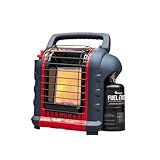

Mr. Heater Big Buddy: Heating a Larger Area
The Mr. Heater Big Buddy offers a higher heat output than smaller Buddy models and may be useful for supplemental heating in an appropriately sized, ventilated space.
It is not a replacement for a professionally installed heating system. Fuel consumption, ventilation requirements, cylinder compatibility, and operating restrictions depend on the exact model.
Mr. Heater Big Buddy:

Do not assume a portable propane heater can safely run overnight. Turn it off before sleeping and follow all manufacturer instructions.
Know When Your Home Is Too Cold
Watch for uncontrollable shivering, clumsiness, confusion, slurred speech, or unusual sleepiness. These can be warning signs of hypothermia.
If you cannot maintain safe indoor conditions, use an available warming center, a properly heated home, or another safe location. People with infants, older adults, or medical vulnerabilities may need to relocate earlier.
For additional heating strategies, read our guide to emergency heat without electricity.
2. Emergency Lighting That Works Without Electricity
Reliable lighting makes it easier to move around safely, prepare food, locate supplies, and care for family members during a blackout.
Battery-powered LED lanterns, flashlights, and headlamps are generally safer choices than candles because they eliminate the open flame.
GearLight LED Camping Lanterns: Reliable Battery-Powered Lighting
The GearLight LED Camping Lantern 2-Pack is a practical option for winter blackouts, emergency kits, and camping. These portable battery-powered lanterns provide convenient lighting without relying on household electricity.
Each lantern features a magnetic base and foldable hook, giving you flexible placement options around your home. The two-pack also makes it easier to keep one lantern in your main living area and another near your emergency supplies.
Keep spare batteries available and check the lanterns periodically so they’re ready when an outage occurs.

Goal Zero Lighthouse 600
The Goal Zero Lighthouse 600 is a rechargeable lantern designed for camping and emergency lighting. It offers multiple charging options, including USB and hand-crank charging.
A compatible solar charging setup may also provide another way to replenish its battery when sunlight is available.

Build a Layered Lighting Plan
- Main room: One lantern for shared lighting.
- Each household member: A flashlight or headlamp.
- Hallways: Low-output lighting to reduce trips and falls.
- Backup: Spare batteries or a charging method that does not depend on the grid.
Use lower brightness settings whenever possible to extend battery runtime.
For additional recommendations, see our best emergency lights for power outages guide.
3. Backup Power for Phones, Radios, and Essential Devices
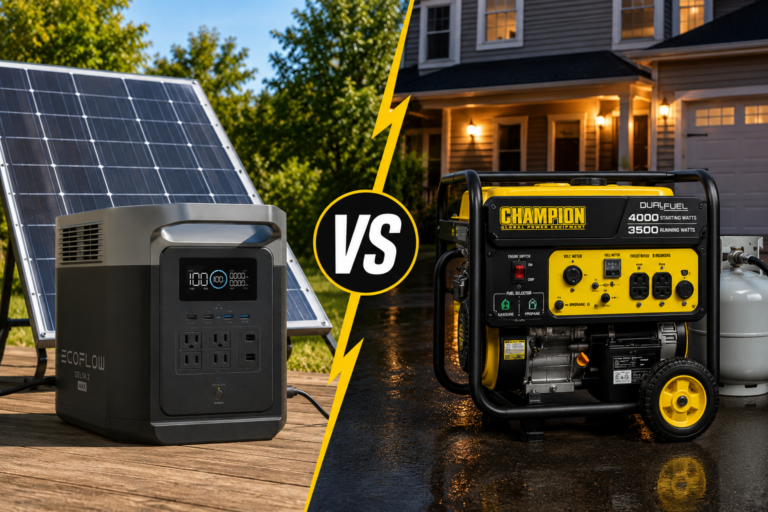
A portable power station can provide electricity for small appliances and electronics when the grid is down. Unlike gasoline generators, battery power stations do not produce combustion exhaust while discharging and can generally be used indoors according to their instructions.
However, the amount of energy available is limited by battery capacity, inverter efficiency, and the electricity each device consumes.
EcoFlow DELTA 2: Backup Power for Household Electronics
The EcoFlow DELTA 2 is a portable battery power station with approximately 1,024 watt-hours of nominal battery capacity. It can be useful for charging phones, operating radios, running LED lighting, and powering compatible small electronics.
Its ability to operate larger appliances depends on the appliance’s wattage, startup requirements, and the station’s rated output.

BLUETTI Elite 30 V2: Compact Emergency Backup Power
The BLUETTI Elite 30 V2 is a compact portable power station featuring a 288Wh LiFePO4 battery and 600W rated AC output. It’s a practical choice for charging phones, emergency radios, LED lanterns, and other small electronics during winter blackouts.
Its portable design makes it suitable for emergency preparedness, camping, and short-term backup power. It also supports compatible solar charging equipment when sufficient sunlight is available.
For extended outages, calculate your devices’ power consumption before relying on a compact power station. This model is not intended for whole-home heating or major appliances.

Anker PowerHouse 521: Portable Charging Option
The Anker PowerHouse 521 is another compact option for keeping communications equipment and personal electronics charged during shorter outages.
Compare usable battery capacity, output ratings, charging methods, and current product availability before choosing a power station.
Anker 521 Portable Power Station Upgraded with LiFePO...Calculate Your Backup Power Needs
To estimate runtime, divide usable battery energy in watt-hours by the total wattage of the devices you plan to operate.
For example, a 1,024 Wh power station running a continuous 50-watt load might provide approximately 17 hours if 85% of its nominal capacity is usable after losses. Actual results vary.
Medical equipment warning: Do not select a power station for essential medical equipment based only on a general product recommendation. Confirm compatibility, runtime, power quality, and backup requirements with the equipment manufacturer and the patient’s healthcare team.
Can Solar Panels Keep a Power Station Running?
Portable solar panels can help recharge batteries during extended outages, but winter conditions can significantly reduce solar production.
Short daylight hours, cloud cover, snow accumulation, and poor panel positioning can all limit charging.
Do not assume that a solar-compatible power station can operate continuously without adequate sunlight and sufficient panel capacity.
For a complete backup electricity strategy, visit our grid-down survival power guide.
4. Emergency Food and Cooking During a Winter Blackout
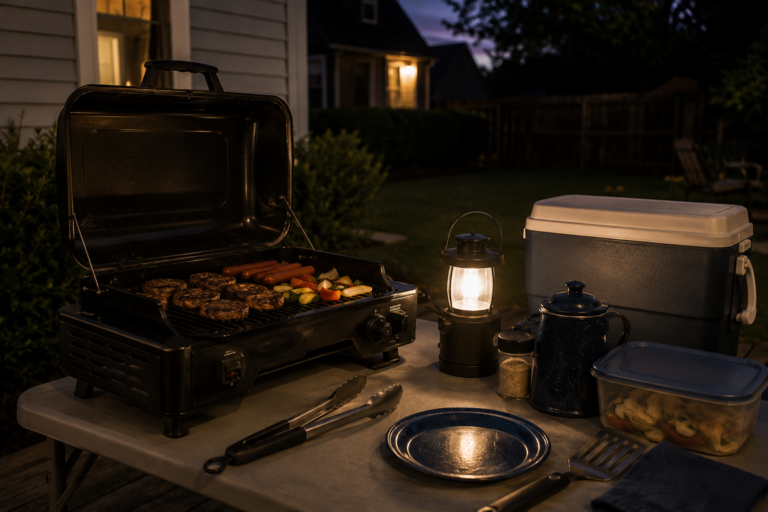
A winter blackout food plan should include meals that require little preparation, foods that can be eaten without cooking, and a safe method of heating food when conditions allow.
Prioritize sufficient calories, drinking water, food safety, and fuel conservation.
Mountain House Freeze-Dried Meals
Freeze-dried meals are convenient for emergency food storage because many have long shelf lives when kept in their original sealed packaging under appropriate conditions.
Check the manufacturer’s stated shelf life, preparation directions, serving sizes, and calorie content. Not every meal or package has the same storage life.

Jetboil Flash Cooking System
The Jetboil Flash is a compact outdoor cooking system designed for efficiently boiling water. It can be useful for preparing freeze-dried meals when operated in a safe outdoor location.
Critical safety warning: Never operate a Jetboil, backpacking stove, charcoal grill, or other outdoor combustion stove inside a home, tent, vehicle, or enclosed garage. These appliances can produce deadly carbon monoxide.
Follow the manufacturer’s instructions and protect the cooking setup from wind without enclosing it or blocking ventilation.
Jetboil Flash: Jetboil Flash 1.0L Fast Boil Stove for Camping and...
Gas One Dual-Fuel Camping Stove
A compatible dual-fuel camping stove can provide an additional outdoor cooking option during an extended power outage.
Use only the approved fuel type and operate the stove in the location and conditions permitted by its manufacturer. Do not use it as an indoor heater.
GasOne 15,000 BTU Propane or Butane Stove Dual Fuel Stove...Build a Three-Level Emergency Food Supply
- No-cook foods: Ready-to-eat canned foods, nut butter, crackers, and other shelf-stable options.
- Quick-preparation foods: Freeze-dried meals, instant oatmeal, and foods requiring limited cooking.
- Long-term pantry staples: Rice, pasta, lentils, beans, and other foods that may require more fuel and water.
Rotate foods according to their individual expiration, best-by, and storage recommendations rather than applying one universal six-month rotation rule.
If the refrigerator or freezer loses power, follow USDA food-safety guidance. A closed refrigerator generally keeps food cold for about four hours; a full freezer may maintain safe temperatures for approximately 48 hours, or about 24 hours if half full, provided the door stays closed.
5. Emergency Water Storage and Frozen Pipes
Winter storms can interrupt water service, damage plumbing, or make water unsafe to drink. A household should store drinking water before severe weather whenever possible.
A practical starting point is at least one gallon of water per person per day for drinking and basic sanitation, with additional water for medical needs, pets, and other circumstances.
Store Water Before the Storm
- Keep commercially bottled water or properly stored drinking water available.
- Use food-grade containers intended for potable water.
- Store water where it is protected from freezing.
- Keep separate supplies for sanitation when practical.
- Follow local utility guidance for protecting plumbing from frozen pipes.
Do not assume bathtub water is safe to drink. Unless the tub and storage method are appropriate for potable water, reserve it for sanitation or other non-drinking purposes.
Water storage container: Reliance Products Aqua-Tainer 7 Gallon Rigid Water...
Can You Drink Melted Snow?
Snow may provide an emergency water source, but melting it does not make it microbiologically safe.
Collect the cleanest available snow, melt it using a safe method, and treat the resulting water appropriately before drinking.
Snow and runoff can contain microorganisms, chemicals, road salt, and other contaminants. Boiling or ordinary camping filters do not reliably remove all chemical contamination.
Portable Water Filters
Personal water filters can help remove certain microorganisms and sediment, depending on their design and certifications.
However, many common backpacking filters do not remove viruses or dissolved chemical contaminants.
LifeStraw Peak Series - Personal Water Filter Straw for...Gravity Water Filters
Gravity-fed filters may be convenient for processing larger quantities of water without electricity.
Before relying on any model, check its documented performance against bacteria, protozoa, viruses, and other relevant contaminants.
ProOne Big+ Gravity Water Filter System - High Capacity...Disinfecting Emergency Drinking Water
When water is suspected of containing disease-causing microorganisms, boiling is generally a reliable disinfection method when the water is not chemically contaminated.
Bring clear water to a rolling boil for one minute, or three minutes at elevations above 6,500 feet.
If boiling is impossible, follow current CDC or EPA instructions for an appropriate water disinfectant. Household bleach concentrations vary, so do not apply a single number of drops to every bleach product.
Water containing fuel, toxic chemicals, or other hazardous contaminants may remain unsafe after boiling or disinfection.
Water purification tablets: Aquatabs Water Purification Tablets, 397mg 100 Pack, Camping...
Sanitation During a Water Outage
Store hand sanitizer, soap, cleaning supplies, disposable gloves, and heavy-duty trash bags.
If toilets stop functioning, follow local public-health guidance for temporary sanitation. Keep waste separate from drinking-water supplies and food preparation areas.
6. Emergency Communication When the Grid Goes Down
Cellular networks, internet service, and household electricity can all be disrupted during severe winter weather.
A communication plan should include at least one way to receive official alerts without relying on a charged smartphone or working home internet connection.
Midland ER310 Emergency Weather Radio
The Midland ER310 provides access to NOAA weather radio broadcasts in areas with coverage. It offers multiple charging options, including rechargeable battery power and a hand crank.
Keep the radio charged before severe weather and familiarize yourself with its controls and reception limitations.

Compare additional models in our best emergency solar radios guide.
Two-Way Radios for Family Communication
Two-way radios can be useful when household members need to communicate over short distances without cellular service.
For many families, properly certified FRS radios are a simpler option because they can be operated without an individual FCC license in the United States.
Radios such as the Baofeng UV-5R operate under different regulatory requirements. Transmitting on amateur radio frequencies generally requires an appropriate amateur radio license, except for narrowly defined emergency circumstances under applicable FCC rules.
Do not assume a programmable radio is legal to use on every frequency or can be used as an ordinary FRS radio.
BAOFENG UV-5R Ham Radio Handheld 8W Walkie Talkies...Create a Family Communication Plan
- Write down important telephone numbers.
- Identify a family meeting location.
- Choose an out-of-area emergency contact.
- Agree on scheduled communication check-ins.
- Keep charging cables and backup batteries together.
- Monitor official weather alerts and local emergency announcements.
Emergency Signaling Equipment
A whistle, flashlight, and reflective signaling equipment can help attract attention if you become stranded or need assistance.
Keep signaling equipment accessible rather than buried inside a storage container.
LED Flashlight High Lumens, Tactical Flashlight Battery...7. How to Prepare Your Home Before a Winter Blackout
Preparing your home before a storm can reduce the amount of emergency work required once the electricity fails.
Build a Winter Blackout Supply Bin
Organize supplies into labeled containers so family members can locate essential equipment quickly.
- Warmth: Blankets, insulated clothing, sleeping bags, and approved emergency heating equipment.
- Lighting: LED lanterns, headlamps, flashlights, and spare batteries.
- Backup power: Charged power stations, charging cables, and compatible solar equipment.
- Food: Ready-to-eat meals, shelf-stable foods, and a manual can opener.
- Water: Drinking-water containers and appropriate treatment supplies.
- Communication: Emergency radios, printed contact lists, and signaling equipment.
- Safety: First-aid supplies, fire extinguishers, smoke alarms, and carbon monoxide alarms.
Inspect Equipment Before Winter
At the beginning of the cold-weather season:
- Test flashlights and lanterns.
- Recharge portable power stations according to manufacturer guidance.
- Inspect heating equipment and fuel connections.
- Check smoke and carbon monoxide alarms.
- Review emergency food and water supplies.
- Confirm your family’s evacuation and communication plans.
Reduce Heat Loss Before a Storm
Install appropriate weatherstripping, address drafts, maintain insulation, and prepare window coverings before severe winter weather arrives.
Do not block combustion-air openings, required ventilation, or emergency exits.
Outdoor Emergency Lighting
Solar-powered outdoor lights may help illuminate walkways and entrances, although winter sunlight and snow cover can reduce charging performance.
Tuffenough Solar Outdoor Lights 2500LM 210 LED Security...Fire and Carbon Monoxide Protection
Install and maintain smoke alarms and carbon monoxide alarms according to applicable guidance and manufacturer instructions.
Keep an appropriate fire extinguisher accessible and make sure household members know how to use it.
Kidde Carbon Monoxide Detector, AA Battery Powered, Portable...Generator safety: Never run a gasoline, propane, or diesel generator inside a home, basement, garage, or enclosed structure. Operate it outdoors, at least 20 feet from doors, windows, and vents where feasible, with exhaust directed away from the building. Follow the manufacturer’s additional clearance instructions.
When Should You Leave Home During a Winter Blackout?
Sheltering in place is not always the safest decision.
Consider relocating to an approved warming center or another safely heated location when:
- You cannot maintain a safe indoor temperature.
- Someone is developing symptoms of hypothermia.
- A household member depends on medical equipment without sufficient backup power.
- Your heating equipment cannot be operated safely.
- Authorities issue evacuation instructions.
- Your home has serious storm damage, flooding, or another immediate hazard.
Plan transportation before roads become impassable, and follow official local travel advisories.
Frequently Asked Questions About Winter Blackouts
How long will a house stay warm without electricity?
It depends on insulation, outdoor temperature, wind, the building’s thermal mass, and how warm the home was before the outage. There is no reliable universal number of hours. Monitor indoor temperatures and household members rather than relying on a fixed estimate.
Can you safely use a propane heater indoors?
Only use a heater specifically approved for the intended indoor application, and follow all manufacturer requirements for ventilation, clearances, fuel, and supervision. Carbon monoxide alarms provide an important additional layer of protection but do not make unsafe heater operation acceptable.
Can a portable power station run a home furnace?
Some power stations can operate certain furnace systems, but compatibility depends on startup wattage, electrical requirements, wiring, and runtime. A furnace may require a suitable transfer arrangement or professionally installed backup system. Do not connect a power station to household wiring using an improvised connection.
How much water should you store for a winter power outage?
Start with at least one gallon per person per day, then account for pets, medical needs, food preparation, and sanitation. A longer outage may require significantly more water.
What is the safest way to cook during a blackout?
Ready-to-eat foods avoid the need for cooking altogether. When cooking is necessary, use an appliance only in the location and manner approved by its manufacturer. Outdoor camping stoves and charcoal grills must not be used indoors or in enclosed spaces.
Final Thoughts: Build a Winter Blackout Plan Before the Next Storm
A reliable winter blackout survival plan combines safe heating, insulated clothing, emergency lighting, stored drinking water, shelf-stable food, backup electricity, and a dependable way to receive weather alerts.
Start with the essentials you already own. Test your equipment, identify gaps, and gradually improve your supplies before severe weather arrives.
Most importantly, know the limits of your emergency equipment and have a backup location if your home can no longer remain safely heated.
Winter preparedness isn’t about owning the most gear. It’s about having a practical plan that protects your household when the grid goes down.
Continue Building Your Emergency Preparedness Plan
- Emergency Heat Without Electricity
- Best Emergency Lights for Power Outages
- Grid-Down Survival Power Guide
- Best Emergency Solar Radios
Affiliate disclosure: This article contains Amazon affiliate links. As an Amazon Associate, The Savvy Survivalist earns from qualifying purchases at no additional cost to you.