5 Best Survival Kits for Beginners
Getting started with emergency preparedness can feel overwhelming, especially when you’re trying to figure out which supplies your household actually needs. One of the easiest ways to begin is with a ready-made survival kit that brings essential emergency supplies together in one convenient package.
This post contains affiliate links. I may earn a small commission at no extra cost to you. Learn more.
The best survival kits for beginners provide a practical starting point for preparing for power outages, severe storms, evacuations, earthquakes, and other unexpected emergencies. Many include basic food and water supplies, first aid materials, emergency blankets, flashlights, and useful survival tools.
However, not every survival kit offers the same level of protection. Some focus on disaster evacuation, while others emphasize medical supplies, food storage, or general outdoor survival equipment.
In this guide, we’ll examine five popular emergency survival kits, explain their strengths and limitations, and show you how to customize a 72-hour emergency kit for your household.
For a broader approach to preparing your home, start with our Emergency Preparedness Master Plan.
Quick Guide: Choosing Your First Survival Kit
Before buying a preassembled emergency kit, consider these five questions:
- How many people? Choose supplies for every household member.
- How long? Start with at least 72 hours of emergency supplies.
- What emergencies? Prepare for the disasters most likely in your area.
- What is included? Check actual food, water, medical, and shelter quantities.
- What is missing? Plan to add medications, clothing, documents, and personal necessities.
Important: A kit advertised as a 72-hour survival kit does not necessarily provide enough water, calories, or equipment for every person for three full days. Always check the contents before relying on it.
The following five emergency kits offer different approaches to beginner preparedness. Each has advantages depending on your household size, storage space, budget, and emergency planning goals.
Emergency kits can vary in their contents, even when sold under similar product names. Before choosing a kit, compare the included supplies, food and water quantities, and the number of people it is designed to support.
1. Ready America 72-Hour Deluxe Emergency Kit
Best for: Beginners who want a straightforward emergency kit for basic disaster preparedness.
The Ready America 72-Hour Deluxe Emergency Kit is designed around the idea of keeping essential supplies together for a short-term emergency. It is a reasonable starting point for someone who has never assembled an emergency bag before.
Depending on the version, Ready America kits may include emergency food and drinking water, basic first aid supplies, protective masks, lighting, and emergency blankets.
The biggest advantage of this type of kit is convenience. Instead of buying every small item separately, you get an organized starting collection that can be stored in a closet, vehicle, or designated emergency location.
What to Look for in the Package
- Emergency food and drinking water rations
- Basic first aid supplies
- Emergency blankets or other temporary protection
- Flashlight and batteries
- Protective masks and hygiene essentials
- Portable storage bag or backpack
Although these supplies cover several important categories, they should not be confused with a complete household emergency plan.
Most basic first aid kits are intended for minor injuries. They may not include the equipment or training needed for serious bleeding, fractures, or other medical emergencies.
Likewise, included drinking water may be insufficient for a full three-day period, particularly in hot weather.
Pros
- Convenient starting point for new preppers
- Combines several emergency essentials in one package
- Easy to store in an accessible location
- Useful as a foundation for a customized emergency bag
Cons
- Basic medical supplies may need upgrading
- Food and water quantities require verification
- May not include enough clothing or weather protection
Recommended upgrades: Add a quality headlamp, work gloves, extra drinking water, personal medications, and a portable phone charger.


2. EVERLIT Complete Earthquake and Disaster Kit
Best for: Households looking for a broader collection of emergency tools and first aid supplies.
The EVERLIT Complete Earthquake and Disaster Kit is another option for people who want an organized emergency backpack without assembling every component from scratch.
EVERLIT offers different emergency kit configurations, so the exact contents depend on the version purchased. Some packages emphasize first aid supplies and survival tools, while others include additional food and water provisions.
This style of kit may appeal to families living in areas where earthquakes, tornadoes, hurricanes, or other natural disasters could force a quick evacuation.
One advantage of a tool-focused emergency kit is that it can help fill gaps in a household’s existing preparedness supplies.
For example, a family may already have bottled water and shelf-stable food stored at home but lack an organized emergency backpack containing first aid materials, lighting, and small survival tools.
What to Look for in the Package
- Organized first aid supplies
- Emergency flashlight or lighting equipment
- Basic survival and repair tools
- Emergency shelter or warmth supplies
- Food and water, if included in the selected version
- Backpack compartments for organization
Be careful when comparing survival kits based only on their advertised item counts.
A kit containing hundreds of pieces may count individual bandages, cotton swabs, or other small medical supplies as separate items. That does not automatically make it more useful than a smaller, carefully selected kit.
Focus on the quality and usefulness of the equipment rather than the total number of pieces.
Pros
- Potentially useful combination of medical and survival supplies
- Convenient organization for emergency evacuation
- Can supplement an existing household emergency stockpile
- Suitable for customization as needs change
Cons
- Exact contents vary by package configuration
- High advertised item counts can be misleading
- Some included tools may be basic quality
Recommended upgrades: Add a reliable water filter, prescription medications, a paper map, and additional first aid supplies appropriate to your training.

3. Redfora Complete Earthquake Bag
Best for: Beginners who prioritize organized evacuation supplies and quick access to essential equipment.
The Redfora Complete Earthquake Bag is designed around the concept of having a ready-to-carry emergency supply bag available when evacuation becomes necessary.
Rather than searching through cabinets and storage bins during an emergency, a prepared backpack allows you to gather essential supplies quickly.
Depending on the package selected, Redfora emergency bags may contain food and water rations, hygiene items, first aid supplies, emergency blankets, and practical disaster-response equipment.
Organization is especially valuable when several people in a household need to access supplies under stressful conditions.
Keeping medical supplies, drinking water, lighting, and personal items in designated compartments makes it easier to find what you need.
What to Look for in the Package
- Emergency food and drinking water
- First aid supplies
- Personal hygiene items
- Emergency blankets or shelter materials
- Basic tools and signaling equipment
- Organized backpack storage
When choosing an evacuation bag, consider the weight as carefully as the contents.
A fully loaded backpack that is too heavy to carry comfortably may become a liability if you need to walk several miles.
Each adult should be able to carry their own emergency supplies safely. Children may carry small age-appropriate bags containing lightweight personal items, but adults should plan for their essential needs.
Pros
- Designed for organized emergency evacuation
- Convenient starting point for family preparedness
- Multiple categories of supplies in one location
- Easy to personalize with additional equipment
Cons
- May require additional food and water
- Included tools may not meet every household’s needs
- Loaded weight should be evaluated before an evacuation
Recommended upgrades: Add extra socks, a compact rain poncho, a whistle, personal hygiene supplies, and copies of important documents.

4. ReadyWise Emergency Survival Backpack
Best for: Beginners who want a portable emergency bag with a focus on food and basic disaster supplies.
ReadyWise is known for emergency food products, and its emergency backpack offerings combine preparedness supplies with portable storage.
For many beginners, food is one of the first concerns when preparing for an extended power outage or evacuation.
However, an emergency backpack should provide more than meals. Drinking water, first aid supplies, lighting, sanitation, and weather protection are equally important.
Depending on the selected ReadyWise package, the backpack may include emergency food products and other survival necessities.
Before purchasing, review the number of servings, total calories, preparation instructions, and amount of drinking water included.
Why Calories and Water Matter
Emergency food manufacturers sometimes advertise the number of servings rather than the number of complete meals.
A package containing numerous servings may still provide fewer calories than a person needs during three days of activity.
Some freeze-dried meals also require additional drinking water for preparation. This means your stored water must cover both hydration and cooking.
Check the shelf life of every included food and water product individually. Do not assume all components expire on the same date.
Pros
- Convenient portable emergency food option
- Can support a broader disaster preparedness plan
- Useful for people starting an emergency food supply
- Backpack format simplifies storage and transportation
Cons
- Some meals may require cooking or rehydration
- Serving counts may not equal full daily calorie needs
- Additional drinking water is usually necessary
Recommended upgrades: Add ready-to-eat snacks, extra drinking water, a metal cup, utensils, and a suitable outdoor cooking method for situations where cooking is safe and practical.

5. Blue Coolers Blue Seventy-Two Emergency Backpack
Best for: Households wanting a compact emergency bag that can be stored near an exit or included in an evacuation plan.
The Blue Coolers Blue Seventy-Two Emergency Backpack is marketed as a portable emergency preparedness solution.
Like other preassembled kits, its main advantage is that it provides a starting collection of supplies in one location.
This approach is useful for beginners who want to establish a basic level of preparedness before building a more comprehensive emergency stockpile.
Emergency backpacks can also be helpful when preparing for weather-related evacuations, including hurricanes, wildfires, and severe storms.
However, the usefulness of any kit depends on the actual supplies included and whether they match the needs of the people who will use them.
What to Look for in the Package
- Emergency food and water supplies
- First aid materials
- Emergency blankets or temporary shelter supplies
- Flashlight or other lighting equipment
- Basic emergency tools
- Portable backpack or storage system
Pay particular attention to the bag’s weight, storage layout, and available space for personal supplies.
A survival kit that cannot accommodate medications, clothing, and important documents may require an additional bag.
Pros
- Portable design for emergency storage
- Convenient for beginning a preparedness plan
- Can be customized for local disaster risks
- Useful as a dedicated evacuation supply bag
Cons
- Actual contents and quantities must be verified
- May not provide complete 72-hour coverage
- Personal supplies must be added separately
Recommended upgrades: Add N95 respirators for appropriate particulate hazards, protective eyewear, spare clothing, a power bank, and printed evacuation routes.

What Should a Beginner’s 72-Hour Survival Kit Include?
Buying a preassembled kit is only the first step. Every household should review its supplies and fill any gaps before an emergency occurs.
A useful 72-hour emergency kit should cover drinking water, food, shelter, first aid, sanitation, lighting, communication, and personal necessities.
1. Drinking Water
Water should be one of your highest priorities.
A common starting recommendation is at least one gallon of water per person per day for drinking and basic sanitation, with additional water needed in hot weather or for certain medical and household needs.
For a family of four, that means a minimum starting supply of 12 gallons for three days.
Most portable emergency backpacks cannot comfortably carry that much water. This is why it is important to distinguish between a grab-and-go bag and a larger emergency water supply stored at home.
Consider keeping additional water containers at home and a portable water treatment method for situations where your primary supply becomes unavailable.
2. Emergency Food
Choose shelf-stable foods that require little or no preparation.
Good options include protein bars, canned foods, nut butter, dried fruit, crackers, and ready-to-eat emergency rations.
Freeze-dried meals can also be useful, but remember that many require water and a way to heat it.
Include foods that match your family’s dietary needs and regularly check expiration dates.
For longer-term planning, our Emergency Preparedness Master Plan explains how to expand beyond a basic three-day supply.
3. First Aid and Medications
Every emergency kit should include basic first aid supplies such as adhesive bandages, sterile dressings, gauze, medical tape, disposable gloves, and wound-cleaning supplies.
Include personal prescription medications where feasible and permitted by your prescribing clinician or pharmacist.
Medication storage conditions and refill restrictions vary, so plan ahead rather than assuming you can safely keep every medication in a vehicle or backpack year-round.
First aid training is just as important as the supplies themselves. Consider learning CPR, basic first aid, and bleeding control.
4. Emergency Shelter and Clothing
Emergency blankets, ponchos, tarps, and weather-appropriate clothing help protect against exposure.
Pack an extra pair of socks, sturdy gloves, a warm layer, and rain protection.
In winter, include additional insulation appropriate for your climate.
Emergency blankets can provide temporary protection but should not be considered replacements for proper cold-weather clothing or sleeping equipment.
5. Lighting and Communication
Power outages frequently accompany major storms and natural disasters.
Pack at least one dependable flashlight or headlamp, along with spare batteries or another suitable power source.
A portable phone charger can help maintain communication when electrical outlets are unavailable.
A weather radio provides another way to receive emergency information when cellular networks are unreliable.
For additional options, read our Emergency Solar Radio Guide.
6. Hygiene and Sanitation
Basic hygiene supplies can make an extended emergency more manageable.
Consider including toilet paper, hand sanitizer, soap, wet wipes, trash bags, menstrual supplies, and other personal necessities.
Store hygiene supplies separately from food and medical equipment to keep the bag organized.
7. Important Documents and Cash
Keep copies of identification, insurance information, emergency contacts, and important medical information in a waterproof container.
A modest amount of cash in small bills may be useful when electronic payment systems are unavailable.
Protect sensitive documents against loss or unauthorized access.
How to Choose the Best Survival Kit for Your Needs
There is no single emergency survival kit that works perfectly for every household.
Before choosing one, consider the emergencies most likely to affect your location and the amount of time you may need to remain self-sufficient.
For Apartment and Urban Residents
Prioritize portable water, first aid supplies, lighting, communication equipment, and an evacuation plan.
Choose a bag that can be carried down stairs if elevators stop working.
For Families With Children
Plan for every family member rather than relying on a single advertised kit capacity.
Add child-appropriate food, medications, hygiene supplies, comfort items, and seasonal clothing.
Keep essential adult supplies in bags that adults can carry.
For Rural Households
Rural emergencies may involve longer travel distances and delayed access to services.
Consider additional water storage, backup communications, vehicle supplies, and equipment appropriate for local weather conditions.
For Vehicle Emergency Kits
Choose compact equipment that can withstand the storage conditions inside your vehicle.
Inspect food, water, batteries, and medications regularly because extreme temperatures can damage certain supplies.
Winter vehicle kits should include extra clothing, blankets, a flashlight, and a safe emergency communication plan.
Ready-Made Survival Kit vs. Building Your Own
One common question among new preppers is whether buying a complete survival kit is better than assembling supplies individually.
Both approaches have advantages.
Advantages of Ready-Made Kits
- Convenient for people starting from scratch
- Reduces the number of individual purchasing decisions
- Keeps many basic supplies together
- Provides a foundation for future upgrades
Advantages of Building Your Own Kit
- Allows you to choose the quality of every item
- Can be customized for family size and medical needs
- Makes it easier to avoid unnecessary equipment
- Lets you prioritize supplies for local emergencies
For most beginners, a practical approach is to start with a suitable ready-made kit and then customize it over time.
Do not assume that buying a survival backpack means your emergency preparations are finished.
The most important supplies are the ones that actually meet your household’s needs and that you know how to use.
Common Mistakes Beginners Make With Survival Kits
Even a well-equipped emergency bag can become less useful if it is poorly maintained or stored in the wrong location.
Trusting the Advertised Survival Duration
A kit labeled for three days may not contain enough water or calories for every household member.
Review the actual quantities and calculate your needs independently.
Buying Too Many Tools
More equipment is not always better.
Prioritize water, food, first aid, clothing, communication, and shelter before adding specialized survival gadgets.
Ignoring Expiration Dates
Food, water products, batteries, medications, and certain medical supplies require periodic inspection or replacement.
Set a reminder to inspect your kit at least twice a year.
Storing the Kit Somewhere Inaccessible
An emergency backpack buried beneath boxes in a garage may be difficult to retrieve during an evacuation.
Keep it in a designated location that household members know and can access quickly.
Never Practicing With the Equipment
Learn how to operate the flashlight, water filter, radio, and other supplies before an emergency occurs.
A short household preparedness drill can reveal missing equipment or problems with your evacuation plan.
Frequently Asked Questions
Are premade survival kits worth buying?
They can be worthwhile for beginners who want a convenient starting point. However, the value depends on the quality, quantity, and usefulness of the included supplies. Most kits still require personalization.
How much should a beginner spend on a survival kit?
There is no universal budget. Start with essential water, food, first aid, lighting, and communication supplies. A less expensive kit supplemented with carefully chosen equipment may be more useful than a costly package filled with unnecessary tools.
Is a 72-hour emergency kit enough?
A three-day kit is a useful starting point, particularly for evacuation planning. However, some emergencies can disrupt electricity, water, transportation, and essential services for much longer. Expand your household supplies when possible.
Should every family member have a survival backpack?
Each household member should have access to appropriate supplies. Adults can divide essential equipment between bags, while children may carry lightweight personal items suited to their age and abilities.
How often should I check my emergency survival kit?
Inspect it at least every six months and after using any supplies. Replace expired items, check batteries, update clothing sizes, and review changing household needs.
Final Thoughts: Which Survival Kit Should Beginners Choose?
The best survival kits for beginners are those that provide useful supplies, fit your household’s needs, and are easy to access during an emergency.
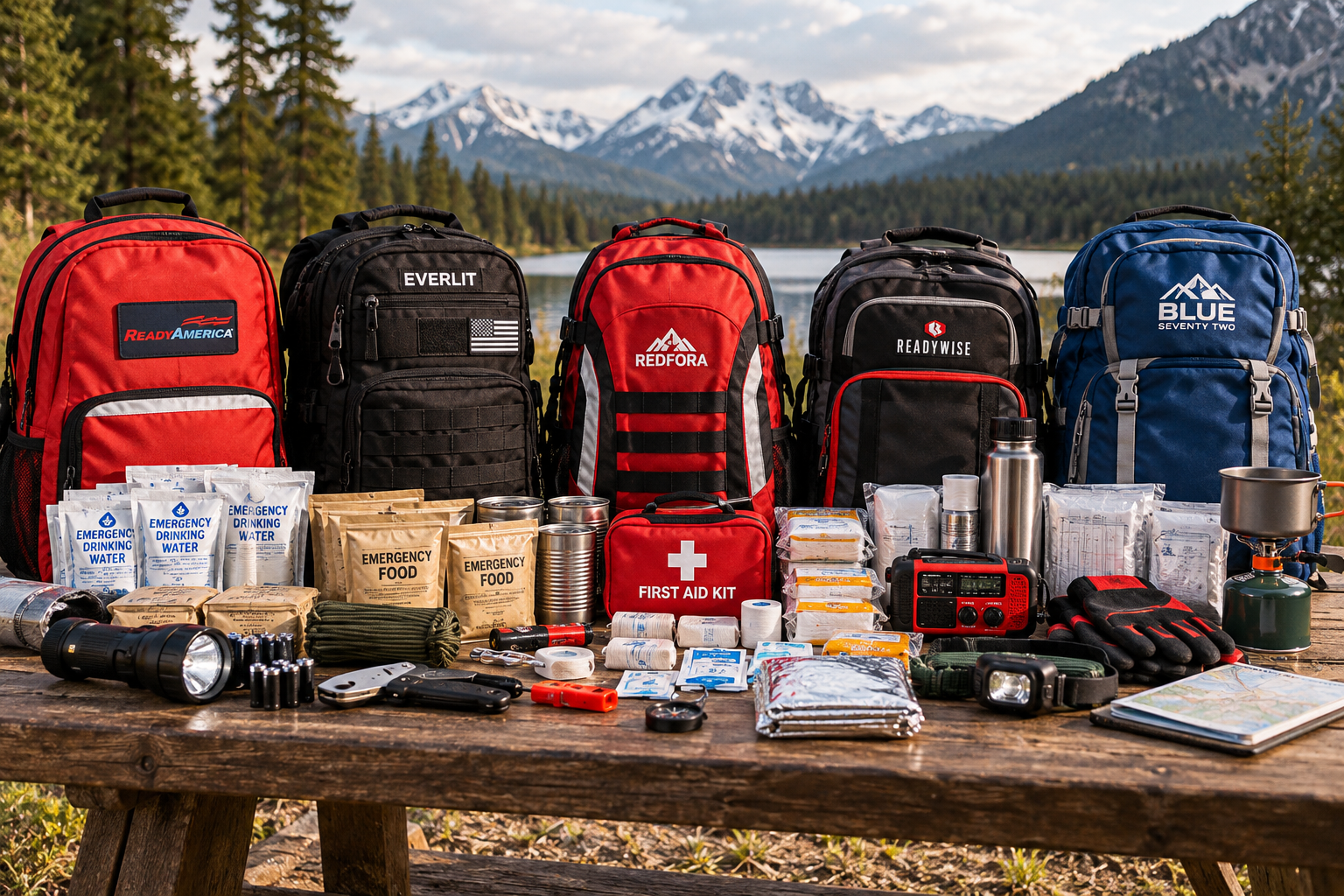
The Ready America, EVERLIT, Redfora, ReadyWise, and Blue Coolers emergency kits each offer a different starting point for organizing emergency supplies.
Rather than choosing based only on the number of items or an advertised survival duration, compare the actual contents, available water, food calories, medical supplies, and carrying weight.
Whichever kit you choose, customize it with your family’s medications, clothing, important documents, and other necessities.
A ready-made survival kit is the beginning of emergency preparedness, not the entire plan.
Further Reading
- Emergency Preparedness Master Plan
- Ultimate Camping Guide
- What to Pack for Camping
- How to Organize Camping Gear
- Emergency Solar Radio Guide
- Best Survival Knives and Multitools
Affiliate disclosure: This article contains Amazon affiliate links. As an Amazon Associate, The Savvy Survivalist earns from qualifying purchases at no additional cost to you.