How to Cook During a Power Outage Safely
Knowing how to cook during a power outage becomes important when an electrical failure lasts longer than a few hours. Without a working stove or microwave, preparing ordinary meals can become difficult, particularly when refrigerated food is warming, outdoor conditions are poor, or emergency cooking fuel is limited.
This post contains affiliate links. I may earn a small commission at no extra cost to you. Learn more.
For a short blackout, sandwiches, canned foods, and other ready-to-eat meals may be enough. A longer outage requires more planning. You need to decide which foods are still safe to eat, which cooking methods can be operated safely, and how to conserve fuel and clean water until electricity returns.
A dependable emergency cooking plan does not require an elaborate outdoor kitchen. It starts with a suitable backup cooking method, shelf-stable foods that are easy to prepare, and equipment you have already tested. Having a second cooking option is useful when weather, equipment failure, or fuel availability makes your primary method impractical.
This guide compares emergency cooking equipment, explains how to manage refrigerator and freezer foods, and provides practical meal ideas for blackouts lasting several days. For broader household planning, see our Emergency Preparedness Plan.
Quick Answer: How to Cook During a Power Outage
The simplest approach is to keep several days of ready-to-eat food and have a tested backup cooking method. A properly installed household gas range may offer limited cooking capability during an outage, depending on its design. Outdoor propane camp stoves, grills, and other camping equipment can prepare hot meals when used according to their instructions.
Keep fuel-burning camping appliances outdoors unless the manufacturer expressly approves the specific appliance for indoor use. Never bring charcoal grills, outdoor propane grills, generators, or wood-burning camp stoves inside a home or garage. Maintain working carbon monoxide alarms and follow food-safety temperature guidelines when deciding whether refrigerated or frozen food is still usable.
Best preparation: Combine a safe cooking method with no-cook meals, stored drinking water, appropriate cookware, and enough legally and safely stored fuel for your expected needs.
Why Cooking During a Power Outage Requires Planning
An electric range becomes unusable as soon as the power fails, and a microwave cannot heat meals without a functioning electrical supply. Some gas ranges continue to provide limited cooking capability, but others depend on electronic controls or safety systems that prevent operation during an outage. The cooking options available to your household therefore depend on the equipment already installed and the backup systems you have prepared.
Food preservation adds another challenge. Refrigerators and freezers can maintain safe temperatures for a limited period when their doors remain closed, but eventually perishable foods require refrigeration, an alternative cold-storage method, or disposal. Cooking does not make food safe again after it has been held at unsafe temperatures for too long.
Emergency cooking also uses resources that are easy to overlook. Preparing dried foods may require considerable water and fuel, while washing dishes becomes more difficult if water service is interrupted. Even lighting matters when preparing meals outdoors or handling hot cookware after sunset.
A practical plan accounts for these connected needs rather than focusing only on buying a camp stove. Our guide to how long food lasts without power explains how to protect refrigerated and frozen supplies during an outage.
Choosing Your Primary and Backup Cooking Methods
Start with the conditions you are most likely to face. A household experiencing occasional thunderstorms may need a simple outdoor stove and several days of shelf-stable meals. A rural household preparing for prolonged winter outages may want additional cooking options that can function in cold weather, provided they have a safe outdoor location to operate them.
Before purchasing equipment, consider how many people you need to feed, whether you have suitable outdoor space, the amount of fuel you can safely store, and how much cooking time your usual meals require. A stove that works well for boiling a single pot of water may be inconvenient when preparing meals for a larger family.
Practice preparing at least one complete meal with your backup equipment under normal conditions. This will help you understand its fuel consumption, cookware requirements, setup procedure, and limitations before an emergency occurs.

The Best Ways to Cook During a Power Outage
Several cooking methods can provide dependable backup capability, but each has different safety requirements and operating limitations. Portable stoves are convenient for simple meals, grills can handle larger quantities of food, and solar or wood-fired equipment may reduce dependence on stored gas fuel under suitable conditions.
The comparison below provides a starting point for selecting equipment. Always use the manufacturer’s instructions for the specific appliance rather than assuming that every stove using the same fuel can be operated in the same location.
| Cooking Method | Operating Location | Fuel or Power | Best Application |
|---|---|---|---|
| Portable butane stove | Follow the model’s approved-use instructions; many are outdoor-only | Butane canisters | Boiling water and simple meals |
| Propane camp stove | Outdoors unless specifically approved otherwise | Propane | Regular meal preparation |
| Gas or charcoal grill | Outdoors only | Propane or charcoal | Grilling and cooking multiple portions |
| Solar oven | Outdoors in suitable sunlight | Solar energy | Supplemental cooking and fuel conservation |
| Rocket stove | Outdoors only | Suitable dry wood | Boiling and cooking with wood fuel |
| Electric induction cooktop | Indoors, with a compatible electrical supply | Generator or adequately sized battery system | Indoor cooking without combustion exhaust |
Portable Butane Stoves
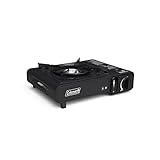
Portable butane stoves are compact single-burner appliances that can heat canned meals, boil water, or prepare simple dishes. Their small size makes them convenient for households with limited storage space, and many models use replaceable butane canisters that are easy to install according to the manufacturer’s directions.
However, portability should not be confused with indoor safety. Some butane appliances are designed for specific commercial or residential applications, while others are intended strictly for outdoor use. Follow the exact model’s instructions, including its ventilation, cookware-size, and fuel-canister requirements. Never use an outdoor-only stove indoors simply because a window is open.
Butane also performs poorly in very cold conditions because low temperatures reduce fuel vaporization. If winter storms are a primary concern, consider whether another cooking method would be more dependable in your climate. Store canisters according to their instructions and keep them away from excessive heat and ignition sources.

Propane Camp Stoves
A two-burner propane camp stove is a practical choice for households that want to prepare familiar meals during a blackout. Depending on the model, it can accommodate pots and skillets for cooking eggs, heating soup, boiling water, or preparing several portions at once. Propane is also convenient because it does not deteriorate through the same oxidation processes that affect stored gasoline.
Most conventional propane camping stoves are designed for outdoor use. Operate them in a suitable outdoor location with adequate clearance from combustible materials, and never bring them into a house, garage, enclosed porch, or tent unless the specific equipment is expressly approved for that environment. Follow the manufacturer’s requirements for fuel connections, regulators, and compatible cylinders.
Small disposable cylinders are convenient for occasional cooking, while compatible refillable systems may be more economical for frequent use. Larger cylinders and hoses should only be used when the stove manufacturer approves that configuration. Never improvise adapters or connections.
For households already using propane-powered emergency equipment, a compatible camp stove may fit into a broader fuel plan. Our Solar Generator vs. Gas Generator Guide explains how fuel-powered and battery-based systems compare for backup electricity.
Outdoor Gas and Charcoal Grills
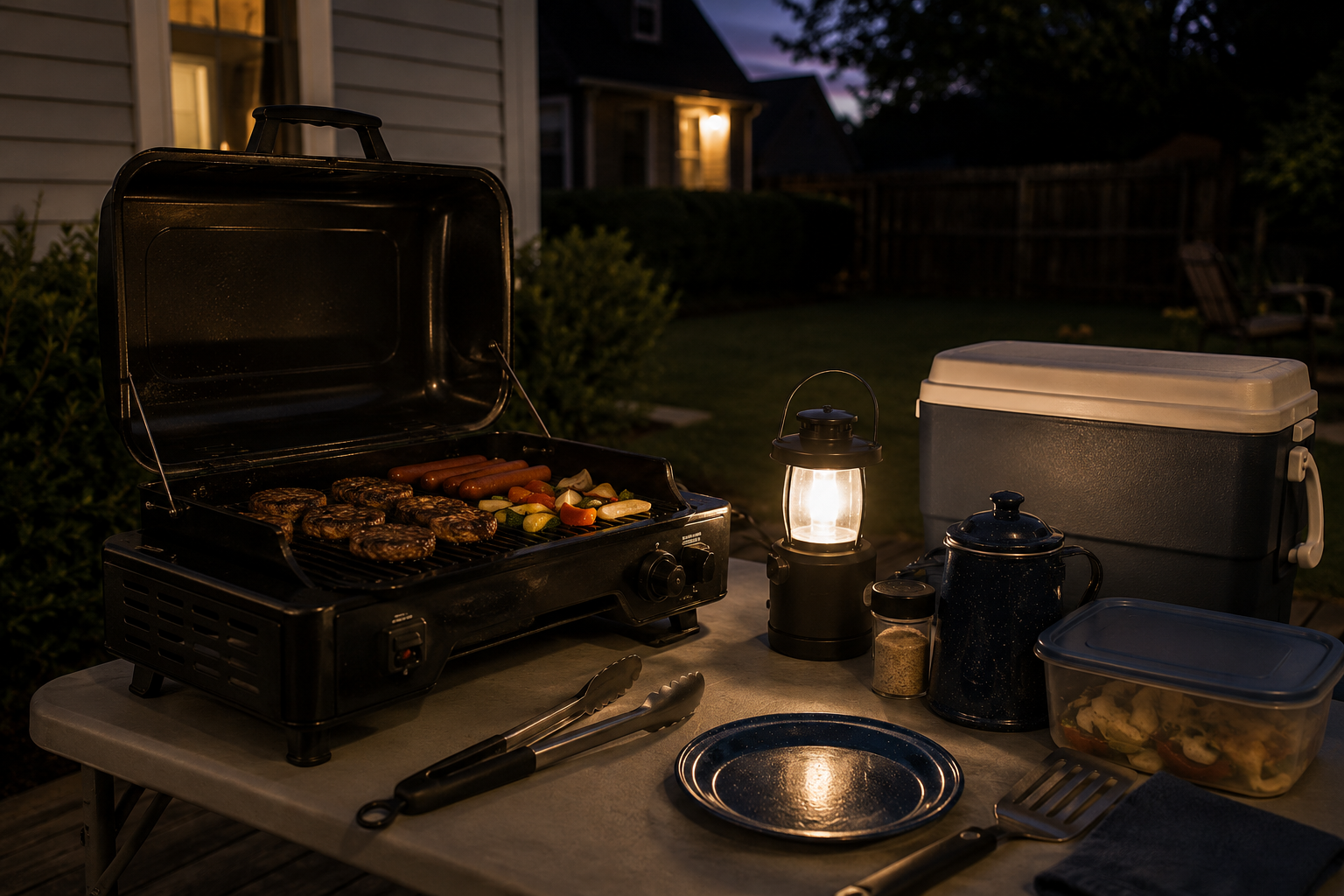
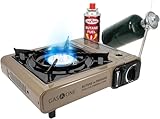
An outdoor grill can be especially useful during a blackout because many households already own one and know how to operate it. Gas grills provide convenient heat control, while charcoal grills can cook substantial quantities of food without electricity. Both are suitable for preparing meats, vegetables, and other foods when outdoor conditions allow.
Grilling may also help you use perishable food that is still within safe temperature limits. For example, raw meat that remains properly chilled can be cooked for an immediate meal rather than left in a refrigerator that is gradually warming. However, cooking food does not reset its storage life. Cooked leftovers must still be eaten promptly or held at safe temperatures.
Never operate a gas or charcoal grill inside a home, garage, tent, or enclosed patio. Both types can create dangerous combustion hazards, and charcoal continues producing carbon monoxide even when flames are no longer visible. Place grills outdoors according to their manufacturer’s clearance requirements and protect children and pets from hot surfaces.

Solar Ovens
Solar ovens use concentrated sunlight to heat food without consuming propane, butane, or charcoal. This makes them a useful supplemental cooking option during extended outages, particularly when fuel deliveries are disrupted and sunny weather is available. Some models can prepare soups, casseroles, grains, and baked foods, although cooking times vary substantially.
Their main limitation is dependence on sunlight. Cloud cover, short winter days, shade, and poor panel orientation can reduce temperatures and extend cooking times. Because solar cooking may heat food slowly, use a food thermometer to confirm safe internal temperatures and avoid leaving perishable ingredients in unsafe temperature ranges.
A solar oven should complement another dependable cooking method rather than serve as the household’s only emergency stove. It can conserve stored fuel on suitable days, but it may provide little assistance during the severe weather responsible for the outage.
Wood Fires and Rocket Stoves
Wood-fired cooking can be useful when dry fuel is available and outdoor conditions are suitable. Rocket stoves concentrate heat around a cooking vessel and can use relatively small pieces of dry wood, making them convenient for boiling water and preparing one-pot meals. Traditional outdoor fire pits can also support cooking with appropriate equipment.
These methods require more attention than a conventional kitchen stove. Wind, rain, smoke, flying embers, and unstable cookware can create hazards, while local burn bans or wildfire conditions may prohibit their use entirely. Keep suitable fire-extinguishing equipment nearby and never operate wood-burning camp equipment inside an occupied building or enclosed area.
Wood cooking is most practical as an additional option for households with appropriate outdoor space, available fuel, and experience managing open flames safely.

What Foods Should You Cook First During a Blackout?
Food safety should guide your meal choices when refrigeration is interrupted. The objective is not to cook everything immediately, but to preserve safe temperatures for as long as possible and use perishable foods before they become unsafe. Opening the refrigerator repeatedly to inspect its contents can accelerate warming, so a refrigerator thermometer and a simple food inventory are valuable.
According to standard USDA and FDA emergency guidance, an unopened refrigerator generally keeps food cold for about four hours. A full freezer may maintain a safe temperature for approximately 48 hours, while a half-full freezer may last around 24 hours, provided the doors remain closed. Actual conditions vary, so thermometer readings are more dependable than time estimates alone.
Important Food Safety Rule
Refrigerated perishable foods that have been above 40°F for more than two hours should generally be discarded. Frozen foods may be safely refrozen or cooked if they still contain ice crystals or measure 40°F or below, subject to food-specific guidance.
Never taste food to determine whether it is safe. Harmful bacteria may be present even when food smells and looks normal. Cooking spoiled or improperly stored food does not reliably eliminate every foodborne hazard.
First Priority: Refrigerated Perishable Foods
When a lengthy outage becomes likely, check the refrigerator’s temperature and consider using foods that remain safely chilled but are unlikely to stay cold much longer. These commonly include raw meat, seafood, poultry, eggs, milk, and cooked leftovers. Plan meals around foods that can be prepared and eaten promptly, rather than producing large batches you cannot refrigerate afterward.
If you have a properly supplied cooler with ice or a functioning backup refrigerator, you may be able to preserve some items longer. Keep cold foods at 40°F or below and monitor temperatures rather than assuming that a cooler remains safe simply because ice is present.
Do not automatically treat every cheese, condiment, fruit, or vegetable the same way. Different foods have different storage requirements, and official food-safety charts distinguish between items that must be discarded and those that may remain usable.

Second Priority: Freezer Foods
A closed freezer generally maintains safe temperatures longer than a refrigerator, making it sensible to leave frozen foods undisturbed during the early stages of an outage. When power restoration is uncertain, monitor the freezer temperature if possible and plan how to use foods as they begin thawing.
Foods that still contain ice crystals or remain at 40°F or below may often be cooked or refrozen safely. Once perishable foods have been above safe temperatures for too long, they should be discarded regardless of whether they are later cooked. Meat, poultry, seafood, and prepared meals require particular care because improper temperature control can create serious foodborne illness risks.
Grouping frozen items together and minimizing door openings can help maintain cold temperatures. If you have a generator or sufficiently sized battery backup, refrigeration may be a higher priority than cooking every frozen item immediately.
Third Priority: Shelf-Stable and Ready-to-Eat Foods
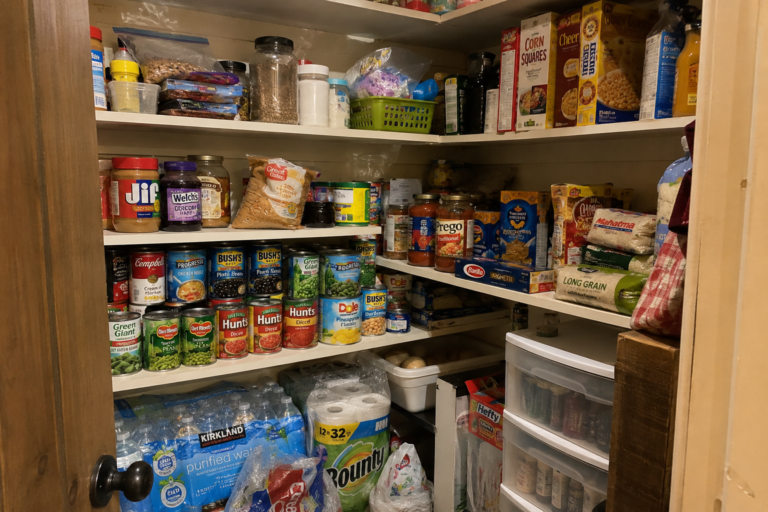
After refrigerated and frozen supplies have been managed, shelf-stable foods become the foundation of emergency meals. Canned soups, beans, tuna, chicken, peanut butter, crackers, oatmeal, instant potatoes, and ready-to-eat meals provide flexibility without requiring continuous refrigeration before opening.
Some canned foods can be eaten without heating when they are commercially prepared and labeled as ready to eat. Others, including dry rice, pasta, and certain dehydrated foods, require water and cooking. Choose a mixture of no-cook and quick-cook options so your household can still eat when outdoor cooking is impractical or fuel supplies run low.
Once opened or cooked, many shelf-stable foods become perishable and must be eaten promptly or refrigerated. Plan portion sizes around what your household can consume safely at one sitting.

How to Conserve Cooking Fuel During an Extended Outage
Cooking fuel can become a limiting resource when electricity remains unavailable for several days. A small stove may be capable of preparing every meal, but the amount of propane or butane consumed depends on burner output, cooking time, weather conditions, and the cookware being used. Estimating fuel requirements before an outage helps prevent unpleasant surprises.
One effective strategy is to choose meals that require less heating. Instant oatmeal, couscous, canned beans, precooked shelf-stable grains, and soups generally need less cooking time than dried beans, large roasts, or long-simmered dishes. When appropriate, using a lid on a pot reduces heat loss and can shorten cooking time.
Batch preparation may also conserve fuel, provided cooked food can be consumed promptly or kept at safe temperatures. Preparing several portions at once is not beneficial if leftovers must sit unrefrigerated for hours afterward.
Estimate Fuel Consumption Before You Need It
Begin with the stove manufacturer’s stated fuel consumption or runtime under specified conditions. A burner operated at full output will generally consume fuel faster than one operated at a lower setting, and windy or cold weather may increase cooking time. Your own practice sessions can provide a more realistic estimate than advertised maximum runtime alone.
Simple Emergency Cooking Fuel Estimate
Total burner hours = Cooking sessions per day × Average burner hours per session × Number of days
For example, two cooking sessions per day lasting 30 minutes each amount to one burner-hour daily. Over seven days, that equals seven burner-hours. Compare this requirement with your stove’s fuel consumption specifications and allow for realistic operating conditions.
This calculation estimates cooking time, not the number of fuel canisters or cylinders you should store. Actual fuel quantities must be calculated from the specific equipment’s consumption rate and must comply with applicable storage requirements.
Choose Meals That Use Less Water
Fuel conservation and water conservation often work together. Preparing pasta in a large pot of boiling water or cooking dried beans from scratch may use more resources than heating canned beans, instant potatoes, or other foods that require little added water. One-pot meals can also reduce the amount of washing needed afterward.
For households planning extended outages, a selection of low-water foods can make emergency cooking substantially easier. Our Long-Term Emergency Water Storage Guide explains how to organize drinking and household water supplies.
Indoor vs. Outdoor Cooking Safety During a Power Outage
The most serious emergency cooking hazards are often unrelated to the food itself. Carbon monoxide, fire, burns, and fuel leaks can become dangerous when appliances are operated in locations for which they were not designed. A cooking device that works safely at an open campsite may be hazardous inside a kitchen, garage, or enclosed porch.
Carbon monoxide is especially concerning because it is colorless and odorless. Exposure can cause headache, dizziness, nausea, weakness, confusion, and potentially fatal poisoning. Symptoms can be mistaken for fatigue or illness, making prevention and working carbon monoxide alarms essential.
Carbon Monoxide and Fire Safety Warning
Never operate charcoal grills, outdoor propane grills, generators, rocket stoves, or wood-burning camp stoves inside homes, garages, basements, tents, or enclosed porches. Opening doors or windows does not make an outdoor-only appliance safe for indoor use.
Use fuel-burning cooking equipment only in locations specifically permitted by the manufacturer and applicable safety requirements. Maintain working carbon monoxide alarms, keep combustible materials away from hot appliances, and never leave an operating stove unattended.
Can You Use a Gas Stove When the Power Is Out?
Some household natural gas and propane ranges can operate during an electrical outage, although their capabilities depend on the model. Certain stovetop burners may allow manual ignition, while ranges with electronic safety controls, electric ignition interlocks, or other features may not function without power.
Check the appliance owner’s manual before attempting manual ignition. Only use a manual-lighting procedure if the manufacturer specifically permits it. Never bypass safety controls, modify ignition components, or attempt to light an appliance when gas is accumulating or you suspect a leak.
Gas ovens may have additional electrical dependencies even when stovetop burners remain usable. Never use a gas oven or stovetop to heat the home, and maintain appropriate ventilation and working carbon monoxide alarms when operating approved indoor gas appliances.
Cooking Safely With Battery Backup
A portable induction cooktop or other suitable electric cooking appliance can provide an indoor option when connected to an adequately sized backup electrical system. Unlike combustion-based camping stoves, an electric cooktop does not produce carbon monoxide at the point of use, although electrical and burn hazards still require attention.
The limitation is power demand. Induction burners often require substantial wattage, and many small battery power stations cannot operate them for long. Check the cooktop’s input requirements, the power station’s continuous output rating, battery capacity, and cookware compatibility before relying on this arrangement.
Battery-powered cooking can be particularly useful for short meals when outdoor conditions are unsuitable, but it should be tested with the actual equipment before an outage.
Emergency Cooking Equipment Worth Keeping Ready
A reliable emergency cooking kit should support the meals your household actually eats. Buying multiple stoves is less useful than having one dependable primary method, a workable alternative, compatible fuel, and cookware that can be handled safely. Additional supplies should address the practical challenges of preparing food without normal kitchen electricity or running water.
Backup Stove and Compatible Fuel
Choose a stove that can prepare meals for your household size and operate safely in your available cooking area. Confirm which fuel cylinders, canisters, regulators, or electrical connections are approved for the model. Keep the instructions accessible, particularly if several household members may need to use the equipment.
Store fuel in accordance with the manufacturer’s directions and local fire regulations. Propane cylinders, butane canisters, and other fuels have different storage requirements, and none should be kept near excessive heat or ignition sources. Inspect equipment and connections before use, and do not operate appliances with damaged components or suspected leaks.

Durable Cookware
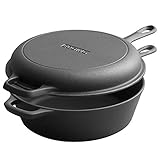
For outdoor cooking, a sturdy pot with a well-fitting lid and a skillet compatible with your stove will handle most simple meals. Cast iron is durable and works well with many grills and wood-fired cooking systems, although its weight and heat retention require careful handling. Lightweight cookware may be more convenient for compact camping burners.
Match cookware to the appliance’s approved dimensions. Oversized pots or griddles can trap heat around portable fuel canisters and create dangerous overheating conditions. A pot that fits the stove properly is more important than owning a large collection of specialized cooking equipment.
Clean Water and Basic Sanitation Supplies
Emergency meals require water for drinking, cooking, handwashing, and cleaning utensils. Keep a separate supply of potable water and choose foods that can be prepared without excessive washing. Disposable plates may reduce cleanup requirements temporarily, although safe hand hygiene and food preparation remain essential.
Water filtration and purification equipment can provide additional options, but each method has limitations. A filter that removes sediment or certain microorganisms may not remove chemical contamination, so use equipment appropriate for the water source and follow public health advisories during emergencies.

Lighting, Thermometers, and Fire Safety Equipment
Battery-powered lanterns and headlamps make it easier to prepare meals when kitchen lighting is unavailable. A refrigerator/freezer thermometer helps determine whether cold foods remain safe, while a food thermometer confirms that meat and other cooked foods reach appropriate internal temperatures.
Keep a suitable fire extinguisher accessible and learn how to use it before an emergency. Working smoke and carbon monoxide alarms are also essential, particularly when household gas appliances or other combustion equipment are involved.
Backup Electricity for Refrigeration
Protecting refrigerated food may be a more efficient use of emergency power than cooking large amounts of food immediately. A properly sized generator or battery system can help maintain safe refrigerator and freezer temperatures, depending on appliance demand and available runtime.
Before relying on backup electricity, measure or estimate the refrigerator’s actual consumption and startup requirements. Our Solar Generator vs. Gas Generator Guide compares different approaches to emergency electricity.

Simple Blackout Meals That Require Minimal Fuel
Emergency meals should be easy to prepare, use familiar ingredients, and avoid creating large quantities of leftovers that cannot be refrigerated. The most practical choices often combine shelf-stable proteins, grains, vegetables, and ready-to-eat foods. You do not need complicated recipes to provide satisfying meals during several days without electricity.
| Meal | Ingredients | Cooking Requirements |
|---|---|---|
| Peanut butter sandwiches | Bread, peanut butter, shelf-stable fruit | No cooking |
| Chicken and crackers | Canned chicken, crackers, shelf-stable seasonings | No cooking |
| Instant oatmeal | Instant oats, water, dried fruit | Hot water |
| Bean and tortilla wraps | Ready-to-eat canned beans, tortillas, shelf-stable toppings | Optional heating |
| Soup with crackers | Ready-to-eat canned soup, crackers | Optional heating |
| Instant potatoes and canned vegetables | Instant potatoes, water, canned vegetables | Hot water and brief heating |
| Couscous with canned tuna | Couscous, canned tuna, water, seasonings | Hot water and short resting time |
Keep enough variety to accommodate dietary needs and avoid relying entirely on meals that require boiling water. If outdoor cooking becomes impossible during a storm, ready-to-eat foods provide an important fallback.
How to Build a Practical Power Outage Cooking Plan
A useful cooking plan should be simple enough for every responsible household member to understand. Instead of relying on an elaborate collection of equipment, organize the essentials into a few clear decisions: how meals will be prepared, what foods will be used first, how fuel and water will be managed, and what happens if the primary cooking method becomes unavailable.
Step 1: Identify Your Cooking Location
Determine where approved cooking equipment can be operated safely. If your primary backup is an outdoor camp stove, choose a suitable location that meets the manufacturer’s clearance and ventilation requirements. Plan for rain, wind, and darkness without moving outdoor-only equipment into enclosed spaces.
Households without safe outdoor cooking space may need to prioritize no-cook meals or a compatible electric cooking system powered by backup electricity. Do not assume that an apartment balcony, covered walkway, or shared building area permits open-flame cooking; building rules and local fire regulations may prohibit it.
Step 2: Organize Meals by Storage Requirements
Keep a simple inventory of refrigerated foods, freezer foods, and shelf-stable meals. During an outage, monitor cold-storage temperatures and make food decisions using official safety guidance. Ready-to-eat pantry foods should remain available when cooking is not possible or when refrigerated food has become unsafe.
Store ingredients for several meals that require little preparation and use portions appropriate for your household. This reduces waste and prevents the need to hold cooked leftovers without refrigeration.
Step 3: Calculate Cooking Fuel and Water
Estimate how many meals you will cook each day, how long your stove will operate, and how much water those meals require. Compare your expected cooking time with the appliance’s fuel consumption information and confirm that any planned fuel supply can be stored legally and safely.
Remember that drinking, handwashing, and cleaning also require water. Choose some meals that can be eaten without heating and keep enough potable water to prepare the foods you intend to store.
Step 4: Prepare an Alternative
A second cooking method is valuable when equipment fails, fuel runs out, or severe weather prevents outdoor cooking. This alternative might be another approved stove using a different fuel, an appropriately powered electric cooktop, or simply several days of nutritious ready-to-eat food.
The goal is flexibility rather than owning every available cooking device. A backup option is only useful if it can be operated safely under the conditions you expect to face.
Step 5: Test the Plan Before Storm Season
Prepare a complete meal using your emergency equipment, including the cookware, lighting, and water you would have available during a real outage. Record how much fuel was used and identify any missing supplies. Check that the stove is in good condition and that fuel connections and operating procedures meet the manufacturer’s requirements.
Repeat the inspection periodically and replace supplies as necessary. Familiarity with your equipment makes it easier to respond calmly when electricity fails.
What to Do During the First 48 Hours Without Power
The first two days of an outage are primarily about protecting food, assessing available resources, and avoiding unnecessary cooking risks. A household that has prepared its equipment and meals in advance can focus on safe temperatures and essential needs rather than rushing to buy supplies.
First Four Hours
Keep refrigerator and freezer doors closed as much as possible. Check the outage information available from your utility and determine whether backup refrigeration power is necessary. For meals, use ready-to-eat pantry foods or other items that do not require opening the refrigerator repeatedly.
If you have an approved household cooking appliance that operates without electricity, consult its instructions before use. Do not improvise indoor cooking with camping equipment.
Four to Twenty-Four Hours
Monitor refrigerated food temperatures and apply food-safety guidance when deciding which foods can still be used. If you have a suitable outdoor cooking method, prepare foods that remain safe and can be eaten promptly. Otherwise, use shelf-stable meals and conserve cooking fuel for tasks that genuinely require heating.
Freezer doors should remain closed unless necessary. A full freezer may preserve safe temperatures much longer than a refrigerator, so opening it repeatedly to inspect food is usually counterproductive.
Twenty-Four to Forty-Eight Hours
Continue monitoring freezer temperatures and determine whether backup electricity, additional ice, or alternative cold storage can preserve food safely. Discard perishable items that no longer meet safe temperature requirements. Do not rely on appearance, smell, or taste to judge safety.
As the outage continues, shift toward simple shelf-stable meals and review remaining fuel and water. Avoid cooking large quantities unless they can be consumed promptly or stored safely afterward.
For a broader look at early outage priorities, see What Happens in the First 24 Hours of a Blackout and What Runs Out First in a Blackout?.
Emergency Power Outage Cooking Checklist
Use this checklist before severe weather to confirm that your household has a workable cooking plan. Review it whenever you change stoves, add new fuel supplies, or update your emergency food inventory.
Cooking and Food Safety Checklist
- Choose a primary emergency cooking method suitable for your household.
- Confirm where the equipment may be operated safely.
- Keep the manufacturer’s operating instructions accessible.
- Store compatible fuel according to applicable safety requirements.
- Maintain a backup option if the primary cooking method is unavailable.
- Keep several days of shelf-stable and ready-to-eat meals.
- Store enough potable water for drinking, cooking, and cleaning.
- Use refrigerator and freezer thermometers to monitor food temperatures.
- Keep a food thermometer for checking cooked meals.
- Maintain working smoke and carbon monoxide alarms.
- Keep suitable fire safety equipment accessible.
- Have appropriate cookware, utensils, and battery-powered lighting.
- Practice preparing a meal using the emergency equipment.
- Plan how to manage perishable foods during extended outages.
- Inspect fuel, equipment, and stored food periodically.
Frequently Asked Questions About Cooking During a Power Outage
What is the easiest way to cook without electricity?
A portable stove designed for your available cooking location is one option, but ready-to-eat meals are often the simplest solution during short outages. For hot meals, a suitable outdoor propane camp stove can provide dependable cooking capability. Households with appropriately sized backup electricity may also use compatible electric appliances indoors.
Can you use a butane stove inside the house?
Only if the specific appliance is expressly approved for indoor use and all manufacturer requirements can be met. Many portable camping stoves are outdoor-only, and ventilation alone does not make an unsuitable appliance safe indoors. Check the exact model’s instructions before use.
Can you cook on a gas stove when the power is out?
Some household gas ranges permit manual ignition of stovetop burners during an electrical outage, while others do not. Follow the manufacturer’s instructions and never bypass electronic safety controls. Gas ovens may have different operating requirements from stovetop burners.
How long will refrigerator food stay safe without electricity?
An unopened refrigerator generally maintains safe temperatures for about four hours. Perishable foods that have been above 40°F for more than two hours should generally be discarded. Use a refrigerator thermometer and follow official food-specific guidance rather than relying on smell or appearance.
Can you cook frozen meat after a power outage?
Frozen meat may often be cooked or refrozen if it still contains ice crystals or measures 40°F or below. If it has been held above safe temperatures for too long, cooking will not reliably make it safe. When the temperature history is uncertain, follow USDA or FDA guidance and discard questionable perishable food.
What foods are best for a long power outage?
Ready-to-eat canned foods, peanut butter, crackers, shelf-stable proteins, instant oatmeal, instant potatoes, and other foods requiring little water or heating are practical choices. Include variety and account for household dietary requirements. Store foods in portions that can be consumed without needing to refrigerate leftovers.
Is a propane or butane stove better for emergency cooking?
Both can prepare simple meals, but their performance and fuel arrangements differ. Propane is commonly used with larger outdoor camp stoves and may be more practical in cold weather, while compact butane stoves are convenient for smaller cooking tasks. Choose equipment based on approved operating location, expected temperatures, fuel availability, and household needs.
Can a portable power station run an electric cooktop?
Some portable power stations can operate compatible electric cooktops, but the appliance’s wattage and expected cooking duration determine whether the setup is practical. Check continuous output, battery capacity, and electrical compatibility before relying on the system. High-powered cooktops can drain smaller batteries quickly.
Build a Complete Blackout Preparedness Plan
Emergency cooking is only one part of maintaining a functioning household without electricity. Refrigeration, drinking water, lighting, communication, sanitation, and temperature control all influence how comfortably and safely a family can manage an extended outage.
Our Emergency Preparedness Plan provides a broader framework for organizing these priorities. You can also review Two-Week Power Outage Preparedness for planning beyond the first few days.
Free Blackout Preparedness Planner
Download our free Blackout Preparedness Planner to organize emergency food, cooking supplies, backup power, water, communication, and other essential household needs.
Final Thoughts
Learning how to cook during a power outage is about more than finding an alternative heat source. A reliable plan must account for food safety, approved equipment, fuel availability, clean water, and the conditions in which cooking will take place.
Begin with a dependable primary cooking method and several days of shelf-stable meals that can be prepared with minimal resources. Add a practical backup option, keep suitable cookware and lighting available, and monitor refrigerated foods carefully when electricity is interrupted. These preparations can help your household continue eating safely without depending on last-minute purchases or improvised cooking arrangements.
The most effective emergency cooking system is not necessarily the most expensive or complicated. It is one that matches your household’s needs, can be operated safely, and has been tested before the next outage occurs.
Further Reading
- The First 24 Hours of a Blackout — Understand the immediate priorities after losing electricity.
- First 72 Hours After a Disaster — Organize essential household needs.
- How Long Food Lasts Without Power — Protect refrigerated and frozen food.
- How to Store Food Without Refrigeration During a Blackout — Explore alternative food-storage approaches.
- Long-Term Emergency Water Storage — Prepare clean water supplies.
- Solar Generator vs. Gas Generator — Compare backup power options.
- Two-Week Power Outage Preparedness — Plan for extended blackouts.
- Emergency Preparedness Plan — Build a complete household preparedness strategy.
Safety References and Additional Resources
- Food and Drug Administration: Food and Water Safety During Power Outages and Floods — Food temperatures and emergency handling.
- Centers for Disease Control and Prevention: Carbon Monoxide Poisoning — Prevention and symptoms.
- Ready.gov: Power Outages — Household outage preparedness.
- National Fire Protection Association: NFPA — Fire safety standards and resources.