Building a 30-Day Emergency Pantry on a Budget
Building a 30-day emergency pantry on a budget does not require spending thousands of dollars on freeze-dried meals, purchasing specialized survival food kits, or filling an entire room with shelves stacked from floor to ceiling. In reality, most families can create a practical emergency food reserve by gradually purchasing inexpensive grocery store items that they already eat, use, and understand how to prepare. A well-built pantry provides security during power outages, severe weather events, temporary job losses, supply chain disruptions, transportation problems, and other situations that can make routine grocery shopping difficult or impossible.
This post contains affiliate links. I may earn a small commission at no extra cost to you. Learn more.
Many people delay food storage because they assume preparedness requires a large upfront investment, but that belief often prevents them from taking the simple first steps that create meaningful progress. A family that adds a few extra pantry items during each shopping trip can build a substantial reserve over time without straining the household budget. Small purchases made consistently often produce better results than large emergency purchases made after store shelves have already started emptying.
The events of recent years demonstrated how quickly normal supply chains can become stressed when demand suddenly increases. Products that were widely available one day became difficult to find the next, and many households discovered that the food stored in their kitchens would not last nearly as long as they originally assumed. As discussed in How Much Food Should a Family Store for 30 Days?, estimating food requirements accurately is often more challenging than most people expect because daily consumption adds up surprisingly fast when every meal must come from stored supplies.
A properly planned emergency pantry should focus on affordability, nutrition, practicality, and shelf stability rather than attempting to mimic television depictions of survival stockpiles. The goal is not to create a warehouse. The goal is to create a reliable food reserve capable of supporting your household through short-term disruptions and providing additional breathing room during longer emergencies.
In this guide, you’ll learn how to build a 30-day emergency pantry without overspending, which foods provide the best value for the money, how to store those supplies properly, and how to develop a food reserve that continues growing stronger over time while remaining realistic for an average household budget.
Quick Answer
Building a 30-day emergency pantry on a budget is best done gradually by purchasing inexpensive grocery store foods your family already eats. Focusing on staple foods, protein, and shelf-stable ingredients allows most households to create a practical emergency food reserve without spending hundreds of dollars all at once.
✓ Key Takeaways
- Buy foods your family already eats.
- Add a few extra items during every grocery trip.
- Store food in cool, dry locations.
- Rotate supplies regularly.
- Start small and build consistently.
Why Most Families Never Start an Emergency Pantry
Most families understand the importance of keeping extra food on hand, yet relatively few ever build a dedicated emergency pantry. The issue is rarely a lack of awareness. Instead, it is often a combination of competing financial priorities, misconceptions about preparedness, limited storage space, and the belief that there will always be enough time to prepare later. Unfortunately, emergencies tend to arrive without warning, leaving little opportunity to build food reserves once shortages, severe weather, or widespread disruptions have already begun.
One of the most common obstacles is the assumption that emergency food storage requires a large upfront investment. Many people picture expensive freeze-dried meals, commercial survival kits, or rooms filled with professionally packaged supplies and conclude that preparedness is beyond their budget. In reality, some of the most effective pantry items cost only a few dollars per package and can be purchased gradually during regular grocery trips. A family that adds just a handful of shelf-stable items each week can build a surprisingly substantial reserve within a few months.
Another challenge comes from the convenience of modern shopping habits. Grocery stores are designed to provide immediate access to food whenever it is needed, which encourages many households to keep only a small amount of inventory at home. During normal times this system works efficiently, but it also creates dependence on continuous deliveries, stocked shelves, and reliable transportation networks. As discussed in How Long Will Grocery Stores Have Food During an Emergency?, stores can experience rapid shortages when large numbers of people begin purchasing supplies at the same time.
Storage concerns also discourage many beginners. Apartment dwellers, renters, and homeowners with limited pantry space often assume they do not have enough room for meaningful food storage. However, emergency supplies can be distributed throughout a home using closets, under-bed storage containers, unused cabinet space, shelving units, and other overlooked areas. A thirty-day pantry does not necessarily require a dedicated storage room when space is used efficiently.
Some families hesitate because they worry that stored food will eventually expire and go to waste. This concern is understandable, especially when food prices are already high. The solution is not to avoid food storage altogether but to focus on foods that can be incorporated into normal meal planning. By rotating supplies regularly and using a first-in, first-out system, pantry reserves become part of everyday life rather than a forgotten collection of aging products. This approach allows households to maintain preparedness while minimizing waste.
There is also a tendency to underestimate how quickly disruptions can affect daily routines. Many emergencies do not begin with dramatic events that provide days of advance notice. Winter storms, severe thunderstorms, infrastructure failures, cyberattacks, transportation disruptions, and unexpected financial hardships can create immediate challenges that leave families relying on whatever resources are already available at home. Having food stored before those events occur provides options that cannot be purchased after the fact.
Preparedness is often viewed as an all-or-nothing project, which causes many people to postpone getting started until they feel they can do everything perfectly. The reality is that every extra day of food stored at home improves resilience. A household with one additional week of supplies is better prepared than a household with none. A household with two weeks is stronger still. Building a thirty-day pantry becomes much more achievable when viewed as a gradual process rather than a single large purchase.
The families that successfully build emergency food reserves are usually not the ones with the largest budgets. They are often the ones who consistently purchase a little extra food whenever opportunities arise, take advantage of sales, store foods they already consume, and steadily increase their reserves over time. Preparedness is less about making one large decision and more about developing small habits that continue producing results month after month.
How Much Food Does a Family Actually Need for 30 Days?
Before purchasing large quantities of food, it is important to understand how much a household will realistically consume during a thirty-day period. Many people underestimate their actual food requirements because they focus on individual meals rather than total calorie needs spread across weeks. A pantry that appears well stocked during normal circumstances can shrink rapidly when every breakfast, lunch, dinner, snack, and beverage must come from stored supplies without the option of making frequent trips to the grocery store.
While exact requirements vary based on age, activity level, medical conditions, climate, and personal preferences, most adults require somewhere between 2,000 and 2,500 calories per day to maintain normal energy levels. Children may require fewer calories depending on age, but their nutritional needs remain significant during extended emergencies. When these daily requirements are multiplied across an entire family and then extended over thirty days, the total amount of food needed becomes much larger than many households initially expect.
For example, a family of four consuming an average of 2,000 calories per person per day would require approximately 240,000 calories to cover a full month. If activity levels increase due to manual labor, storm cleanup, hauling water, operating without modern conveniences, or other emergency-related tasks, calorie needs may rise even further. This is one reason why relying solely on a few cases of canned goods or several bags of rice is rarely sufficient for a complete preparedness plan.
As discussed in How Much Food Should a Family Store for 30 Days?, emergency food planning works best when households estimate needs based on realistic consumption patterns rather than rough guesses. A family should consider how many meals are eaten at home each day, how often snacks are consumed, and which foods provide the greatest nutritional value relative to cost and storage space.
Another common mistake is focusing entirely on calorie totals while ignoring meal variety. Technically, a family could store enough rice and beans to meet calorie requirements for a month, but eating the same foods repeatedly can lead to menu fatigue, reduced morale, and decreased willingness to consume stored supplies. A practical emergency pantry should contain a mix of carbohydrates, proteins, fats, fruits, vegetables, seasonings, and comfort foods that help maintain both physical health and household morale during stressful situations.
Water requirements should also be considered alongside food storage planning because many pantry items require preparation. Dry rice, pasta, beans, oatmeal, dehydrated foods, and powdered products all depend on having sufficient water available. A family that stores large amounts of dry food without adequate water reserves may discover that a significant portion of their food supply becomes difficult to prepare during an emergency. For this reason, food storage plans should be coordinated with a dedicated water supply strategy such as the recommendations outlined in How Much Water Does a Family Need for 30 Days?.
Budget-conscious preparedness also benefits from understanding food density. Some products provide hundreds or even thousands of calories per dollar spent, while others consume significant storage space without contributing much nutritional value. Staple foods such as rice, pasta, oats, flour, peanut butter, dried beans, and canned meats often provide far greater value than specialty survival products marketed toward emergency preparedness enthusiasts.
Rather than attempting to calculate every calorie with scientific precision, most families achieve excellent results by building a pantry capable of supplying three meals per day for every household member for thirty days while maintaining a reasonable balance of nutrition, convenience, and variety. Once this foundation exists, additional food reserves can be added gradually as budget and storage space allow.
The goal is not to create a perfect mathematical food inventory. The goal is to ensure that if grocery stores become difficult to access, supply chains experience interruptions, or household finances suddenly become strained, your family has enough food available at home to remain comfortable, healthy, and self-sufficient for an extended period.
The Biggest Mistake People Make When Building Food Storage
The biggest mistake most people make when building an emergency pantry is purchasing food they would never normally eat. This often happens because preparedness marketing focuses heavily on specialized survival products, long shelf-life meals, and bulk food purchases that seem impressive on paper but rarely fit into a household’s everyday eating habits. As a result, many beginners spend hundreds or even thousands of dollars on supplies that remain untouched for years, eventually expire, or become forgotten in the back of a closet.
Building a pantry around unfamiliar foods creates several problems at the same time. First, family members may dislike the taste, making those foods difficult to rely on during an actual emergency. Second, because the products are not part of normal meal planning, they are rarely rotated. Third, households miss the opportunity to learn how to prepare those foods efficiently before they are needed. An emergency is a poor time to discover that nobody enjoys eating the supplies that were stored for months or years.
Preparedness works best when food storage becomes an extension of normal grocery shopping rather than a completely separate project. Every item added to a pantry should ideally serve two purposes. It should provide emergency reserves while also remaining useful during everyday life. When families store foods they already consume regularly, rotation becomes simple because older supplies are naturally used and replaced during routine shopping trips.
For example, a household that regularly eats pasta can simply purchase extra boxes whenever they go on sale. A family that uses canned vegetables several times each week can gradually increase inventory without changing eating habits. Peanut butter, oatmeal, rice, canned chicken, canned tuna, soup, flour, sugar, coffee, cooking oil, and similar pantry staples often provide excellent emergency storage value because they are already familiar components of everyday meals.
Another costly mistake involves chasing shelf life while ignoring practicality. Some products advertise storage lives measured in decades, which sounds attractive from a preparedness perspective. However, if the food is expensive, difficult to prepare, or unlikely to be eaten under normal circumstances, the extended shelf life may not provide as much value as expected. A pantry filled with foods that can be rotated naturally often provides greater long-term value than one filled entirely with products designed to remain untouched for twenty-five years.
Many beginners also focus heavily on quantity while overlooking nutritional balance. Purchasing hundreds of pounds of a single staple food may seem like an efficient way to build calorie reserves, but emergencies can last for weeks. Families require protein, fats, vitamins, minerals, and dietary variety to maintain health and energy levels over extended periods. A pantry that contains only inexpensive carbohydrates may meet calorie targets while still creating nutritional challenges.
Impulse buying is another problem that frequently appears when people first become interested in preparedness. News reports, severe weather forecasts, economic concerns, or social media discussions often create a sense of urgency that encourages rushed purchasing decisions. Instead of developing a structured plan, people buy whatever happens to be available at the moment. This approach usually produces an unbalanced collection of foods that may not work well together as complete meals.
A more effective strategy is to think in terms of meals rather than individual products. Instead of asking whether a particular item belongs in an emergency pantry, consider whether it contributes to breakfasts, lunches, dinners, snacks, or beverages your family already enjoys. This mindset helps create a pantry that remains practical, organized, and easier to manage over time.
Storage space is often wasted when households purchase oversized quantities of foods that provide little nutritional value. Large packages of snack foods, sugary treats, or highly processed convenience items can consume valuable storage areas while contributing relatively few useful calories or nutrients. Although comfort foods certainly have a place in emergency preparedness, they should complement a solid foundation of staple foods rather than replace it.
The same principle applies to expensive specialty survival products. Freeze-dried foods, emergency ration bars, and commercial preparedness kits can serve useful roles in certain situations, especially for long-term storage or evacuation supplies. However, they should generally supplement a pantry built around affordable grocery store foods rather than form the entire foundation of a family’s emergency food plan.
As discussed in Long-Lasting Survival Foods, many of the best emergency food options are products already sitting on grocery store shelves. Rice, beans, pasta, canned meats, oats, peanut butter, flour, canned fruits, canned vegetables, and shelf-stable cooking ingredients have helped families endure difficult times for generations because they are affordable, versatile, and easy to store.
Another overlooked issue involves preparation requirements. Some foods require significant amounts of water, fuel, cooking equipment, or preparation time. During a prolonged power outage or infrastructure disruption, those requirements may become more challenging to meet. When evaluating pantry items, households should consider how they would prepare those foods if normal utilities became unavailable. This is especially important when building a pantry intended to support blackout preparedness.
Families should also avoid the trap of comparing their pantry to what they see online. Preparedness content often showcases massive storage rooms, commercial shelving systems, and food inventories that took years to assemble. Comparing a new pantry to those examples can make the process feel overwhelming. A family that adds one week’s worth of food storage has already improved its preparedness position significantly compared to having no reserve at all.
Successful emergency food storage is usually built through consistency rather than large purchases. Small additions made during every grocery trip accumulate over time, creating a reserve that grows steadily without placing unnecessary pressure on the household budget. This gradual approach also allows families to identify which foods work best, which items are consumed most often, and which products deserve additional storage space.
The most resilient emergency pantries are rarely the most expensive. Instead, they are the ones built around foods that household members already enjoy eating, know how to prepare, can rotate regularly, and can afford to replace. Those practical considerations often determine whether a pantry remains useful years from now far more than impressive shelf-life claims or expensive packaging ever will.
Start With Foods Your Family Already Eats
If there is one principle that consistently separates successful emergency pantries from neglected food storage projects, it is building reserves around foods that are already part of a family’s normal routine. This approach eliminates many of the problems that cause preparedness efforts to fail because it keeps food rotation simple, reduces waste, improves budgeting, and ensures that stored supplies remain useful long before an emergency ever occurs.
When people first begin researching food storage, they are often exposed to images of specialized survival foods packaged for decades of storage. While those products certainly have a place within preparedness planning, many households would benefit far more from creating a solid foundation using foods that already appear on their dinner table every week. A pantry stocked with familiar foods becomes a practical extension of everyday life rather than a separate collection of supplies that only exists for worst-case scenarios.
The easiest way to identify which foods belong in an emergency pantry is to examine recent grocery receipts. Most households purchase the same core products repeatedly throughout the month. Those recurring purchases provide an excellent blueprint for emergency food storage because they reveal what family members actually consume rather than what they think they might consume during a crisis.
For example, a household that regularly eats spaghetti can increase preparedness simply by storing additional pasta, pasta sauce, canned tomatoes, and seasonings. Families that frequently prepare rice-based meals can gradually build larger reserves of rice and complementary ingredients. Households that rely on canned vegetables, soups, beans, peanut butter, oatmeal, cereal, canned fruit, or shelf-stable snacks can steadily increase inventory without making dramatic changes to shopping habits.
This strategy creates a natural rotation cycle. Instead of allowing food to sit untouched for years, older items are incorporated into normal meals while newly purchased products replace them. The result is a pantry that remains fresh, organized, and ready for use at all times. Food storage becomes less about preservation and more about maintaining a larger inventory of products that are already part of everyday living.
Children’s preferences should also be considered when selecting emergency food supplies. During stressful situations, familiar foods can provide comfort and stability that extends beyond simple nutrition. A pantry that contains foods children are willing to eat is far more valuable than one filled with products they refuse to touch. Emergencies create enough challenges without adding unnecessary battles over meals.
Another advantage of storing familiar foods is that preparation methods are already known. Family members understand cooking times, required ingredients, portion sizes, and storage requirements. There is no learning curve when the food is needed because those products are already integrated into normal household routines.
Preparedness should reduce uncertainty rather than introduce additional complications. Storing foods that are already understood helps accomplish exactly that.
The Budget Pantry Strategy That Works Better Than Buying Everything at Once
Many people never build a meaningful food reserve because they assume the entire pantry must be completed immediately. When they calculate the total cost of purchasing a full month’s worth of food in a single shopping trip, the number appears overwhelming. Faced with that expense, they postpone the project indefinitely and continue operating without any significant food reserve.
A more practical approach is to build an emergency pantry gradually over time. This method spreads costs across multiple weeks or months while allowing households to take advantage of sales, discounts, coupons, and seasonal pricing opportunities.
Instead of attempting to purchase thirty days of food at once, focus on adding a small number of items during every grocery trip. Even an additional ten to twenty dollars spent on pantry supplies each week can produce substantial results over the course of several months. Because the purchases are spread across time, the financial impact remains manageable while inventory steadily grows.
This strategy also provides flexibility. Families can adjust purchases based on changing budgets, sales opportunities, dietary preferences, and storage limitations. If rice is heavily discounted one week, extra rice can be added. If canned vegetables are on sale the following week, inventory can be expanded accordingly. Over time, these small decisions create a balanced pantry without requiring large financial sacrifices.
The gradual approach further reduces the risk of purchasing excessive quantities of foods that may not work well for the household. As supplies accumulate, families gain a better understanding of consumption patterns, storage capacity, and meal planning requirements. Adjustments can be made along the way rather than discovering expensive mistakes after a large purchase has already been made.
Many experienced preppers build their food reserves using exactly this method. While emergency preparedness is often portrayed as a large project completed all at once, the reality is that many well-stocked pantries were assembled over years through consistent purchasing habits rather than massive spending sprees.
Building preparedness slowly also aligns well with broader emergency planning goals. Food storage should not exist in isolation. Families should simultaneously consider water storage, emergency cash reserves, backup lighting, communication plans, and other preparedness priorities. As discussed in How Much Emergency Cash Should You Keep at Home?, spreading preparedness investments across multiple categories often produces greater resilience than focusing every dollar on a single area.
The objective is not simply to own more food. The objective is to create a household capable of functioning more independently when normal systems become disrupted.
💡 Pro Tip
Watch your local grocery store’s weekly sales flyer before shopping. Stock up on staple foods only when prices are below average to stretch your preparedness budget even further.
Week-by-Week Plan for Building a 30-Day Emergency Pantry
One of the easiest ways to make preparedness feel achievable is to divide the process into smaller stages. Rather than focusing on a complete thirty-day pantry, focus on what can be accomplished this week. Repeating that process consistently allows substantial food reserves to develop surprisingly quickly.
Week 1: Focus on Staple Foods
The first week should concentrate on inexpensive foods that provide large numbers of calories for relatively little money. These products form the foundation of many emergency pantries because they are versatile, affordable, and widely available.
- Rice
- Pasta
- Oatmeal
- Flour
- Sugar
- Cornmeal
- Dry beans
- Peanut butter
These staples provide flexibility because they can be combined into numerous meals while remaining affordable for most budgets.
Week 2: Add Protein Sources
Protein becomes increasingly important during extended emergencies because it supports energy levels, muscle maintenance, and overall health. Week two should focus on expanding protein reserves through shelf-stable foods.
- Canned chicken
- Canned tuna
- Canned salmon
- Dry beans
- Peanut butter
- Shelf-stable milk
- Protein-rich soups
These foods help create balanced meals rather than relying entirely on carbohydrates.
Week 3: Expand Variety and Meal Ingredients
Once basic calorie and protein requirements begin taking shape, additional ingredients can be added to improve meal quality and variety.
- Canned vegetables
- Canned fruit
- Pasta sauces
- Seasonings
- Bouillon cubes
- Cooking oil
- Coffee
- Tea
- Powdered drink mixes
Flavor becomes increasingly important during longer disruptions. A pantry that contains seasonings and meal ingredients is often far more enjoyable than one built solely around basic staples.
Week 4: Fill Gaps and Add Long-Term Storage Items
The final stage focuses on identifying weaknesses and expanding reserves where needed.
- Extra canned meats
- Additional rice and beans
- Freeze-dried backup foods
- Baking supplies
- Snack foods
- Comfort foods
- Shelf-stable desserts
At this point, households usually have a much clearer understanding of what foods are being stored and which categories need additional attention.
The Cheapest Calories for Emergency Food Storage
When building a pantry on a budget, understanding calorie efficiency can dramatically improve purchasing decisions. Some foods provide far more nutritional value per dollar than others, making them ideal choices when resources are limited.
Rice consistently ranks among the most economical emergency foods available. A relatively inexpensive bag can provide thousands of calories while remaining useful in countless recipes. Dry beans offer similar value by combining long shelf life with substantial protein and fiber content.
Oatmeal is another exceptional pantry staple because it is inexpensive, easy to prepare, versatile, and filling. It can be used for breakfasts, baking, snacks, and emergency meals requiring minimal ingredients.
Peanut butter deserves special attention because it combines calories, protein, and healthy fats in a compact package. Many preparedness experts consider it one of the best budget-friendly emergency foods available.
Pasta remains another excellent option due to its affordability, shelf stability, and compatibility with numerous sauces and ingredients. Combined with canned meats and vegetables, it can form the basis for many complete meals.
While emergency food planning should never focus exclusively on calorie counts, understanding which foods provide the greatest nutritional return on investment can help stretch limited preparedness budgets much further.
As your pantry grows, remember that food is only one component of preparedness. Water remains equally important because many pantry staples require cooking and preparation. Households should ensure food storage efforts are matched with adequate water reserves as outlined in How Much Water Does a Family Need for 30 Days?.
By this point, a family following the strategies outlined above can already be approaching several weeks of food reserves without making any dramatic purchases. The next step is identifying which specific canned foods, proteins, and shelf-stable products provide the best combination of nutrition, affordability, and storage life while also learning how to store those supplies properly for maximum longevity.
Estimated Calories Needed for 30 Days
- 1 Person: 60,000–75,000 calories
- 2 People: 120,000–150,000 calories
- 4 People: 240,000–300,000 calories
- 6 People: 360,000–450,000 calories
These estimates are general guidelines and should be adjusted based on family size, age, activity level, and any special dietary requirements.
Best Canned Foods for Budget Emergency Preparedness
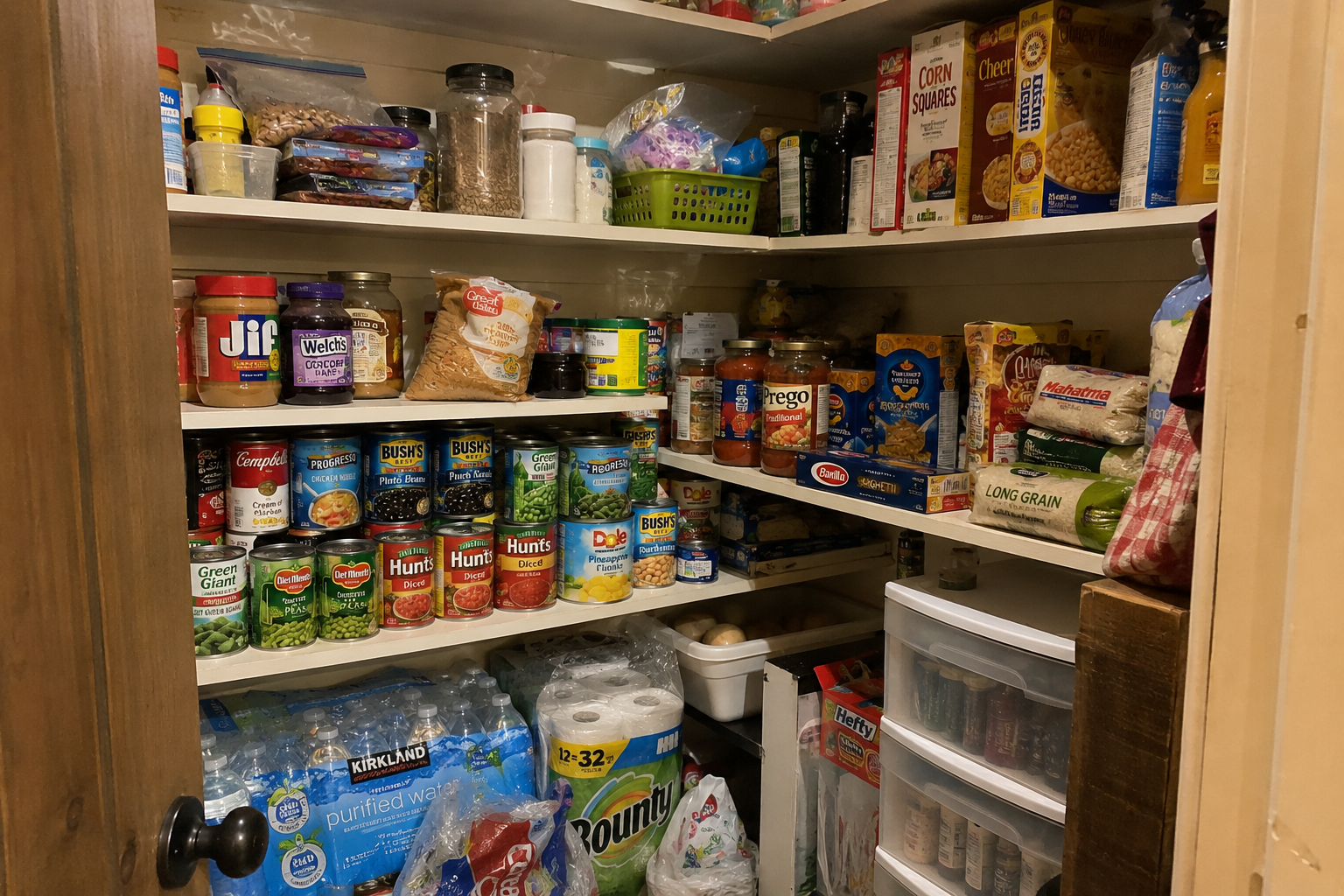
Canned foods have earned a permanent place in emergency preparedness because they combine affordability, convenience, nutrition, and long storage life in a way that few other food categories can match. For families building a thirty-day pantry on a limited budget, canned goods often provide the fastest and simplest path toward creating a reliable food reserve. They require little preparation, remain usable for extended periods when stored properly, and can often be eaten directly from the container if cooking becomes impossible during an emergency.
One reason canned foods work so well for preparedness is their flexibility. A pantry stocked with canned vegetables, fruits, meats, soups, and beans allows households to create complete meals without depending entirely on fresh ingredients. During power outages, severe weather events, or supply chain disruptions, these products can provide both nutrition and convenience while reducing the amount of cooking fuel required.
Canned vegetables should form a significant portion of most emergency pantries. Green beans, corn, peas, carrots, mixed vegetables, spinach, and similar products provide important vitamins and minerals while helping create meal variety. They also pair well with rice, pasta, soups, and canned meats.
Canned fruits offer additional nutritional benefits while helping satisfy cravings for something sweet. Peaches, pears, pineapple, mixed fruit, applesauce, and fruit cocktail are common choices that store well and require no refrigeration until opened.
Beans deserve special consideration because they provide an excellent combination of affordability, calories, protein, and fiber. While dry beans often provide better value per pound, canned beans require significantly less preparation and can be consumed immediately if necessary. Black beans, kidney beans, pinto beans, navy beans, and baked beans all make valuable additions to a preparedness pantry.
Soup is another category that performs exceptionally well during emergencies. Many canned soups contain vegetables, protein, carbohydrates, and seasonings in a single package. They can serve as complete meals or supplement other pantry foods when meal planning options become limited.
Tomato products should not be overlooked. Canned tomatoes, tomato sauce, tomato paste, diced tomatoes, and pasta sauces can dramatically expand meal possibilities while helping prevent menu fatigue. These ingredients allow households to transform simple staples such as rice and pasta into more satisfying meals.
When purchasing canned foods, focus on products your family already enjoys eating. Sales, bulk discounts, warehouse clubs, and seasonal promotions often provide opportunities to expand inventory at reduced cost. Building a pantry through strategic purchasing can significantly lower overall preparedness expenses without sacrificing quality.
As discussed in How to Store Food Without Refrigeration, shelf-stable foods become increasingly valuable during power outages because they reduce dependence on freezers and refrigerators that may no longer be functioning normally.
Affordable Protein Sources That Store Well
Protein is one of the most important components of a successful emergency pantry, yet it is often the category that receives the least attention when families begin building food reserves. Many households accumulate large quantities of rice, pasta, flour, and other carbohydrate-rich staples while overlooking the importance of maintaining adequate protein supplies for longer disruptions.
Fortunately, effective protein storage does not have to be expensive. Many affordable options provide excellent shelf life while supporting balanced nutrition during emergencies.
Canned chicken remains one of the most versatile emergency protein sources available. It stores well, requires no refrigeration before opening, and can be incorporated into soups, casseroles, sandwiches, pasta dishes, rice meals, and numerous other recipes. Because of its versatility, many preparedness-minded households keep significant quantities on hand.
Canned tuna continues to be another popular choice because it combines affordability, protein density, and convenience. Tuna can be eaten directly from the can or incorporated into a variety of meals requiring minimal preparation.
Canned salmon provides similar advantages while offering additional nutritional benefits such as omega-3 fatty acids. Although it may cost slightly more than tuna, many families find it worthwhile for meal variety and nutritional diversity.
Peanut butter remains one of the most economical protein sources available. In addition to protein, it provides calories and fats that become especially valuable during emergencies where food availability may be uncertain. Because it requires no preparation and appeals to both adults and children, peanut butter often serves as a cornerstone food in budget emergency pantries.
Dry beans continue to be among the most cost-effective protein options on the market. A relatively small investment can provide many meals worth of nutrition. While they require water and cooking fuel, their affordability makes them difficult to ignore when building long-term food reserves.
Shelf-stable milk products can also contribute valuable protein while supporting cooking and baking needs. Powdered milk, evaporated milk, and ultra-pasteurized shelf-stable cartons offer flexibility that becomes useful when fresh dairy products are unavailable.
Protein-rich soups, chili, canned stews, and ready-to-eat meal products can further diversify emergency food supplies while reducing preparation requirements.
Families should strive to build protein reserves gradually rather than attempting to purchase everything at once. Because protein products often cost more than staple carbohydrates, incremental purchasing helps spread expenses over time while steadily improving preparedness.
How to Store Food Properly for Maximum Shelf Life
Building an emergency pantry is only half of the preparedness equation. Proper storage determines whether those supplies remain safe, nutritious, and usable months or years into the future. Even the most carefully selected food inventory can deteriorate prematurely if environmental conditions are ignored.
The ideal storage environment is cool, dry, dark, and stable. Temperature fluctuations accelerate food degradation, while moisture can encourage spoilage, rust, mold growth, and packaging failures. Direct sunlight may further shorten shelf life by increasing temperatures and damaging packaging materials.
Whenever possible, food should be stored in climate-controlled areas of the home rather than garages, sheds, attics, or other locations exposed to extreme temperatures. While some products can tolerate temporary fluctuations, long-term storage generally benefits from more stable conditions.
Organization also plays an important role in pantry management. Food that cannot be easily located often becomes forgotten. Forgotten food eventually expires, creating unnecessary waste and reducing preparedness effectiveness.
A simple first-in, first-out rotation system works well for most households. Newer products are placed behind older products, ensuring that older inventory is used first during normal meal preparation. This method helps maintain freshness while minimizing waste.
Labels can further simplify organization. Marking purchase dates or expiration dates on packages makes it easier to identify which items should be used next. This practice becomes increasingly valuable as pantry inventories expand.
Dry foods such as rice, flour, pasta, oats, sugar, and beans often benefit from additional protection when stored for extended periods. Food-grade containers, airtight storage systems, and moisture-resistant packaging can help preserve quality while protecting supplies from pests.
For households interested in longer-term storage methods, Mylar bags combined with oxygen absorbers can dramatically extend the shelf life of many staple foods.


These storage methods are particularly useful for families that purchase bulk quantities during sales and wish to preserve those supplies for many years.
Canned foods generally require less intervention but should still be inspected periodically. Rust, swelling, severe dents, leaks, and damaged seals may indicate compromised containers that should not be consumed.
Water storage should also be evaluated alongside food storage because many pantry staples require preparation. Households building long-term food reserves should ensure they maintain adequate emergency water supplies as explained in How Much Water Does a Family Need for 30 Days? and How Long Does Stored Water Last?.
⚠ Warning
Never store emergency food in hot attics, garages that reach extreme temperatures, or damp basements unless the food is packaged specifically for those conditions. Heat and moisture dramatically shorten shelf life.
Budget Pantry Storage Supplies Worth Buying
Many preparedness purchases can be postponed until later stages of pantry development, but a few storage-related products often provide enough value to justify their cost early in the process. These items help protect food investments while improving organization and accessibility.
Food-grade buckets remain one of the most useful preparedness storage tools available. They allow families to store large quantities of staple foods while protecting supplies from moisture, rodents, insects, and physical damage.

Shelving units can also become valuable as pantry inventories grow. Organized storage improves rotation, reduces waste, and allows families to quickly assess inventory levels during emergencies.


A quality manual can opener deserves a permanent place in every preparedness plan. During power outages, electric openers may become unusable, leaving canned food inaccessible without a manual backup.

Although none of these products are strictly required to begin building a pantry, they often provide meaningful improvements in organization and long-term food protection.
Foods That Are Usually a Waste of Money for Beginners
One of the easiest ways to stretch a preparedness budget is by avoiding purchases that contribute relatively little practical value. While almost any food can play a role in emergency planning, certain products are frequently over-purchased by beginners who are still learning how to prioritize their resources.
Highly specialized survival foods often fall into this category. While some freeze-dried products are excellent, many beginners purchase large quantities before establishing a foundation of affordable everyday foods. This can result in spending hundreds of dollars on products that may never be rotated or consumed.
Extremely expensive preparedness kits frequently create similar issues. Many commercial kits emphasize convenience and marketing appeal rather than cost efficiency. Families can often assemble larger and more practical food reserves by purchasing grocery store staples individually.
Large quantities of snack foods represent another common mistake. Chips, candy, cookies, and similar items certainly have value as morale boosters, but they should not occupy significant portions of limited pantry space. These products generally provide less nutritional value while often costing more per calorie than staple foods.
Novelty products promoted through fear-based advertising should also be approached carefully. Preparedness decisions should be based on practical needs, realistic risks, and family requirements rather than emotional marketing campaigns.
Every dollar spent on food storage should improve a household’s ability to remain self-sufficient during disruptions. Focusing on versatile, affordable, and familiar foods usually produces better results than chasing the latest preparedness trend.
How to Rotate Emergency Food Without Creating Waste
One of the biggest concerns people have when building an emergency pantry is the possibility of food expiring before it can be used. With grocery prices remaining high, nobody wants to spend money on supplies that eventually end up in the trash. Fortunately, preventing waste is usually much simpler than most people expect.
The most effective strategy is to build your emergency pantry around foods your family already eats and then rotate those supplies through normal meal planning. Rather than maintaining a completely separate stockpile that sits untouched for years, your emergency food reserve becomes an extension of your everyday pantry.
A simple first-in, first-out system works well for most households. New items are placed behind older items, ensuring that products purchased first are used first. This approach keeps inventory fresh while reducing the likelihood of forgotten supplies accumulating in the back of cabinets.
Many families also find it helpful to perform a quick pantry review every few months. This provides an opportunity to check expiration dates, identify damaged packaging, update inventory lists, and plan meals around products that should be used soon.
Food rotation serves another important purpose beyond reducing waste. It allows family members to become familiar with the foods they are storing. If a particular canned soup, shelf-stable meal, or pantry staple does not work well for your household, it is far better to discover that during normal times than during an emergency.
A properly rotated pantry should feel less like an emergency stockpile and more like a larger, better-prepared version of the pantry you already use every day.
How Much Would a 30-Day Pantry Cost?
The total cost of building a thirty-day emergency pantry varies widely depending on family size, dietary preferences, local food prices, and the types of products being purchased. However, many people are surprised to discover that a practical food reserve often costs far less than they originally assumed.
A pantry built primarily around grocery store staples such as rice, beans, pasta, canned vegetables, canned fruit, peanut butter, oats, canned meats, and shelf-stable cooking ingredients will generally cost much less than one built around commercial survival food kits.
For many households, the key is avoiding the temptation to purchase everything at once. Building reserves gradually allows preparedness expenses to be spread across multiple weeks or months. Even adding ten to twenty dollars worth of extra pantry items during each grocery trip can produce meaningful results over time.
Sales, coupons, warehouse clubs, bulk purchasing opportunities, and seasonal promotions can further reduce costs. A family that purchases food strategically often acquires significantly more supplies for the same amount of money than someone buying everything at full retail price.
The goal should not be to reach a specific dollar amount. The goal should be to create a food reserve that provides security and flexibility while remaining realistic for the household budget.
Building a Pantry During High Inflation and Rising Food Prices
Periods of high inflation can make preparedness feel more challenging because food costs rise while household budgets become increasingly strained. Ironically, inflation is also one of the strongest arguments for maintaining an emergency pantry.
Every item already sitting on your shelf was purchased at yesterday’s prices. When grocery costs continue increasing, food stored today may represent significant savings compared to purchasing the same products months later.
This is one reason many preparedness-minded families focus on purchasing extra quantities of frequently used foods whenever prices are favorable. A sale on rice, canned vegetables, pasta, peanut butter, or canned meat can provide an opportunity to increase food reserves while reducing future grocery expenses.
Inflation also highlights the value of buying versatile staple foods rather than highly processed convenience products. Basic ingredients often provide more meals per dollar while offering greater flexibility during both normal times and emergencies.
Preparedness becomes much easier when viewed as a long-term habit rather than a reaction to current events. Families that build reserves consistently are often better positioned to handle future price increases because much of their inventory was purchased before those increases occurred.
What Happens If Grocery Stores Cannot Restock?
Modern grocery stores rely on continuous deliveries to keep shelves stocked. Most locations do not maintain months of inventory in storage rooms waiting for emergencies. Instead, products move through distribution networks on a regular schedule designed for efficiency rather than crisis preparedness.
When severe weather, transportation disruptions, labor shortages, infrastructure failures, cyberattacks, or sudden spikes in demand occur, those systems can experience significant strain. Certain products may disappear from shelves much faster than most shoppers expect.
As discussed in How Long Will Grocery Stores Have Food During an Emergency?, shortages often begin with everyday necessities. Bottled water, canned foods, bread, milk, batteries, medications, and other essentials frequently experience the highest demand during uncertain situations.
A household with a well-stocked pantry gains valuable flexibility during these events. Instead of rushing to crowded stores or competing for limited supplies, family members can remain at home and rely on food already available.
Emergency food storage is not only preparation for worst-case scenarios. It can also provide support during temporary disruptions that affect access to groceries, transportation, income, or supply chains.
Combining Food Storage With Water, Cash, and Blackout Planning
Food storage becomes significantly more effective when it is integrated into a broader preparedness plan. While food is often the most visible component of emergency planning, it works best when supported by water storage, emergency cash, backup lighting, communication plans, and strategies for managing power outages.
Water is particularly important because many pantry staples require cooking or preparation. Families building food reserves should also maintain adequate water supplies as outlined in How Much Water Does a Family Need for 30 Days?.
Emergency cash provides another layer of resilience. During certain emergencies, stores may remain open while electronic payment systems become unreliable. As discussed in How Much Emergency Cash Should You Keep at Home?, having some cash available can create additional options when digital payments are unavailable.
Power outages can also affect how food is prepared, stored, and consumed. Households should consider how meals would be cooked if electricity became unavailable and whether sufficient fuel, lighting, and backup cooking methods are available.
The strongest preparedness plans are rarely built around a single category of supplies. Instead, they combine multiple layers of preparedness that work together to support the household during a wide range of situations.
30-Day Emergency Pantry Checklist
Staple Foods
- White rice
- Pasta
- Oatmeal
- Flour
- Cornmeal
- Sugar
- Salt
- Cooking oil
- Dry beans
Protein Sources
- Peanut butter
- Canned chicken
- Canned tuna
- Canned salmon
- Canned beans
- Shelf-stable milk
- Protein-rich soups
Fruits and Vegetables
- Canned vegetables
- Canned fruit
- Tomato sauce
- Canned tomatoes
Cooking and Meal Ingredients
- Pasta sauce
- Bouillon cubes
- Seasonings and spices
- Coffee
- Tea
- Powdered drink mixes
Comfort Foods and Snacks
- Crackers
- Granola bars
- Snack foods
- Chocolate or candy
- Comfort foods your family enjoys
Food Storage and Preparation Supplies
- Manual can opener
- Food-grade storage buckets
- Mylar bags
- Oxygen absorbers
- Permanent marker for labeling
☑ Pantry Success Checklist
- ✔ 30 days of staple foods
- ✔ Protein sources
- ✔ Fruits and vegetables
- ✔ Water storage plan
- ✔ Manual can opener
- ✔ Food rotation system
Frequently Asked Questions
How long should it take to build a 30-day emergency pantry?
There is no required timeline. Some households may build a basic pantry within a few months, while others gradually expand food reserves over a year or longer. Consistent progress is usually more important than speed.
Should I buy freeze-dried food or regular grocery store food?
Most beginners benefit from starting with affordable grocery store foods that their family already eats regularly. Freeze-dried foods can serve as useful supplements but are often significantly more expensive.
How much food should I store for each family member?
Most adults require approximately 2,000 to 2,500 calories per day, although individual needs vary. Families should build reserves based on realistic consumption patterns and household size.
What foods have the longest shelf life?
White rice, dry beans, oats, pasta, sugar, salt, and other properly stored staple foods often provide excellent shelf life. Additional guidance can be found in Long-Lasting Survival Foods.
Can I build a pantry if I live in an apartment?
Yes. Many households successfully store food using closets, under-bed containers, shelving units, cabinets, and other available spaces. A dedicated storage room is not required.
Is a 30-day pantry enough?
A thirty-day pantry provides an excellent foundation for most households. Once that goal has been reached, families can decide whether additional reserves fit their preparedness objectives.
Final Thoughts
Building a 30-day emergency pantry on a budget is one of the most practical preparedness projects a family can undertake. Unlike many emergency supplies that may never be used, food storage provides value every day by increasing household resilience, improving flexibility, and creating a buffer against unexpected disruptions.
The most successful pantries are rarely built through large one-time purchases. Instead, they grow gradually through consistent shopping habits, strategic purchases, careful rotation, and a focus on foods that household members already enjoy eating.
Whether the challenge comes from severe weather, supply chain disruptions, temporary financial hardship, transportation problems, or extended power outages, a well-stocked pantry provides options that are unavailable to families relying entirely on their next grocery trip.
You do not need a massive storage room or thousands of dollars worth of supplies to get started. A few extra items added during each shopping trip can eventually grow into a food reserve capable of supporting your household through difficult circumstances while providing peace of mind throughout the year.
The best time to begin building an emergency pantry is before it becomes necessary. Start small, remain consistent, and allow your food reserves to grow steadily over time.
Continue Reading