
Best Solar Power Stations for Blackouts (2026 Guide)
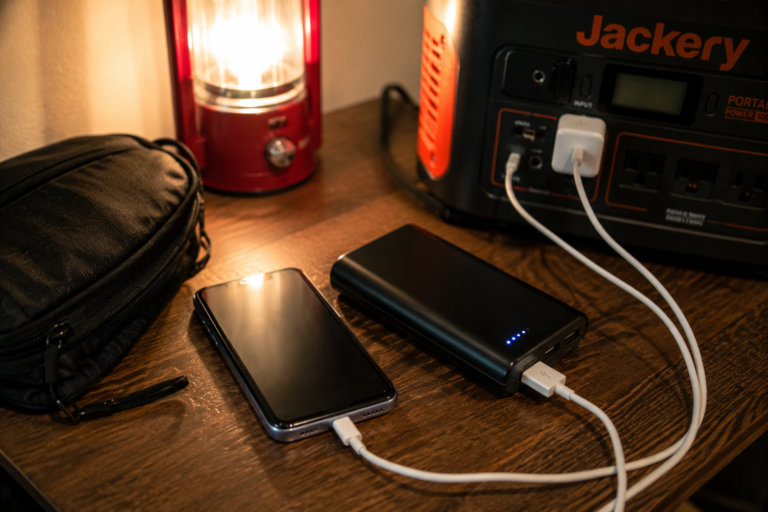
The best solar power stations for blackouts are not camping gadgets — they are emergency power systems. When the power goes out, you don’t need a gadget. You need a system.
This post contains affiliate links. I may earn a small commission at no extra cost to you. Learn more.
One that can:
• Keep your refrigerator from spoiling food
• Run a CPAP machine overnight
• Power lights and communications
• Handle compressor surge without shutting down
• Recharge fast enough to survive multi-day outages
Most buyers choose solar power stations based on brand recognition.
That’s how people end up with a battery that can’t even start their fridge.
Before choosing a power station, it’s important to know how much capacity your home actually needs. Our guide explains what size solar generator you need for a blackout based on appliances like refrigerators, CPAP machines, and essential household loads.
This guide ranks the best 2000Wh-class solar power stations for real blackout resilience — not marketing hype.
We’re evaluating them based on:
• Continuous output vs surge headroom
• LiFePO₄ battery longevity
• Recharge speed (AC + solar)
• Expandability
• Real-world essential load performance
If you’re preparing for storm outages, grid instability, or long-duration power loss, this breakdown focuses on what actually matters. Power failures are becoming more frequent and lasting longer in many regions.
Recommended Gear: See our complete Emergency Power & Lighting Gear List for recommended solar generators, backup batteries, lanterns, flashlights, and blackout-ready power systems.
For a full breakdown of layered blackout planning, see our complete guide to grid-down survival power systems.
⚙️ What “2000Wh Class” Actually Means in a Blackout
Understanding the difference between watt-hours and watts is critical when planning blackout power.
- Watt-hours (Wh) = total stored energy
- Watts (W) = how much power it can deliver at once
- Surge watts = short burst capacity for motor startup
A 2000Wh unit does not run a 2000W device for 1 hour due to inverter loss (~10–15%).
⚡ Quick Comparison: Best Solar Power Stations for Blackouts
| Model | Capacity | AC Output | Surge | Battery | Best For |
|---|---|---|---|---|---|
| Jackery Explorer 2000 Plus | 2042Wh | 3000W | 6000W | LiFePO₄ | Best Overall Blackout Backup |
| EcoFlow DELTA 2 Max | 2048Wh | 2400W | 3400W | LiFePO₄ | Fast Recharge + Balanced Performance |
| BLUETTI AC200PL | 2304Wh | 2400W | 3600W | LiFePO₄ | Expandable Long-Term Backup |
| Anker SOLIX F2000 | 2048Wh | 2400W | 2800W | LiFePO₄ | Best Value Pick |
Best for surge strength: Jackery
Best for recharge speed: EcoFlow
Best for expandability: Bluetti
Best budget value: Anker
All four:
- Can run a full-size refrigerator
- Use LiFePO₄ battery chemistry
- Support solar charging
Now let’s break down the rankings.
Short on time? The Jackery Explorer 2000 Plus offers the strongest surge protection for refrigerator startup loads.
If you want to see exactly how long these systems run a refrigerator,
read our guide on running a refrigerator on a solar generator during a blackout.
Before choosing a power station, it’s important to know how much capacity your home actually needs. Our guide explains what size solar generator you need for a blackout based on appliances like refrigerators, CPAP machines, and essential household loads.
🧪 How These Units Were Ranked
These rankings are not based on brand loyalty.
They’re based on practical blackout criteria:
- Can it start a modern refrigerator compressor reliably?
- Does it provide at least 2400W continuous output?
- Is the battery LiFePO₄ for long-term durability?
- Can it recharge fast enough during daylight windows?
- Does it allow expansion if your needs grow?
Any unit that fails those criteria may work for camping — but not for real blackout resilience.
These power stations fit inside a broader emergency power backup strategy that includes generators, solar charging, and safe connections.
⚡ Why 2400W Continuous Output Is the Real Minimum
Most buyers focus on watt-hours.
But in blackout conditions, inverter strength often matters more than total capacity.
A refrigerator compressor can spike well above its listed running wattage.
Microwaves, sump pumps, and power tools also create surge demand.
A unit with 2,000Wh capacity but only 1,800W continuous output may shut down under real-world loads.
For blackout resilience, 2400W continuous output is the practical floor.
3,000W provides additional headroom and reduces shutdown risk.
That’s why inverter strength weighs heavily in these rankings.
Surge Wattage vs Running Wattage (Why Refrigerators Trip Cheap Units)
- Fridges spike hard when compressors start
- Many units shut down during startup
- 2400W continuous is minimum
- 3000W+ is safer
- 6000W surge is why Jackery ranks first
🥇 1. Best Overall — Jackery Explorer 2000 Plus
👉 Check current price on Amazon

The Jackery Explorer 2000 Plus ranks first because it delivers the strongest surge capability in this class while maintaining solid capacity and reliability.
🔥 High Surge Headroom
- 3000W continuous output
- 6000W surge
This matters for:
- Refrigerators and freezers
- Microwaves
- Power tools
- Motor-driven appliances
The 6000W surge rating is what separates this unit from many competitors. Refrigerators and freezers spike hard on startup. Lower-surge units often shut down during that momentary demand.
Surge capability prevents shutdown when compressors kick on.
In blackout conditions, inverter strength matters more than minor capacity differences.
🔋 Strong Capacity
- 2042Wh battery
- LiFePO₄ chemistry
- Expandable with additional battery packs
This provides meaningful runtime without entering whole-home battery pricing territory.
🔌 Practical Simplicity
- Straightforward interface
- Clear display
- Strong Amazon availability
- Established support network
Best For:
✔ Home blackout standby
✔ Fridge + freezer protection
✔ Power tool surge loads
✔ Buyers prioritizing inverter strength
Bottom Line:
If refrigerator reliability during surge startup is your top priority, this is the safest bet in the 2000Wh class.
🥈 2. Best Balanced Performance — EcoFlow DELTA 2 Max
👉 Check current price on Amazon

The EcoFlow DELTA 2 Max earns second place for recharge speed and balanced output.
⚡ Fast Recharge
- Solar input up to 900W
- AC recharge to ~80% in roughly 1–1.5 hours
Fast recharge becomes critical during multi-day outages.
🔋 Balanced Output
- 2048Wh capacity
- 2400W continuous
- 3400W surge
Strong performance across typical household essentials.
🧠 Battery Longevity
- LiFePO₄ battery
- 2,500+ cycle rating
Best For:
✔ Homeowners needing rapid recharge
✔ Multi-day outage rotation
✔ Balanced power without extreme surge focus
Bottom Line:
Choose this if recharge speed matters more than extreme surge headroom.
🥉 3. Best Expandable System — BLUETTI AC200PL
👉 Check current price on Amazon


The BLUETTI AC200PL stands out for raw capacity and scalability.
🔋 Larger Base Capacity
- 2304Wh battery
- Expandable up to 8448Wh
This allows long-term system growth.
⚡ Strong Surge
- 2400W continuous
- 3600W surge
Capable of starting major appliances reliably.
🔌 Additional Output Flexibility
- 30A TT-30 output (RV ready)
- Multiple AC outlets
Best For:
✔ RV owners
✔ Cabin setups
✔ Buyers planning future battery expansion
Bottom Line:
Best for buyers planning multi-day outages with future battery expansion.
🔋 When Expandable Battery Systems Make Sense
Expandable systems allow you to connect additional battery packs to increase runtime.
Buy expandable if:
✔ You want 3–5 day runtime
✔ You plan cabin or off-grid use
✔ You want freezer + refrigerator redundancy
✔ You’re building a long-term energy system
Don’t buy expandable if:
✖ You only need overnight backup
✖ You won’t purchase extra batteries
✖ You’re solving short storm outages only
Expandable systems cost more — but for long outages, they eliminate constant recharge pressure.
🏆 4. Best Value — Anker SOLIX F2000
👉 Check current price on Amazon
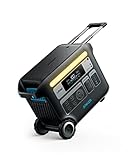
The Anker SOLIX F2000 delivers solid specs at a more approachable price tier.
🔌 Balanced Power
- ~2048Wh capacity
- 2400W continuous
- 2800W surge
Handles refrigerators, CPAP, lights, and short microwave use.
🔋 LiFePO₄ Chemistry
- Long cycle life
- Heat stability
- Improved longevity vs older lithium systems
Best For:
✔ Apartment backup
✔ Moderate home loads
✔ Buyers seeking value over maximum surge
Bottom Line:
A practical value pick for essential loads without paying for maximum surge.
🧪 Real-World Runtime (2000Wh Class)
Rated capacity is not fully usable.
After inverter losses, expect roughly 1,700–1,900Wh usable energy.
Here’s what that means in practical blackout terms:
Estimated Runtime Comparison
| Device | Typical Draw | Estimated Runtime |
|---|---|---|
| Refrigerator | 100–150W cycling | 20–30 hours |
| Chest Freezer | 80–120W cycling | 18–28 hours |
| CPAP (no humidifier) | 30–60W | 2–3 nights |
| LED Lighting (6 bulbs) | ~60W total | 25–30 hours |
| WiFi Router + Phone Charging | 15–25W | 3–5 days |
These numbers vary based on usage, compressor cycles, and ambient temperature — but this is realistic planning range.
For a deeper breakdown of medical device planning, see our guide to CPAP blackout power options.
🔆 3-Day Outage With 400W Solar
Battery alone only delays failure.
Solar turns a battery into a renewable system.
With 400W of panels, most regions can generate:
• 1.5–2kWh per day in decent sun
• Enough to replenish overnight fridge + CPAP usage
• Sustainable multi-day outage performance
For extended outage planning, see our full two-week power outage preparedness guide.
If you’re planning for anything beyond 24 hours, 400W solar minimum is practical.
You can see our breakdown of field-tested solar powered survival gear here.
A large battery without adequate solar input is just stored depletion.
Pair your battery system with dedicated indoor-safe lighting for extended outages.
❄️ Cold Weather Performance: What Most Buyers Overlook
LiFePO₄ batteries are excellent for longevity — but they have limits.
Important:
• LiFePO₄ batteries cannot safely charge below freezing (32°F / 0°C)
• Discharging in cold weather is fine
• Charging below freezing can damage cells unless the unit has internal heating
Best practice:
✔ Store indoors in winter
✔ Bring the unit inside before charging
✔ Avoid leaving power stations in freezing garages
Cold weather planning is part of real blackout preparedness.
☀️ Solar Pairing Strategy
Wall charging alone limits runtime.
Solar transforms stored energy into renewable power.
Recommended Solar Capacity
| Use Case | Recommended Solar |
|---|---|
| Emergency only | 200W |
| 2–3 day outage | 400W |
| Extended blackout | 600–800W+ |
For serious blackout resilience, 400W minimum is practical.
Cloud cover, winter sun angles, and panel inefficiency all reduce real-world charging speeds. Always size solar above the minimum.
A large battery without adequate solar input is just delayed failure.
Recommended Panel Pairing for Jackery
👉 Check current price on Amazon

Two 200W panels provide balanced recharge speed without overcomplicating setup.
🏠 24-Hour Storm Blackout Scenario
Imagine:
• Grid down at 6:30 PM
• Refrigerator cycling overnight
• CPAP running for 8 hours
• Router and phones charging
• Morning microwave use
A properly sized 2000Wh unit handles that without panic.
Long outages also require reliable water storage.
See our guide on how to store water long term for emergencies.
That’s the difference between “backup battery” and resilience.
Food planning matters too.
Here are survival foods with a long shelf life that don’t require refrigeration during outages.
🚫 When a 2000Wh Power Station Is Not Enough
A 2000Wh unit covers essential loads — not full homes.
It will NOT:
• Run central HVAC systems
• Power electric water heaters
• Sustain electric ovens or ranges
• Reliably run large 240V well pumps
• Replace a whole-home standby generator
If you need higher output capacity, see:
• Best Survival Generators
• Solar + Generator Hybrid Backup
Solar power stations excel at quiet, indoor-safe essential loads — not total house replacement.
🔥 Final Recommendation
All four units are strong options.
But if prioritizing:
- Strongest surge capability
- Proven inverter strength
- Expandability
- Balanced capacity
For most homeowners seeking the safest all-around blackout solution, the Jackery Explorer 2000 Plus ranks first overall.
If prioritizing:
- Faster recharge → EcoFlow
- Maximum expandable capacity → Bluetti
- Lower price tier with solid performance → Anker
Choosing among the best solar power stations for blackouts comes down to inverter strength, recharge speed, and real-world runtime — not brand hype.
Severe weather seasons and grid instability are increasing in many regions. Backup power is easier to secure before demand spikes.
🔇 Solar Power Station vs Gas Generator
Both have roles in preparedness.
✔ Indoor safe
✔ Silent operation
✔ No fuel storage required
✔ Minimal maintenance
Gas Generator:
✔ Higher surge capability
✔ Better for large motor loads
✔ Can run longer with fuel supply
✖ Requires outdoor placement
✖ Requires fuel rotation and maintenance
For many households, the strongest system combines both.
🔒 Why Brand Support Matters in Emergencies
During a power outage is not when you want to:
• Discover weak inverter components
• Deal with overseas-only support
• Fight warranty claims
Established brands with strong U.S. distribution channels matter in emergencies.
🔄 Test Before the Grid Fails
Buyers make one critical mistake: they never test their system.
Run your refrigerator on battery for 6–8 hours.
Charge devices.
Simulate overnight CPAP use.
Blackout planning is not theoretical — it’s rehearsed.
❓ Frequently Asked Questions
How long will a 2000Wh power station run a refrigerator?
Typically 20–30 hours depending on efficiency and door usage.
Can it power a whole house?
No. These units power essential loads — not full HVAC systems.
Is LiFePO₄ better?
Yes. It offers longer cycle life, better heat stability, and improved longevity.
⚠️ Common Buying Mistakes
- Focusing only on watt-hours
- Ignoring surge rating
- Buying insufficient solar
- Expecting whole-home backup
- Never testing before an outage
- Choosing unknown low-support brands
🎯 Practical Buying Formula
For real blackout readiness:
✔ 2000Wh+ capacity
✔ 2400W+ continuous output
✔ Strong surge rating
✔ LiFePO₄ battery
✔ 400W+ solar
That configuration covers 90% of real-world outages without stepping into full-house battery pricing.
Building a reliable blackout power setup? See our recommended emergency power and lighting gear here.