HAM Radio for Beginners: How to Communicate When Everything Else Fails
Ham radio for beginners is one of the most reliable ways to communicate when the grid goes down.
This post contains affiliate links. I may earn a small commission at no extra cost to you. Learn more.
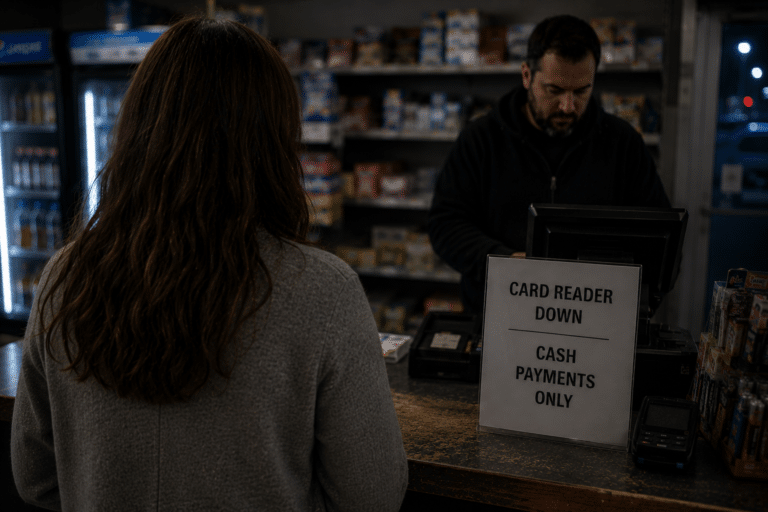
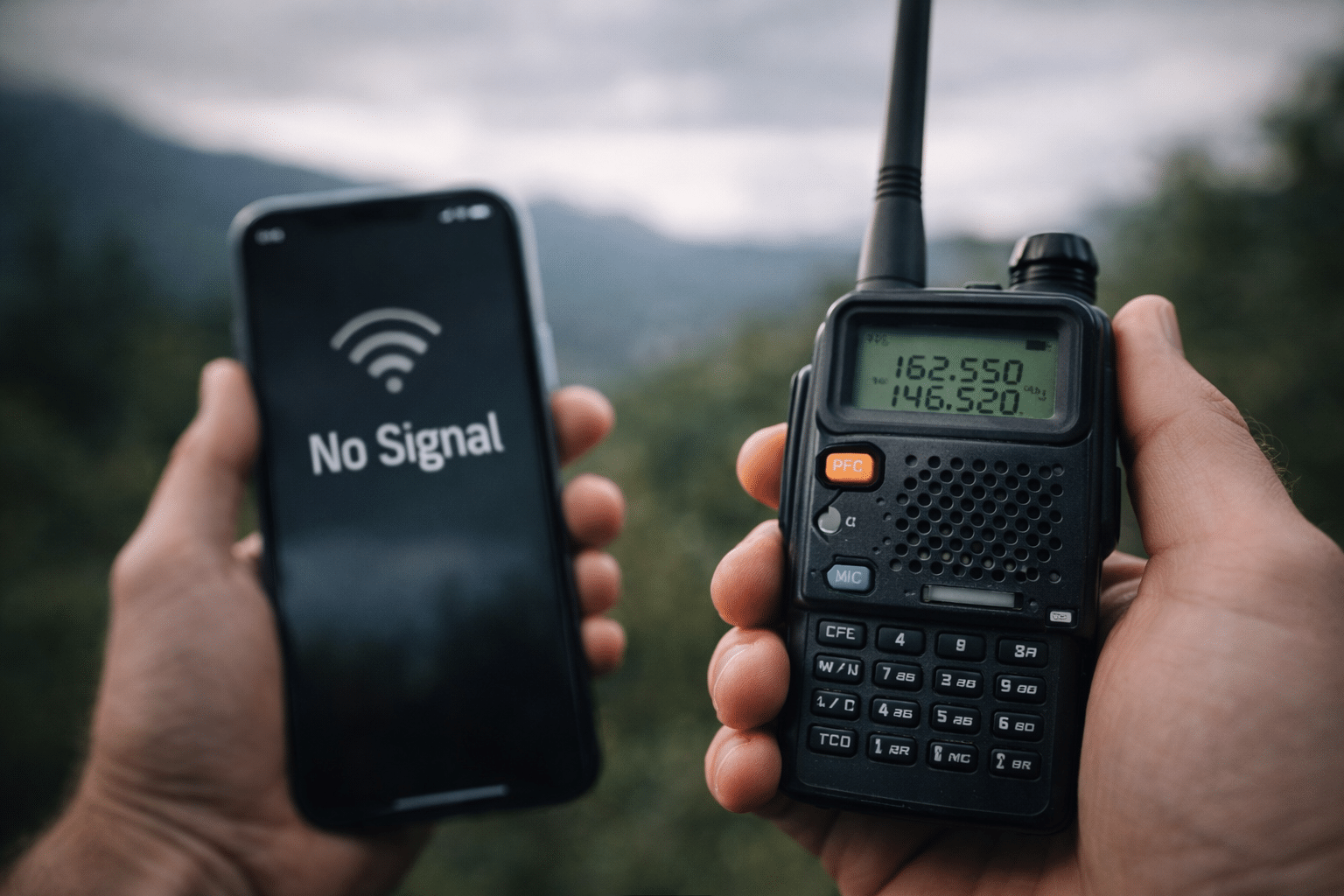
When the grid goes down, your phone becomes a paperweight.
During a major outage, cell service may disappear, internet access can become unavailable, and many people suddenly find themselves with no reliable way to call for help or receive information.
Meanwhile, people who have invested time in learning radio communication often have access to information, updates, and coordination options that many others lose during an outage.
👉 If you want a complete survival strategy (not just one piece of the puzzle), start with the full system here:
Emergency Preparedness Plan 2026
That’s where HAM radio comes in.
HAM radio is one of the most powerful tools available—but it’s only one part of a complete communication system. To stay connected in real emergencies, you need layered methods that cover short-range, long-range, and backup communication.
For a complete communication strategy when everything fails, see: How to Communicate When the Grid Goes Down.
It’s one of the only communication systems that still works when everything else collapses—no cell towers, no infrastructure, no subscriptions.
Many people avoid HAM radio because they assume it is overly technical, but the fundamentals are far easier to learn than most beginners expect.
If you’re new to ham radio for beginners, this guide will walk you through everything you need to know without overwhelming you.
This guide explains what HAM radio is, why it remains one of the most valuable communication tools during emergencies, what equipment beginners should focus on first, and how to get started without becoming overwhelmed by technical details.
Quick Summary:
- HAM radio works without cell towers
- Best beginner radios are handheld dual-band units
- Repeaters extend your range dramatically
- Licensing is required but easy to obtain
What Is HAM Radio (Amateur Radio)?
HAM radio—also known as amateur radio—is a communication system that uses radio frequencies to send voice, text, or data over long distances.
Unlike traditional walkie-talkies, HAM radio offers significantly greater communication range and can operate across cities, states, or even countries without relying on cellular networks or internet infrastructure.
Operators use radios, antennas, and frequencies to communicate directly with others.
For preparedness-minded individuals, this means maintaining the ability to exchange information, coordinate with family or groups, and stay informed even when conventional communication systems become unavailable.
Why HAM Radio Matters in a Grid-Down Scenario
Most people assume communication systems will always be available, but major disasters and large-scale outages have repeatedly shown that those systems can become unreliable or disappear entirely when they are needed most.
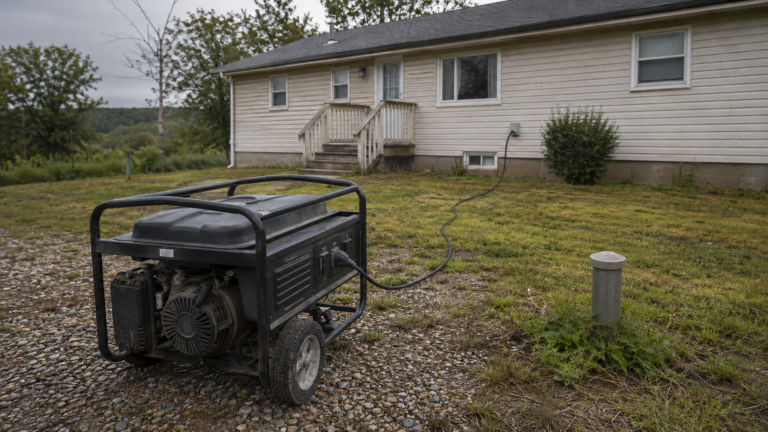
During a major outage, cell towers may lose power or become overloaded, internet infrastructure can fail, emergency services often become overwhelmed with requests, and many people are left without reliable information about what is happening around them.
If you’ve never experienced it, here’s exactly what actually happens during a blackout when communication systems fail.
HAM radio helps overcome many of the communication failures that occur during emergencies and can be used during natural disasters, large-scale blackouts, wilderness emergencies, and family preparedness situations. Because it operates independently of cellular networks, it remains one of the few communication methods available when traditional systems become unreliable.
HAM operators are often among the last reliable sources of communication during major emergencies, which is one reason communication failures deserve more attention from preparedness-minded individuals. Understanding how quickly information systems can break down during the first 72 hours of a disaster helps explain why backup communication plans are so important.
Real Examples of HAM Radio During Emergencies
HAM radio isn’t just a hobby. Amateur radio operators have provided critical communication support during major disasters including Hurricane Katrina, Hurricane Maria, California wildfires, and widespread power outages where cell networks became overloaded or unavailable. In many cases, radio operators helped relay emergency information between affected communities and emergency responders when conventional communication systems failed.
Types of HAM Radios (Keep It Simple)
While HAM radio equipment can seem complicated at first, most beginners only need to understand the three primary radio categories used for communication and preparedness.
1. Handheld Radios (Best for Beginners)
These are the easiest and cheapest way to start.
Pros:
- Portable (fits in your bag)
- Affordable
- Simple to use
- Great for short to medium range
Cons:
- Limited power (range depends on terrain)
- Requires practice to use effectively
👉 Best for: bug-out bags, local communication, beginners
2. Mobile Radios (Vehicle-Based)
Installed in a vehicle, these offer more power and range.
Pros:
- Stronger signal than handhelds
- Better range
- Reliable for travel or evacuation
Cons:
- Requires installation
- Not portable
👉 Best for: bug-out vehicles, long-distance driving communication
3. Base Stations (Home Setup)
This is your full setup at home.
Pros:
- Maximum power and range
- Can communicate long distances
- Most reliable setup
Cons:
- More expensive
- Requires space and setup
👉 Best for: home preparedness, long-term grid-down scenarios
How Far Can HAM Radios Reach?
One of the biggest advantages of HAM radio is its potential communication range, which can vary dramatically depending on equipment, terrain, antennas, and operating conditions.
Typical Range:
- Handheld: 1–5 miles (up to 20+ with repeaters)
- Mobile: 10–50+ miles
- Base station: hundreds to thousands of miles
Under the right conditions and with the proper equipment, HAM radio operators can communicate across hundreds or even thousands of miles.
Using certain frequencies (HF bands), signals can bounce off the atmosphere and travel globally.
What Are Repeaters (And Why They Matter)
Repeaters are radio stations placed on high points (like towers or mountains).
Repeaters receive incoming signals, amplify them, and then retransmit them over a much larger area, allowing operators to communicate far beyond normal handheld radio range.
By extending the effective range of handheld and mobile radios, repeaters make local and regional communication significantly more practical for most operators.
Example:
- Without repeater → 2–5 miles
- With repeater → 20–50+ miles
During a disaster, some repeaters may go offline, but many are equipped with battery or generator backups, and some communities maintain independent systems specifically designed to remain operational during emergencies.
This is similar to how emergency radio systems still work in a blackout, giving you access to information when everything else goes down.
What Happens If Repeaters Go Down?
Many beginners assume repeaters will always be available, but severe disasters can take them offline. While many repeaters have battery or generator backup systems, some may eventually fail during prolonged emergencies. That’s why experienced operators learn simplex communication, which allows radios to communicate directly without relying on repeaters or other infrastructure. The range is usually shorter, but simplex communication remains one of the most reliable grid-independent options available.
Do You Need a License for HAM Radio?
If you plan to transmit on HAM radio frequencies in the United States, you will generally need a license issued by the Federal Communications Commission.
In the U.S., HAM radio is regulated by the Federal Communications Commission.
- License Levels:
- Technician (beginner)
- General
- Extra
Most people only need the Technician license to get started.
The Technician license is where most beginners start because it provides access to the VHF and UHF frequencies commonly used for local communication and repeater networks. The exam consists of multiple-choice questions and is generally considered approachable for newcomers. Many people successfully pass after only a few evenings of study, making it one of the easiest ways to gain access to a powerful emergency communication tool.
⚠️ In true emergencies, rules can be relaxed—but don’t rely on that.
Essential HAM Radio Gear for Beginners
Getting started does not require an expensive radio room or complicated equipment. Most beginners can build a capable entry-level setup with only a few essential pieces of gear.
Basic Starter Setup:
- Handheld HAM radio
- Extra battery or power bank
- Better antenna (upgrade from stock)
- Programming cable (optional but helpful)
Recommended Add-Ons:
- Solar charger
- Portable antenna
- Notebook for frequencies
- Headset or mic
Power Is Everything
Communication equipment is only valuable as long as it remains powered, which is why backup energy sources should always be part of the overall plan.
That’s why you need to understand what size solar generator you actually need to keep critical gear running when the grid fails.
You should also have a backup plan using reliable backup power options during a blackout so you’re not left in the dark.
Every preparedness-minded radio operator should maintain backup batteries, alternative charging methods such as solar panels, and portable power banks capable of keeping critical communication equipment operating during extended outages.
HAM Radio vs Walkie Talkies (Big Difference)
Many beginners mistakenly assume HAM radios and walkie-talkies perform the same function, but there are significant differences in capability, range, and flexibility.
| Feature | HAM Radio | Walkie Talkies |
|---|---|---|
| Range | High | Limited |
| Frequencies | Many | Few |
| Power | Adjustable | Fixed |
| License | Required | Not required |
| Capability | Advanced | Basic |
👉 Walkie talkies = short range
👉 HAM radio = real communication system
HAM Radio vs Emergency Radio vs Walkie Talkies (What You Actually Need)
This is where most people get confused—and end up buying the wrong gear.
| Feature | HAM Radio | Emergency Radio | Walkie Talkies |
|---|---|---|---|
| Communication | Two-way (long range) | One-way (receive only) | Two-way (short range) |
| Range | High to extreme | Limited | Short |
| Infrastructure Needed | None | Broadcast stations | None |
| Best Use | Real communication | Information updates | Close-range coordination |
👉 What this means for you:
Emergency radios are primarily used to receive information, walkie-talkies provide short-range communication, and HAM radio offers a far more capable communication system for serious emergency preparedness and disaster response situations.
If you’re serious about staying informed during a blackout, you still need a reliable emergency radio setup alongside your communication gear.
How to Actually Get Started (Step-by-Step)
The easiest way to learn HAM radio is to focus on the fundamentals first and gradually build your knowledge through regular use and practice.
If you’re learning ham radio for beginners specifically for survival, focus on simple, reliable setups you can actually use under stress—not complex systems you won’t practice with.
Step 1: Buy a Beginner Radio
Most beginners are best served by starting with a handheld radio because it provides an affordable way to learn the basics without a major investment.
Step 2: Learn the basic functions of your radio, including power controls, volume adjustment, frequency tuning, and menu navigation. Becoming comfortable with these simple features will make everything else much easier to learn.
Step 3: Spend time listening before transmitting. Monitoring local radio traffic helps you learn common procedures, communication etiquette, and how experienced operators interact on the air.
Step 4: Study for your Technician license using free online study guides, practice exams, and training resources. Most beginners can prepare for the exam within a few days of focused study.
This is part of learning how to prepare before a disaster actually happens, not while you’re in the middle of one.
Step 5: Practice regularly by monitoring local repeaters, participating in emergency communication nets, and becoming comfortable with basic radio procedures before you need them during a real emergency.
HAM Radio in Urban vs Rural Survival
Communication performance can vary significantly depending on whether you live in a densely populated urban environment or a more remote rural area.
Urban:
- More interference
- More repeaters available
- Shorter direct range
👉 Strategy: Use repeaters + backup communication
If you’re in a city, you’ll also need to understand urban survival strategies when systems fail, since communication challenges are very different.
Rural:
- Less interference
- Fewer repeaters
- Longer direct range
👉 Strategy: Strong antennas + higher power radios
Using HAM Radio for Family & Group Communication
One of the most common mistakes is purchasing communication equipment without developing a clear plan for how family members or group members will actually use it during an emergency.
Every family communication plan should include agreed-upon frequencies, backup channels, and scheduled check-in times so everyone knows exactly where and when to communicate during an emergency. Establishing these procedures before a disaster occurs eliminates confusion when communication becomes critical.
Example:
Primary: Channel X at 8AM
Backup: Channel Y if no response
Even the best communication equipment becomes far less effective when users have not established frequencies, schedules, and procedures in advance.
You need a clear system in place, just like building a complete off-grid communication system that everyone in your group understands.
Common Beginner Mistakes (Avoid These)
❌ Buying gear and never using it
❌ Not upgrading the antenna
❌ Ignoring power backup
❌ No communication plan
❌ Waiting until an emergency to learn
You don’t rise to the occasion—you fall to your level of preparation.
Communication is only one part of survival. If you can’t build fire or stay warm, you won’t last long—make sure you understand how to start a fire in any condition when it matters most.
Powering Your HAM Radio Off-Grid
Even the best radio becomes useless if you cannot keep it powered during an extended outage, which is why power planning should always be considered part of your communication strategy.
The most reliable off-grid power solutions include portable solar panels, rechargeable battery systems, and power banks that can keep essential communication equipment functioning when utility power is unavailable.
One of the biggest mistakes radio owners make is relying entirely on wall charging and assuming utility power will always be available when they need it.
Without backup power options, even high-quality communication equipment can become unusable during a prolonged outage.
Want to build a complete, reliable setup?
Make sure you’re not missing these critical pieces:
- Best survival generators for long-term outages
- How to size your solar generator correctly
- Best emergency lighting for blackouts
If your power fails—your communication fails. Build both.
Advanced Capabilities (When You’re Ready)
Once you get comfortable, HAM radio can do more:
- Long-distance communication (HF)
- Digital messaging
- Emergency networks
- Weather monitoring
This turns your setup into a real communication system, not just a backup.
When Should You Use HAM Radio?
The best time to learn HAM radio is long before an emergency occurs, giving you the opportunity to become comfortable with your equipment under normal conditions.
HAM radio can be used during camping trips, hiking adventures, off-grid travel, and routine practice sessions, all of which help build confidence and familiarity with your equipment.
Regular use builds confidence, improves operating skills, and reduces the likelihood of mistakes during a real emergency.
HAM Radio Terms You Need to Know (Beginner-Friendly)
Understanding a few basic HAM radio terms will make the rest of the learning process much easier and help prevent the confusion that often discourages new operators.
Frequency
This is the channel your radio uses to communicate.
A frequency can be thought of as a specific lane on a highway, and if two operators are not using the same frequency, they will not be able to communicate with each other.
Band
Bands are ranges of frequencies.
The two most important for beginners:
2 Meter Band (144–148 MHz)
70 Centimeter Band (420–450 MHz)
These are where most beginner radios operate.
Repeater
A repeater is a radio station that receives incoming signals, amplifies them, and retransmits them over a wider area, allowing operators to communicate much farther than they could using direct radio-to-radio communication alone.
This is how you extend your range way beyond normal limits.
Call Sign
When you get licensed, you receive a unique ID (like a username for radio).
Example:
👉 “KJ7XYZ”
You use this to identify yourself when transmitting.
Net
A “net” is a scheduled group communication.
Nets are commonly used for weekly check-ins, emergency communication drills, training exercises, and local coordination between radio operators.
Joining nets is one of the fastest ways to learn.
Best Frequencies for Beginners
You don’t need to know everything—just start with what works.
2 Meter Band (VHF)
- Best for local communication
- Strong performance outdoors
- Common for repeaters
👉 This is your go-to band
70cm Band (UHF)
- Better in cities and buildings
- Works well indoors
- Shorter range but clearer in urban areas
👉 Great for urban survival setups
Emergency & Calling Frequencies
These are widely recognized:
146.520 MHz (2m national calling frequency)
Local repeater frequencies (varies by area)
👉 Write these down. Don’t rely on memory.
Best HAM Radio for Your Situation (Quick Pick Guide)
Don’t overthink this. Here’s what actually works based on your situation:
- On a Budget: Go with the Baofeng UV-5R — cheap, effective, and widely used
- Bug-Out Bag Setup: Lightweight handheld with extra batteries and upgraded antenna
- Home Backup System: Reliable mid-range radio like the Yaesu FT-65R
- Long-Term / Serious Use: Durable, high-performance option like the Yaesu FT-60R
The most important step is simply getting started. Learning radio communication before an emergency occurs gives you time to develop skills and identify weaknesses in your setup before they matter.
Best Beginner HAM Radios (What Actually Works)
Many new operators assume they need expensive equipment to get started, but several affordable radios provide excellent performance for beginners.
Choosing the right beginner radio is important because poor usability, limited performance, or unnecessary complexity often discourages new operators from continuing to learn.
These are beginner-friendly options that actually work when it counts.
Budget Option (Start Here)
Baofeng UV-5R
Why it works:
- Extremely affordable
- Dual-band (2m + 70cm)
- Tons of tutorials online
Downsides:
- Stock antenna is weak
- Interface isn’t beginner-friendly
👉 Verdict: Best entry point—cheap and effective
Check Price on Amazon

Mid-Range Option
Yaesu FT-65R
Why it’s better:
- More durable
- Better build quality
- Easier to use
👉 Verdict: Worth it if you want reliability
Check Price on Amazon

Upgrade Pick (Serious Beginners)
Yaesu FT-60R
Why it stands out:
- Proven reliability
- Excellent signal performance
- Built to last
👉 Verdict: Buy once, cry once
Check Price on Amazon
Real Survival Scenarios Where HAM Radio Wins
The true value of HAM radio becomes most apparent when normal communication systems fail and reliable information becomes difficult to obtain. While many people view HAM radio as a hobby, experienced operators understand that it can become an important source of communication and situational awareness when traditional networks are unavailable. These are some of the situations where HAM radio provides a clear advantage.
Scenario 1: Power Grid Collapse
During a large-scale blackout, cellular networks may become overloaded or lose power, internet access can disappear, and local news coverage may become limited or delayed. In these situations, HAM radio operators can monitor emergency communications, exchange information with other operators, and stay informed about developing conditions. Rather than relying entirely on failing infrastructure, radio operators often have access to information that helps them make better decisions during a rapidly changing emergency.
Scenario 2: Lost in the Wilderness
Remote areas often have little or no cellular coverage, making communication difficult when something goes wrong. Whether dealing with an injury, a navigation problem, or an unexpected emergency, a properly configured HAM radio can provide a way to reach other operators who may be able to relay messages or assist with emergency communication. For hikers, hunters, and off-grid travelers, HAM radio offers an additional layer of safety that does not depend on nearby cell towers.
Scenario 3: Natural Disasters
Severe weather events such as hurricanes, tornadoes, floods, and wildfires frequently disrupt normal communication systems. Roads may become impassable, power may be unavailable for extended periods, and emergency services can become overwhelmed. HAM radio operators have a long history of supporting communication efforts during disasters by sharing information, relaying messages, and helping communities maintain communication when other systems are struggling or unavailable.
Scenario 4: Family Communication During Emergencies
One of the most practical uses for HAM radio is maintaining communication with family members during an emergency. When phone networks become unreliable, a preplanned radio communication strategy allows family members to share updates, coordinate travel plans, and confirm everyone’s safety. Families who establish frequencies, backup channels, and scheduled check-in times before an emergency occurs are often far better prepared than those attempting to create a communication plan during a crisis.
How to Set Up Your First HAM Radio (Step-by-Step)
Setting up your first HAM radio is usually much simpler than beginners expect once the process is broken down into a few basic steps.
Step 1: Charge Everything
- Battery fully charged
- Backup ready
Step 2: Install a Better Antenna
Factory antennas often leave significant performance on the table, making an antenna upgrade one of the simplest and most cost-effective improvements a beginner can make.
👉 This alone can double your range
🧠 Pro Tip: Most beginners focus on the radio itself—but your antenna matters more. A $20 antenna upgrade can outperform a $200 radio with a stock antenna. If you want better range, fix your antenna first.
Step 3: Program Frequencies
You have two options:
Manual:
- Enter frequency
- Set offset (for repeaters)
Easier way:
Use software like CHIRP
- Connect cable
- Load local frequencies
- Upload to radio
👉 This saves hours
Step 4: Find Local Repeaters
Use:
RepeaterBook
Search your area and load:
- Frequency
- Offset
- Tone
Step 5: Listen First
Don’t jump in transmitting.
- Listen to conversations
- Learn etiquette
- Understand flow
Step 6: Make Your First Call
Simple format:
“Call sign, listening”
That’s it.
Building a Reliable HAM Radio Power Setup
Long-term communication reliability depends on having a dependable power source capable of keeping your equipment operational throughout an emergency.
Battery Strategy
- Extra batteries (minimum 2–3)
- Rotate usage
- Keep charged
Solar Charging
This is where you win long-term.
- Portable solar panel
- USB charging
- Works off-grid
This is where investing in solar gear that actually works in survival situations becomes critical.
If you’re planning for longer outages, you also need to understand how to survive long-term power outages without relying on the grid.
Power Banks
- Fast recharge
- Lightweight
- Easy backup
👉 Tie this into your solar generator / blackout setup for maximum reliability.
Advanced Tips That Give You an Edge
After mastering the fundamentals, there are several advanced techniques and upgrades that can significantly improve your communication capabilities.
Upgrade Your Antenna (Biggest Gain)
This is the #1 performance boost.
- Longer antenna = better range
- External antenna = major upgrade
Elevation = Range
Higher position = better signal
- Hill
- Rooftop
- Elevated terrain
Monitor Multiple Channels
Don’t rely on one frequency.
Have:
- Primary
- Backup
- Emergency
Practice Regularly
Most people skip this—and fail when it matters.
- Weekly check-ins
- Test communication plans
- Join local nets
The Biggest Mistake People Make With HAM Radio
The biggest mistake most people make is treating HAM radio like a piece of equipment rather than a skill. Owning a radio does not automatically make you prepared. Real preparedness comes from learning how to operate the radio, understanding local frequencies, practicing regularly, and developing communication plans before an emergency occurs.
Preparedness comes from understanding how to use your equipment effectively, not simply owning it.
HAM Radio FAQ
Do I need a license to use HAM radio?
Yes, in most cases you need a license to transmit legally in the U.S.
How far can a HAM radio reach?
Anywhere from a few miles to thousands depending on setup.
Can HAM radio work without internet?
Yes. That’s the entire point—it works independently.
If you’re serious about this, your next step is building a complete system—start with
Complete Off-Grid Communication System (No Phone, No Internet) so you’re not figuring it out under pressure.
HAM Radio Is Only One Part of a Complete Communication Plan
While HAM radio is one of the most capable communication tools available, it should never be your only option. A complete preparedness strategy includes emergency weather radios, short-range family radios, backup power systems, printed contact information, and predetermined communication plans. The goal is not to rely on a single device but to build multiple layers of communication that continue working as conditions change.
Final Take: Is HAM Radio Worth It?
Most people rely almost entirely on smartphones and internet-based communication systems, leaving them with few alternatives when those systems become unavailable during emergencies or large-scale outages.
HAM radio provides an alternative communication method that continues functioning even when many conventional systems become unavailable.
During a serious emergency, maintaining communication and access to information can significantly improve decision-making, coordination, and overall preparedness.
Don’t Wait Until It’s Too Late
Most people don’t realize communication is their biggest weakness… until it’s gone.
If you don’t already have a plan in place, start here:
Complete Off-Grid Communication System (No Phone, No Internet)
This ties everything together—radios, backup systems, and real-world strategy.
What To Do Next
The best time to start learning HAM radio is before you actually need it. Begin with a simple beginner radio, spend time listening and learning how local operators communicate, and gradually build radio communication into your overall preparedness plan. When traditional communication systems become unavailable, the skills and equipment you develop today may become some of the most valuable tools you own.